Now Departing: More Star Tours Destination Hinting

From Imagineer Tom Fitzgerald on the Disney Parks Blog:

Recently, we talked about the characters you’ll meet in Star Tours – The Adventures Continue. Since then, there’s been a lot of speculation about where we’ll meet those characters. Well, stay tuned. While the Star Tours Company does fly to many destinations (as you can see in the attached image – especially if you read Aurebesh) we’ll soon give you the flight list for our show!

UPDATE: Our good friend Scott Smith actually deciphered the above message, here is the full translation:

Tatooine, flight 712, time 0745, statues: gate change
Coruscant, flight 1138, time 0910, status: on time
Tatooine, flight 324, time 1045, status: on time
Endor, flight 611, time 1100, status: delayed
Coruscant, flight 208, time 1245, status: on time
Tatooine, flight 410, time 1310, status: on time
Alderaan, flight 716, time 1315, status: see agent
Coruscant, flight 1010, time 1415, status: on time
Alderaan, flight 1112, time 1645, status: see agent
Endor, flight 903, time 1945, status: delayed

Other than some inside jokes with Endor flights delayed and Alderaan passengers being told to see agent, there isn’t anything new about the attraction revealed. While Disney has not released the list of destinations for the new attraction, we do have some speculation and clues as to what they might be. As usual, stay tuned for more information on Star Tours: The Adventures Continue as it becomes available.

Park 6 Explained

Update: 3/28/11 Added pictures of the Chaser and all 4 variants; Donald (2) and WDW Road Sign (2). Learned of a WDW Road Sign variant with “Animal Kingdom” instead of “Magic Kingdom”. Learned the price should be $12.95. Found out Park 6 was already released, and possibly pulled back off the shelves at Disneyland Paris. Added link to the 9″ Park 6 figures. Big thanks to everyone who tweeted, commented, and emailed us about the news. Every once in a while our “real” jobs get in the way of 24/7 monitoring. But thanks to all our fans we always have someone close to the news! Thank you. Merci.

Update: 3/22/11 Release date of April 1st is confirmed at WDW Trading Event and on the Events pages at the Disney Vinylmation Blog. Added picture of the Matterhorn 9″. Added picture on set on display at WDW Trading Event.

Update: 3/9/11 Release date removed from the official site. April 1st now only a possible release date.

Update: 3/8/11 Release date announced as April 1st (no joke… hopefully). Added turn around pictures.

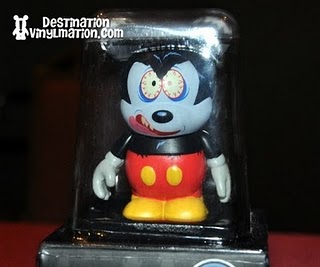
Update: 1/21/11 Added images from the 1/1/11 blog announcements from Disney. Includes, Primevil Whirl and Runaway Brain Mickey Combo Topper.

1/8/10 From the Disney Pin Site we get a sneak peak at the up coming Park 6 vinylmation series. Note: These pins should tell us some of the figures in the series, but they are usually a mixture of 3″ and 9″.

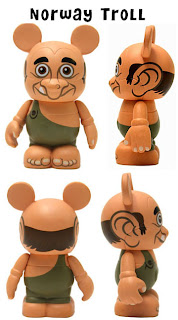
Norway Troll

Artist: Casey Jones

The large Troll in Norway’s Puffin’s Roost store located in the EPCOT World Showcase.

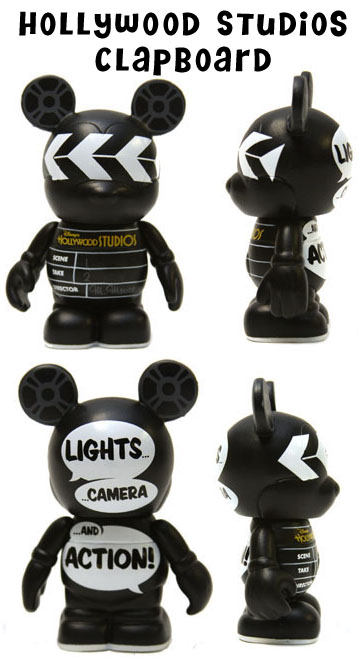
Hollywood Studios Clapboard

Artist: Caley Hicks

An icon representing Hollywood Studios Theme Park in Orlando, FL. The clapboard is the item used during filming of movies and TV shows that mark the beginning of a take.

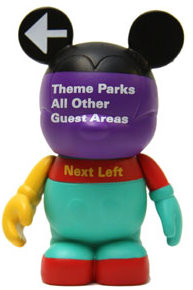
Walt Disney World Road Sign

Artist: Thomas Scott

Depicts the colorful signs that point the way to the Theme Parks and Resorts around WDW.

Walt Disney World Road Sign Variant

Artist: Thomas Scott

The WDW road sign pointing to the Animal Kingdom

Walt Disney World Road Sign Variant

Artist: Thomas Scott

The WDW road sign pointing to the Other Guest Areas.
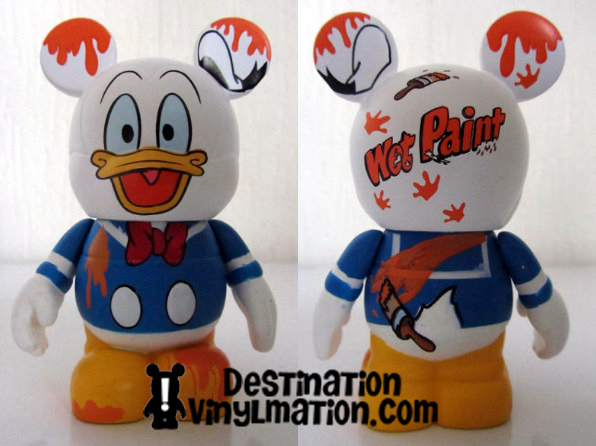
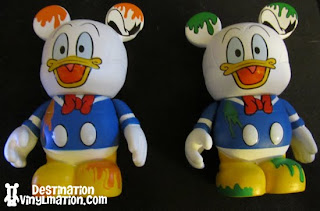
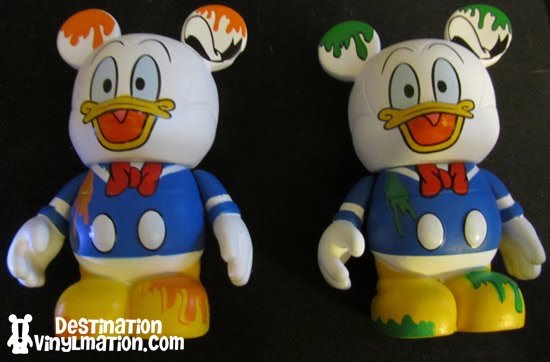
Wet Paint Donald

Artist: Mark Seppela

Donald from the old wet paint signs that used to be found around the Disney Parks. A trouble-making Stitch is found on the present day signs.

Donald Wet Paint Variant
Artist: Mark Seppela
A Variant with Orange paint instead of green.
Donald Wet Paint Variant

Artist: Mark Seppela

A Variant with purple paint instead of green.

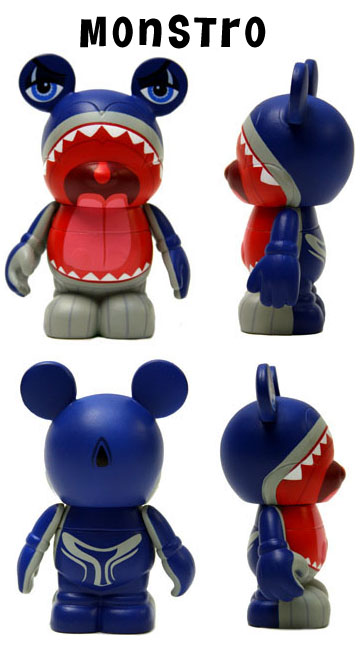
Monstro

Artist: Eric Caszatt

Monstro, from Pinocchio, swallows guests boats in the Storybook Land Canal at Disneyland.

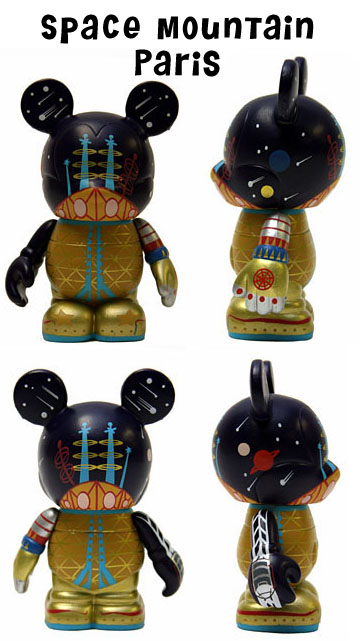
Space Mountain Paris

Artist: Lin Shih

The Disneyland Paris version of the popular Disney attraction.

Orange Monorail

Artist: Dan Howard

Similar to the other monorails, just orange.

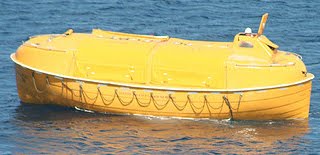
DCL Lifeboat

Artist: Randy Nobel

Chris (in the comments) said he spoke to an artist and that it represents the life rafts (boats) used by the Disney Cruise Lines. Based on the photos, I’d have to agree. Thanks Chris!

Sonny Eclipse

Artist: Maria Clapsis

Cosmic Rays Starlight Cafe
Magic Kingdom
Tomorrowland

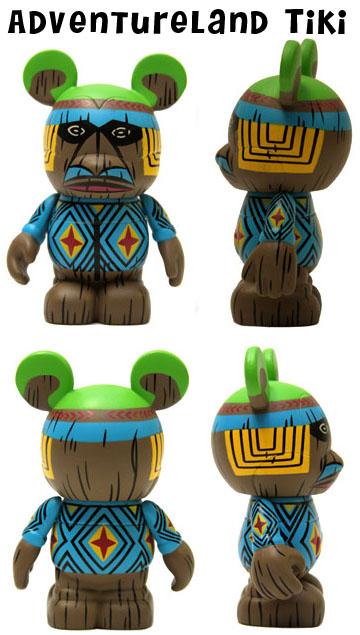
Adventureland Tiki

Artist: Casey Jones
Magic Kingdom

Primeval Whirl

Artist: Thomas Scott

Based on the Primevil Whirl Attraction from the Animal Kingdom

Mystery Chaser

Click on the Mystery Chaser to the left to reveal the chaser.

Runaway Brain Mickey

Park 6 Combo Topper
From the Runaway Brain Short

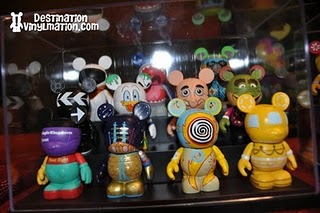
Park 6 set featured at WDW Trading Event
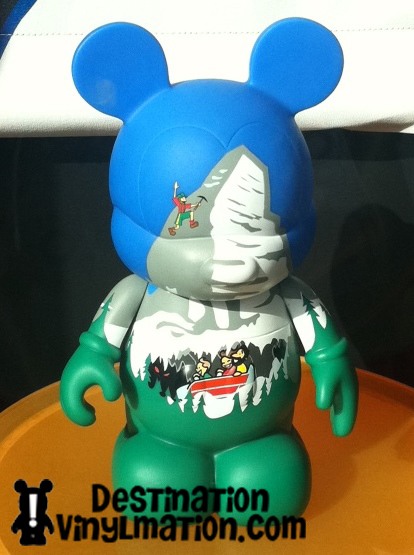
9″ Matterhorn on display at DLR
Photos courtesy of Disney, Ryan and Alex

Park 6 News and Chaser: de la Fance

Our friend Aranya sent in pics of the Park 6 series including the chaser (pictured below). She picked them up at Disneyland Paris. We have heard rumors that Park 6 has been pulled off the shelf at DLP until the US April 1 release date. Other news about Park 6 include the visual confirmation of a Wet Paint Donald variant (you can see that figure here) and the textual confirmation (no pic yet) of the WDW Road Sign variant with “Animal Kingdom” instead of “Magic Kingdom” on the sign. Also of note, is the 12.95 Euro price tag on the figures. All indications point to a $12.95 US price tag, as past releases have been the same “number” price, just either in Euros or USD. Meaning collectors in France, pay a bit more for their Vinylmation.

Click on the Mystery Chaser below for a picture of the Park 6 chaser.

Wedding Week: Wrap Up with New DV Reporter: Zoe


Hello everyone! My name is Zoe Dokas and I am from Orange County, CA. I am so excited to have been asked to become a part of the Destination Vinylmation family. I will be reporting all things Vinylmation from California. I can’t wait to start this and share my love of Vinylmation with all of you!

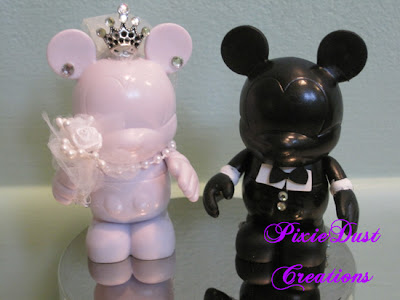
For my first post I would like to wrap up this week’s wedding features. We have seen several custom bride and groom Vinylmations, cake toppers, bridesmaid gifts as well as wedding guest books. These are all great ways to bring Vinylmation into your wedding day. These ideas are innovative and fun for any wedding.

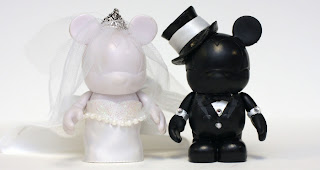
First we saw Maria Clapsis’ customs, which take on the classic bride and groom look. I love the way she designed these, they are simple and have the perfecting finishing touches. (I love the tiara and the top hat!)

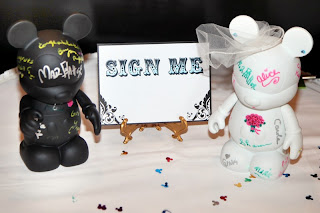
Next we saw Lisa and Trace Farry’s custom bride and groom guest book Vinylmation. I love this idea! It is such a cute and creative idea to use these 9 inch blank Vinylmation as guest books. They have an easy design, to leave enough room for many signatures from wedding guests. This is a great way to put a little Disney in your wedding and also have something to display and keep those memories. They are simple yet perfect! (P.S. I love the Mickey confetti scattered on the table!)

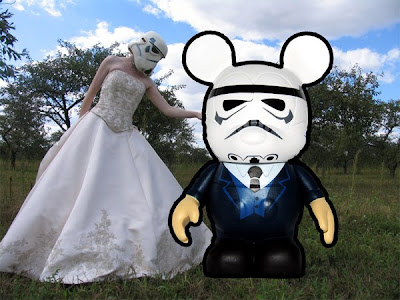
Then we saw the Storm Trooper of the week photo, which was themed according to our wedding week. This is such a clever and quirky idea. A great mix of Star Wars and weddings. These two were obviously meant for one another!!

Lastly, we saw a few more customs from Jenifer Marie including, a classic bride and groom set as well as a bridesmaid gift set. The bride and groom set are similar to Maria Clapsis’ set, which gives them a simple look, but again it’s all in the details. I love the accessories that were added to these figures. The small jeweled earrings on the bride and the jeweled buttons make these figures beautiful. Jenifer also created custom bridesmaid Vinylmation to give to each of her bridesmaids as a gift. I absolutely love this idea. They are adorable and make a perfect bridesmaid gift. I love the bouquet details, the bow on top and the little pearl necklaces. I also love that she was inspired by Park 5, Flowers and Fairies, it is one of my favorites.

This just makes me a little bit more excited for the actual Celebration Vinylmation series coming out later this year!

– Zoe Destination Vinylmation CA Reporter

Donald Spills All Colors of Paint in the Park 6 Variant


Our friend Aranya, over in France, got her hands on the Park 6 set when they released it last Friday (along with the TRON and Sushi set). In it she found this cool variant of the Wet Paint Donald. Makes a lot of sense right? Aranya says they cost 12.95 Euros. Could this be a direct comparison to the price here?

What do you think? Leave us a comment!

WDWNT: The Magazine – LAUNCHING SPACE MOUNTAIN

LAUNCHING SPACE MOUNTAIN

by David Smith

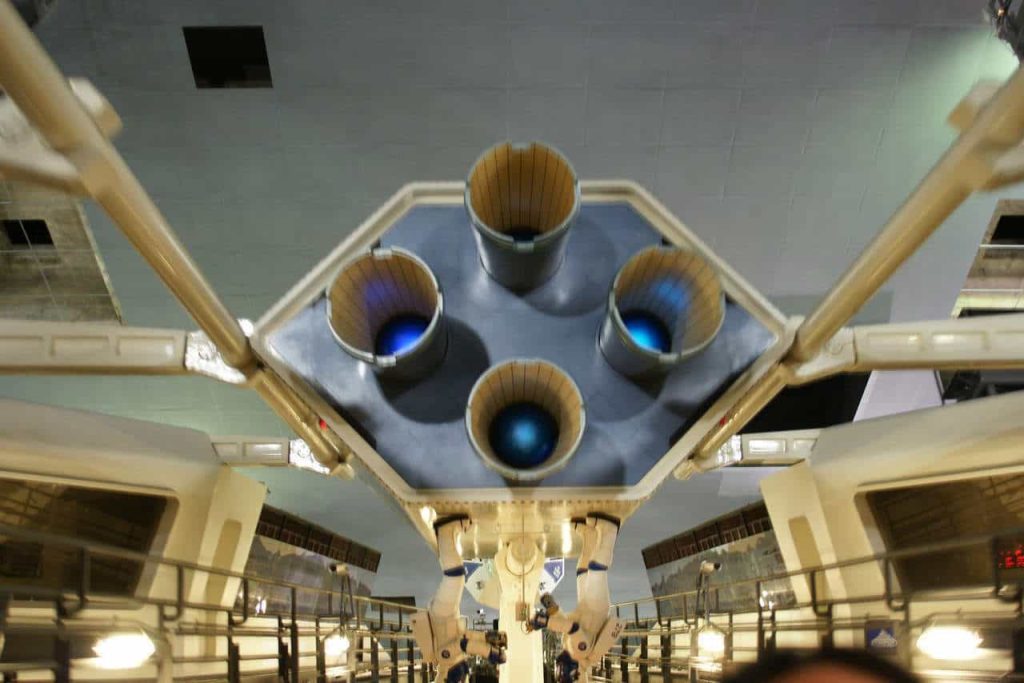
I remember the countdown on the lift hill.  That’s all.  That is not entirely true; I also remember the screams reverberating through the queue line.  I was seven at the time, and I was convinced that those screams represented the final moments of terrified people being flung off the track and into the dark void.  With every passing minute and scream, my fear continued to escalate in much the same manner that the lift hill would physically elevate the “space ships.”  Click, click, click… ever closer to a spiraling doom.  I don’t remember boarding, but I do remember hearing the countdown as the ship climbed the multi-thousand foot hill (at least it felt that way to my seven year-old self).
 DSC00173-X2

“30 seconds to lift-off…”

“15 seconds to lift-off…”

“10 seconds to lift-off”

And then blackness.  Nothing.

I remember very little of my first encounter with Space Mountain in Disneyland.  I had sworn off roller coasters at age 5, but through a strategic combination of insulting reassurance and compassionate accusations of timidity, my family had convinced me to try a roller coaster for the first time.  My friend’s graphic description of the Abominable Snowman on Matterhorn, and my own reticence about riding a runaway train on Big Thunder Mountain left me only one option- Space Mountain.  I mean, what could possibly be scary about space?  (I had not seen Alien yet in this point of my life.)  By the time I was at the crest of the hill ready to launch into the starfield, I was fully convinced I had made a mistake, and if I survived, I would definitely need to find a new family.

I don’t remember the twists and turns, the dips, the speed, or the details of that first ride, but I absolutely remember exiting the attraction and wanting to go again.  Not only had I survived, I was hooked.  I would ride Space Mountain (and roller coasters in general) many more times after that.  What was it about this attraction that played a vital part in turning me, and many others like me, into a Disney theme park junkie?  To answer that question, let’s look back on the history of the attraction leading up to its opening at Walt Disney World and the various iterations that followed.
 846a-XL

“Why can’t we have a ‘space mountain’ ride?”

Conceptualization

As with most things in the Disney theme parks, the genesis of Space Mountain has to be traced back to Disneyland and Walt Disney’s vision.  In 1959, Disneyland opened the Matterhorn Bobsleds attraction, decisively establishing that 1) the tubular steel track design was an evolutionary leap forward in coaster design, and 2) thrill attractions could absolutely have a place in Disney theme park storytelling.  With the major Disneyland expansion completed, Walt Disney then turned his attention to renovating Tomorrowland with a planned completion in 1967.

Walt and his Imagineers had been working on creating a cohesive “Space Port” theme for Tomorrowland.  During one design review session, Walt is said to have asked, “Why can’t we have a ‘space mountain’ ride?”  With this single question, the 11-year journey from conception to reality began.  As he often did with things requiring a futuristic motif, Walt Disney asked John Hench in 1964 to begin work on designing a space mountain with the working title, “Space Voyage.”

For engineering the track layout, the Imagineers once again turned to Arrow Development, who had created the ride system for the Matterhorn Bobsleds.  As originally conceived, the attraction would consist of four separate tracks populated by single-car ride vehicles.  As with Matterhorn, the layout would make use of “energy wheels,” which enabled the innovative block zone operations.  Since the attraction was originally going to be installed in Disneyland’s Tomorrowland with southern California’s more predictable weather, the initial track layout included both indoor and outdoor elements that would instantaneously transition riders from blinding sunlight to complete darkness.

As the design team struggled to fit the four-track design into the available space, it soon became apparent that the design was just too large to fit into the available land in Disneyland.  Therefore, the team made the decision to go with two tracks and two-car trains, thus reducing the required space while maintaining capacity.

The design and engineering process continued at a steady pace, until that day in December 1966 that changed everything in the Disney Company.  With Walt’s death, focus shifted away from expanding Disneyland to the Florida project.  The Space Mountain project was put on hold, and many of the team members began working on the Thunder Mesa project.  It would be five years before the Space Mountain project was resurrected.

During the hiatus, the Imagineers encountered many of the same engineering challenges that they had faced, and would face again, on Space Mountain.  Even though the Thunder Mesa project itself would be put on hold, the experience and lessons learned on Thunder Mesa would have a direct impact on the Space Mountain design.

For instance, after visiting Arrow Development in 1968, WED engineer Bill Watkins concluded that Arrow’s “energy wheels” would be prohibitively costly to operate and maintain, and would likely increase the number of attraction shutdowns.  Thus, when development of Space Mountain resumed, it was quickly decided to make it a pure-gravity coaster.

Even prior to the Magic Kingdom’s opening in 1971, park executives recognized that in order to attract the teen and young adult demographic, more thrill rides were required.  There was some talk of replicating Matterhorn in Florida, but the lack of space in the Magic Kingdom’s Fantasyland quickly ended that idea.  Looking at previous ideas, “Space Voyage” quickly came to the forefront, and in early 1971, the project was restarted.

One of the first decisions was to change the attraction from an indoor / outdoor experience to a purely indoor one.  The primary factor behind this was central Florida’s less than predictable weather.  It was also at this point that the track layout was finalized.

Bill Watkins played a key role in engineering the track layout and is one of people most responsible for how Space Mountain feels.  At the time, computers were still too slow to handle the calculations required.  The WED computers that were capable of calculating the track curves would require an entire night to process the necessary data for a single curve.  Therefore, the curve calculations were all done by hand.

Bill used his experience as a pilot to provide a reference for how the curves of Space Mountain were meant to be felt.  During a coordinated (normal) turn, the speed and the bank of the aircraft determine the radius of the curve.  In addition, banking into a turn in an aircraft is usually a smooth transition and the pilot applies pressure to the controls.  Using these concepts as a guide, Bill designed the turns to have a smooth transition into and out of banks while also setting the curve radius to approximate the feel of an aircraft making a coordinated turn.

With the track layout finalized, it was time to start construction.  However, there was one final decision to make.  From the start, the very early sketches of Space Mountain showed the building having a cone shape.  During the design though, there was a sizable contingent of people that wanted the attraction to be covered with a dome shaped building.  A dome would be significantly easier, and cheaper, to build.  After much debate within the company, the decision was handed down that Space Mountain would have a cone shape.  Aesthetic value had won out over economic concerns.

Construction of Walt Disney World’s Space Mountain began in 1972, and the attraction was announced to the public in a joint statement with the attraction’s sponsor, RCA.

“Clearing the Tower”

Opening

On January 15th, 1975, Space Mountain was officially dedicated as a Magic Kingdom attraction.  Guests at the opening were entertained by a 2,000 piece marching band and the release of over 50,000 balloons along with fireworks.  During the ceremony, the Chairman of RCA, Robert Sarnoff, and the Chairman of Walt Disney Productions, Donn Tatum, unveiled a bronze dedication plaque engraved with the words: After nearly twelve years of designs and redesigns, starts and stops, technical obstacles and breakthroughs, cones and domes, Space Mountain was now open to the public and on its way into the stratosphere of American popular culture.



Delving into the D.O.R.K. Project Florida: A Whole New Disney World

This is a reprint from the first print issue of WDWNT: The Magazine

Delving into the D.O.R.K.
Project Florida: A Whole New Disney World

Discovering the world of Disney books, documents, and ephemera

By Jackie Steele

Book_Cover

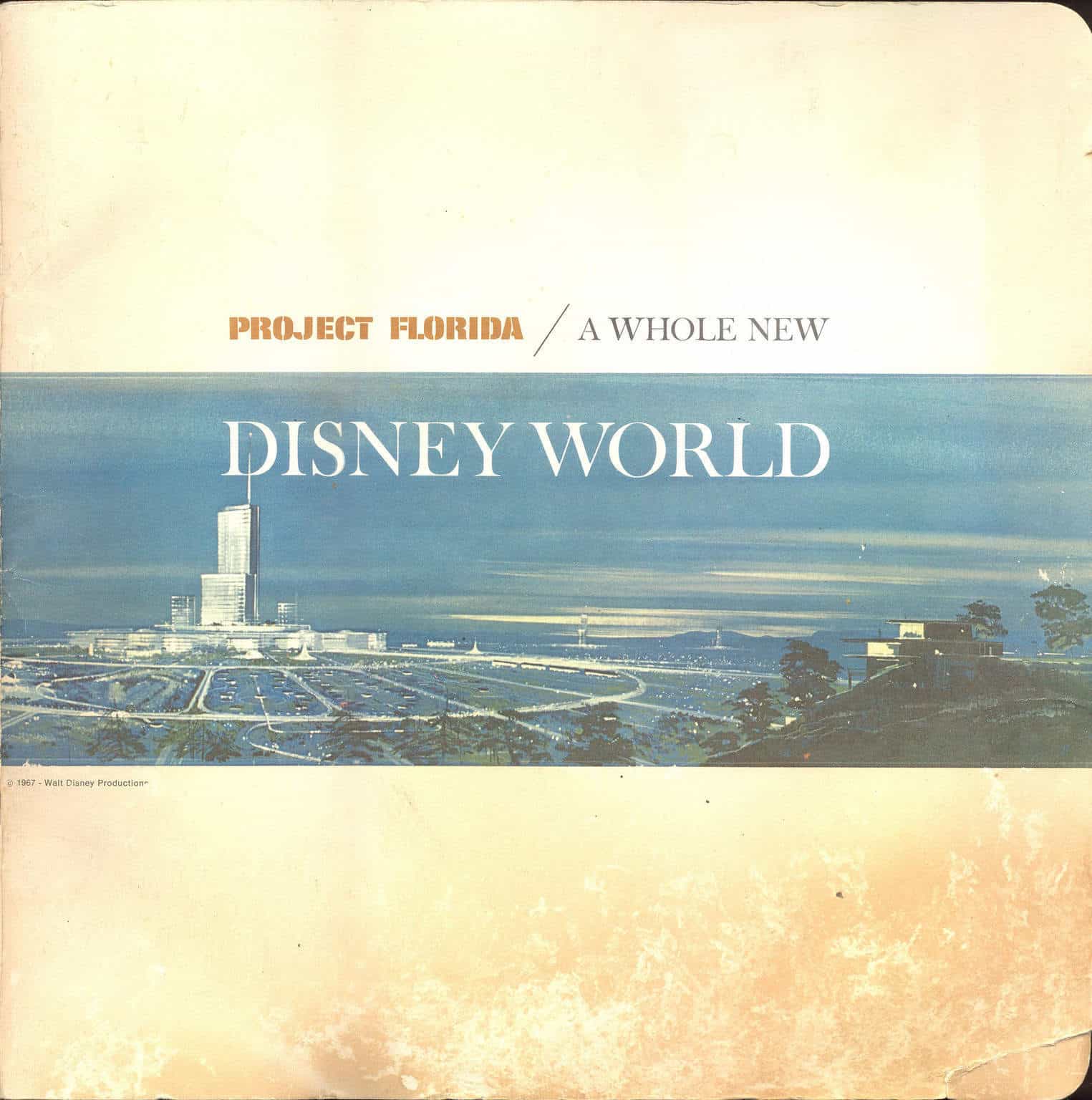
Most Disney fans are very familiar with Walt Disney’s “EPCOT Film,” in which he outlines plans for the Experimental Prototype Community of Tomorrow that he was hoping to build in central Florida. The movie, which was filmed on Walt’s last day in front of the camera before his death, premiered to an invitation-only audience at the Wometco Park Theaters in Winter Park, Florida in February of 1967. The first audience was primarily dignitaries and politicians, but it would later be shown to industries, lawmakers, and the general public over the coming months as Walt Disney Productions pushed for the various elements needed to make Project Florida a success. It’s a safe bet to say that most Disney fans have seen the film and probably can recite a few of the more-memorable lines from the script. What many Disney fans may not realize, however, is that along with the EPCOT Film there was also an EPCOT book:

Project Florida: A Whole New Disney World, released in 1967. It essentially serves as a “companion guide” to the film, touching on many of the same concepts that Walt discussed on camera. It’s a thin book, only about 20 pages long, but is relatively large in stature, measuring about 11 inches x 11 inches. It’s probably even a bit of a cheat to call it a “book,” as “booklet” probably best describes it. But this isn’t a cheap pamphlet; each page is printed in full color on sturdy cardstock.

The book begins with a half-page flap featuring the words of Walt Disney:
“With the technical know-how of American Industry and the creative imagination of the Disney Organization, I’m confident we can build a living showcase that more people will talk about and come to look at than any other area in the world.”

Lifting this flap reveals a photo of Roy O. Disney on the overleaf, alongside an introductory letter which had been obscured by Walt’s quote. This serves, incidentally, as a poignant reminder that Roy was the “flip side” of his brother’s creative genius, always working quietly in the background to help make Walt’s dreams into reality. And now that the era of Walt had passed, Roy would be the one to take the forefront. Roy’s letter promises a proposed development that will, “make a present reality of a community of the future – a community which will be as unique in the year 2,000 as it is
today.”

The language used in this book is definitely intended to be as persuasive as it is informative. Many times, we read the words “proposed” and “proposal;” nothing is accepted as a given, and the plans are never presumed to be concrete. Much like the EPCOT Film, it is presumed that everything may change time and time again. And we often see mentions what the Disney organization will need from Florida officials and industries in order for the plans to come to fruition.

Much like the EPCOT film, one of the first things we see in Project Florida is a discussion of Disneyland. The book recaps the early achievements of
the park in California. More importantly to this book’s intended audience, it also recaps the economic impact that Disneyland had on Anaheim. The book includes a quote (also highlighted in the EPCOT Film) from James W. Rouse, who told an audience at a 1963 urban design conference that, “the greatest piece of urban design in the United States today is Disneyland.” This and other supporting evidence was doubtless included to help persuade lawmakers and Florida citizens that Disney knew what it was doing and was more than capable of planning a city.

Resort_Overview_Map

It’s not until eight pages into this 20-page book that we get our first glimpse of what is being planned for Project Florida. Again, the focus is on what the development can do for central Florida’s tourism and economic interests:

“Disney World begins with the same economic stimulant that is the foundation of the booming Disneyland-California area: a major, new
Disney family entertainment center, With this attraction as the proven, popular tourist magnet, Disney World will include recreational, industrial
and transportation complexes to serve both the permanent residents and the 20 million Florida tourists expected annually by the 1970’s.”

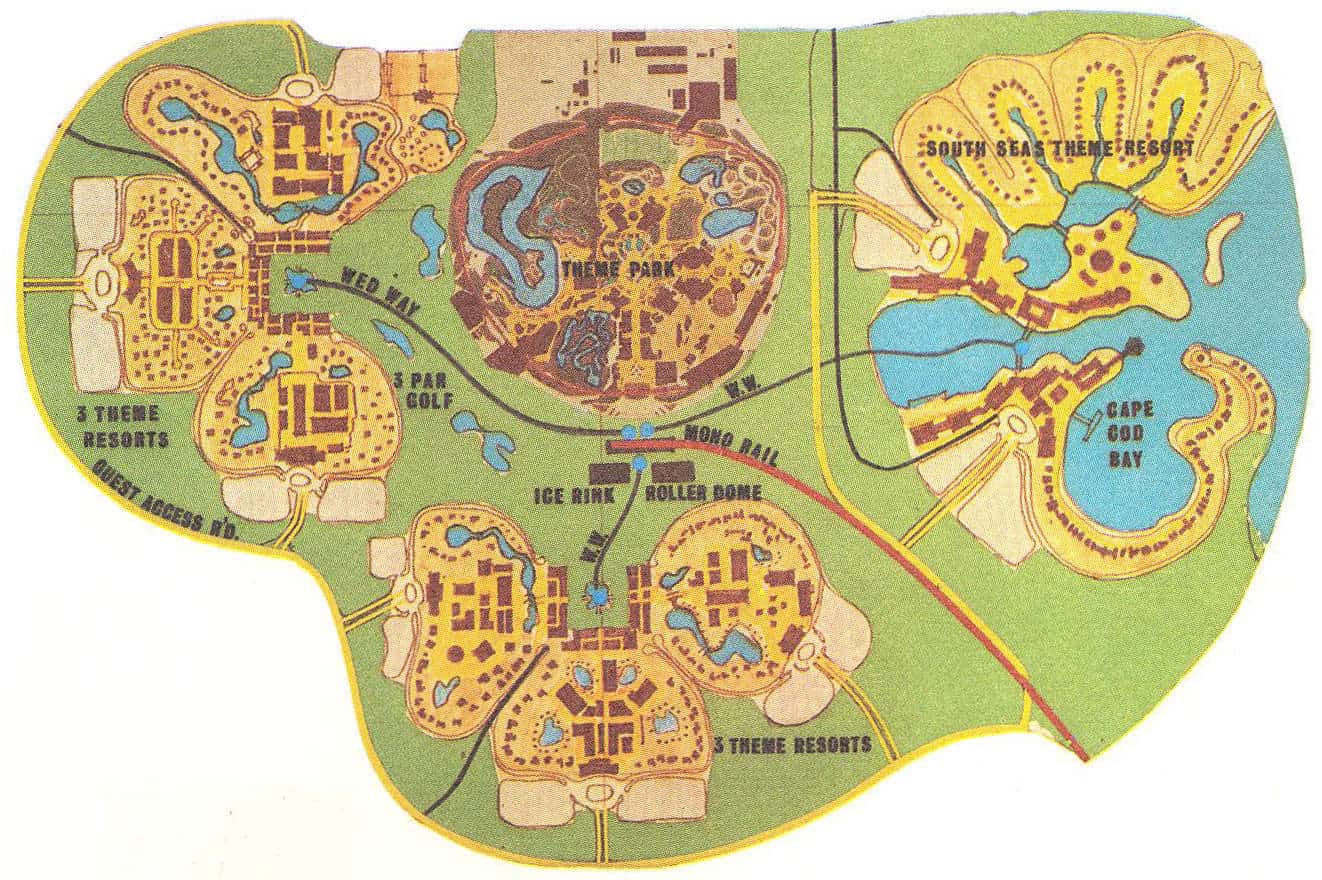
The next two pages focus on a series of overhead maps of the amusement park, seven themed resorts, and recreation facilities. It’s interesting to note
that with the exception of a proposed “South Sea Island” hotel and an “early American themed resort,” the themed resorts would be clustered in groups of three in land-locked areas near the front and left of the park. Early plans did not include the Disney-created Seven Seas Lagoon, and the hotels would have been close enough to be served by the WEDWay Peoplemover network rather than by monorail.

Side_Diagram


By page 11, we start to see the focus turn toward plans for phase II, the full EPCOT development. Much like what we see in the EPCOT Film, we get a
look at the early plans for the entire EPCOT complex, including numerous diagrams of the radial city plan, the industrial areas, and a side-elevation
diagram of the city center, including an 800-room hotel and multi-level transportation center.

The text echoes the dialogue of the EPCOT Film, with assurances that the pedestrian “will be king” at EPCOT, with ease of transportation whilst
keeping vehicular traffic separate from living areas. Even more altruistically, the book states that EPCOT aspires to be the first “accident free, noise free, pollution free city center in America.”

The next few pages outline the various living and recreational areas in EPCOT, much as we see in the film. There are several pieces of concept art
included to help the reader visualize what must have seemed absolutely impossible in the late 1960s.

The book concludes with another push toward lawmakers, industries, and the general public, highlighting the expected economic impact of the
development and citing evidence that the Disney organization is not only competent to handle the project, but also has a history of being a “good host.” If there’s any doubt that the book was designed to influence opinion as much as it was designed to be informative, those doubts are erased with its final words, a plea from Walt Disney himself.


Jackie Steele is a bit of an anomaly in the Disney fan universe, in that his love of the parks came later in life. With the exception of a half-day visit to the Magic Kingdom in high school, he didn’t set foot in a Disney theme park until 2003. But the love was instant and soon evolved into a quest to know more about where the Disney parks came from and what made them work. He has amassed a collection of more than 450 (and growing) Disney and World’s Fair books, documents, and ephemera, which he lovingly refers to as the D.O.R.K. (Disney Origins Research Knowledgebase). You
can browse through the titles in his collection online at http://brkgne.ws/dork

Town Square Theater’s Magical Transformation – Inside and Out

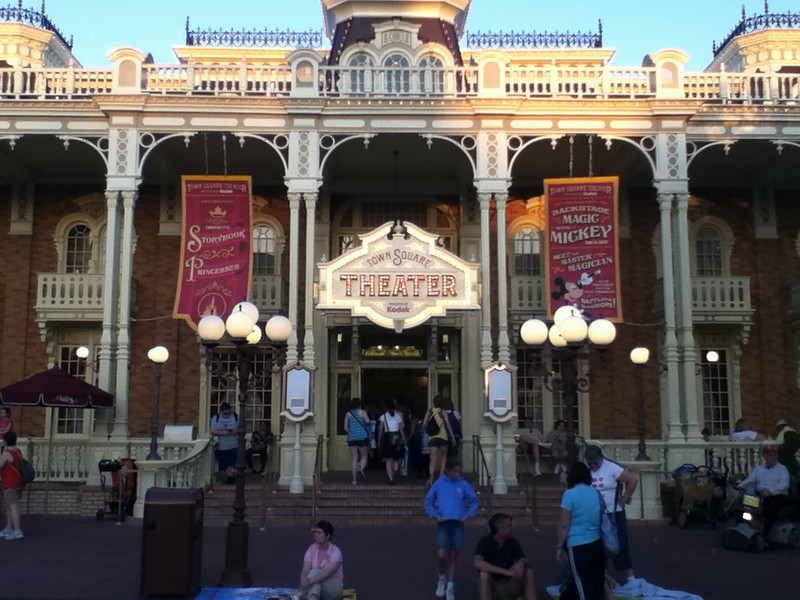
WDWNT Reporter Banks Lee visited The Magic Kingdom yesterday and took some great pictures of some newly revealed details at Town Square Theater on Main Street U.S.A.:

Photo & Video Sharing by SmugMug

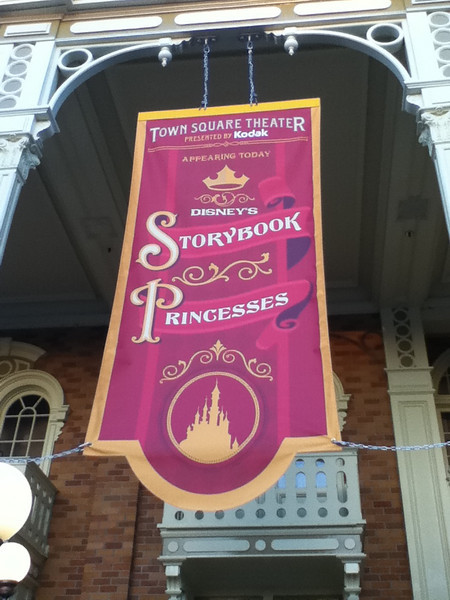
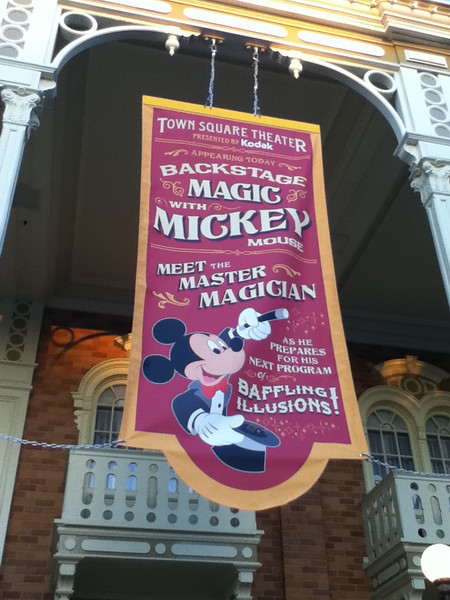
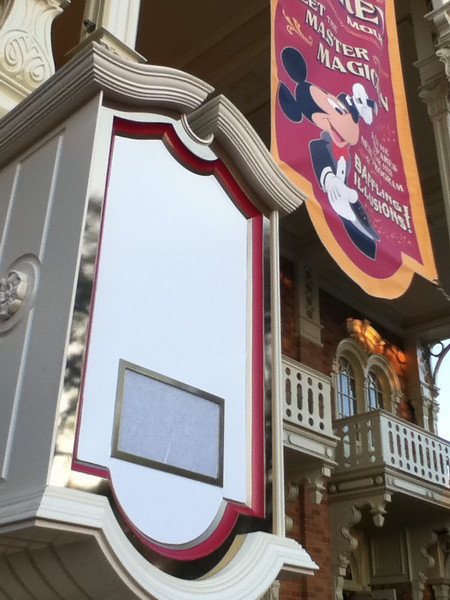
Banners for the Princesses and Magician Mickey are now up outside

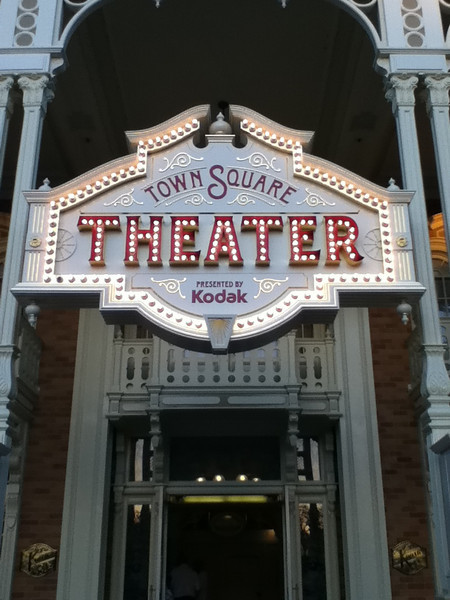
The sign that was installed a few weeks ago

The Princesses will be living here until at least late 2012

This will be Mickey’s permanent home

Wait time signs await activation

Inside, work is wrapping up

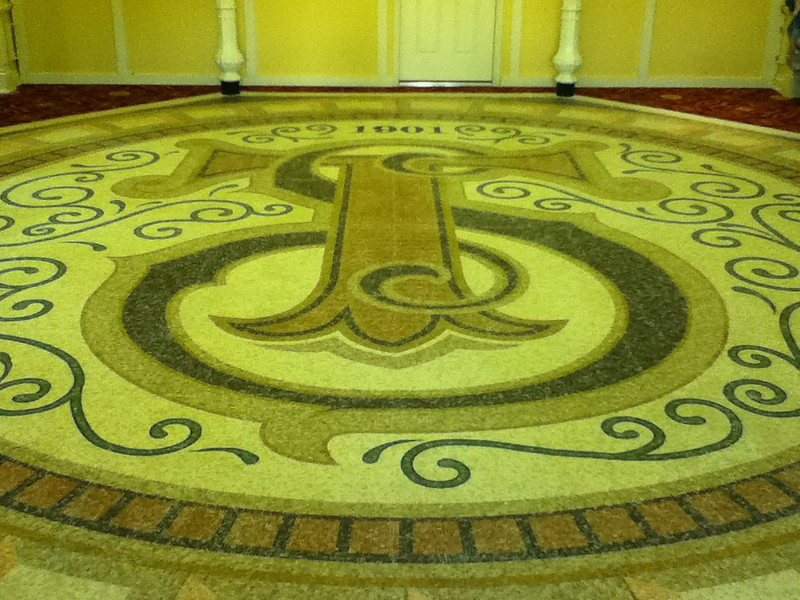
A beautiful tile mural wrapping the new area into the Main Street story has been revealed

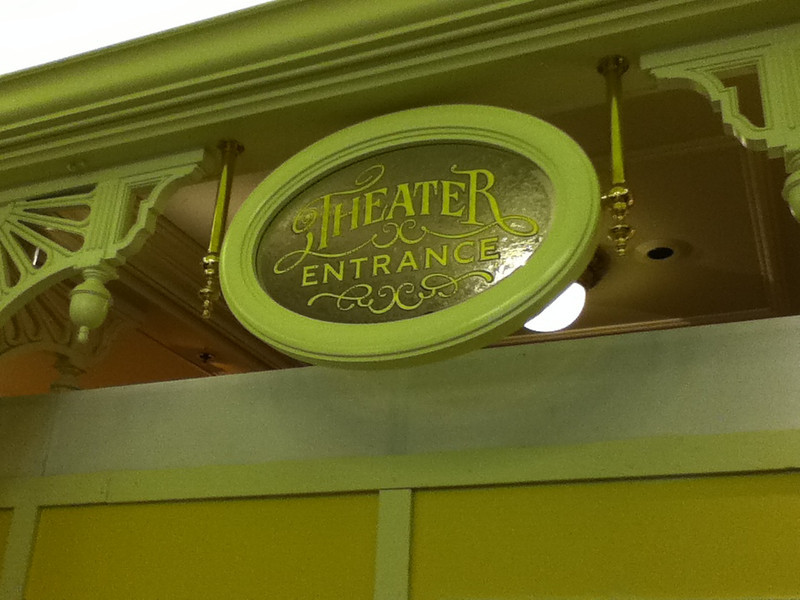
Signage directs guests to the three separate venues. The theater entrance is the gateway to the meet and greet experiences

Tony’s Town Square restaurant has reconfigured their waiting area so a line does not flow into the center of the new lobby that will now be pretty busy

This area is Box Office Gifts. There is a sign outside for a “Curtain Call Collectibles”, which we assume is another shop at the exit of the meet and greets

The Town Square Theater is officially opening on April 1st, so stay tuned to WDW News Today as we keep you up-to-date on this exciting project!