Tim Alcoser’s Monstrous Summer All-Nighter Photo Report (20130524 – 20130525)

Disneyland News Today reporter Tim Alcoser attended the entire 24-hour Monstrous Summer event at the Disneyland Resort. For those who want to recap or who could not attend the event, there are plenty of pictures here for your enjoyment.


For the event, early guests were parked in the Bambi section of the Toy Story Parking lot, which is traditionally reserved for Cast Member parking only.


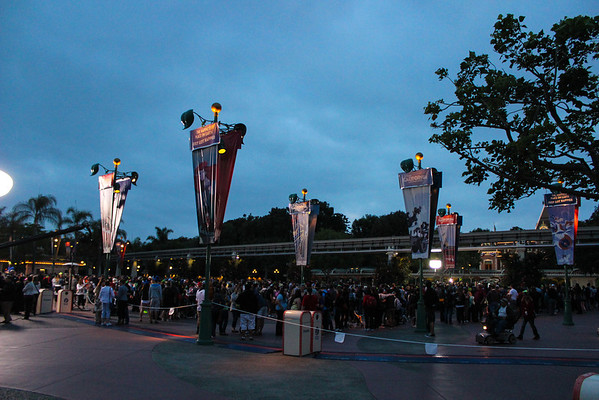
Crowds await the 6:00 AM entrance into Disney California Adventure. Time is 5:30 AM.


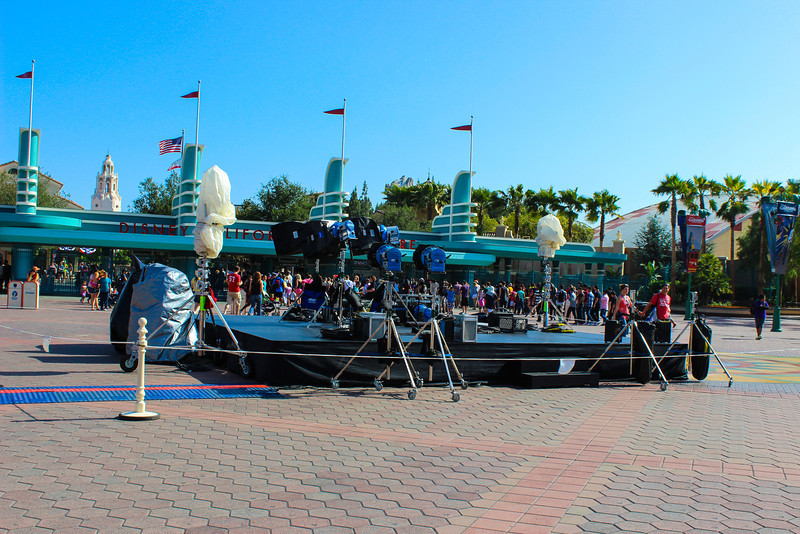
Camera crews await the 6:00 AM start of Disney’s Monstrous Summer.


Guests eagerly await the 6:00 AM opening of Disneyland.


Watch the Countdown to the Start of the Monstrous Summer All-Nighter at Disneyland.


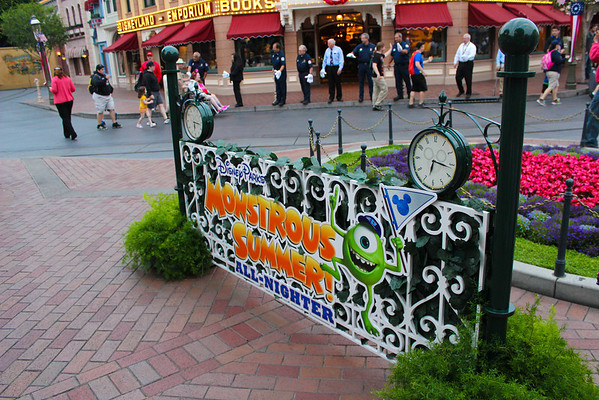
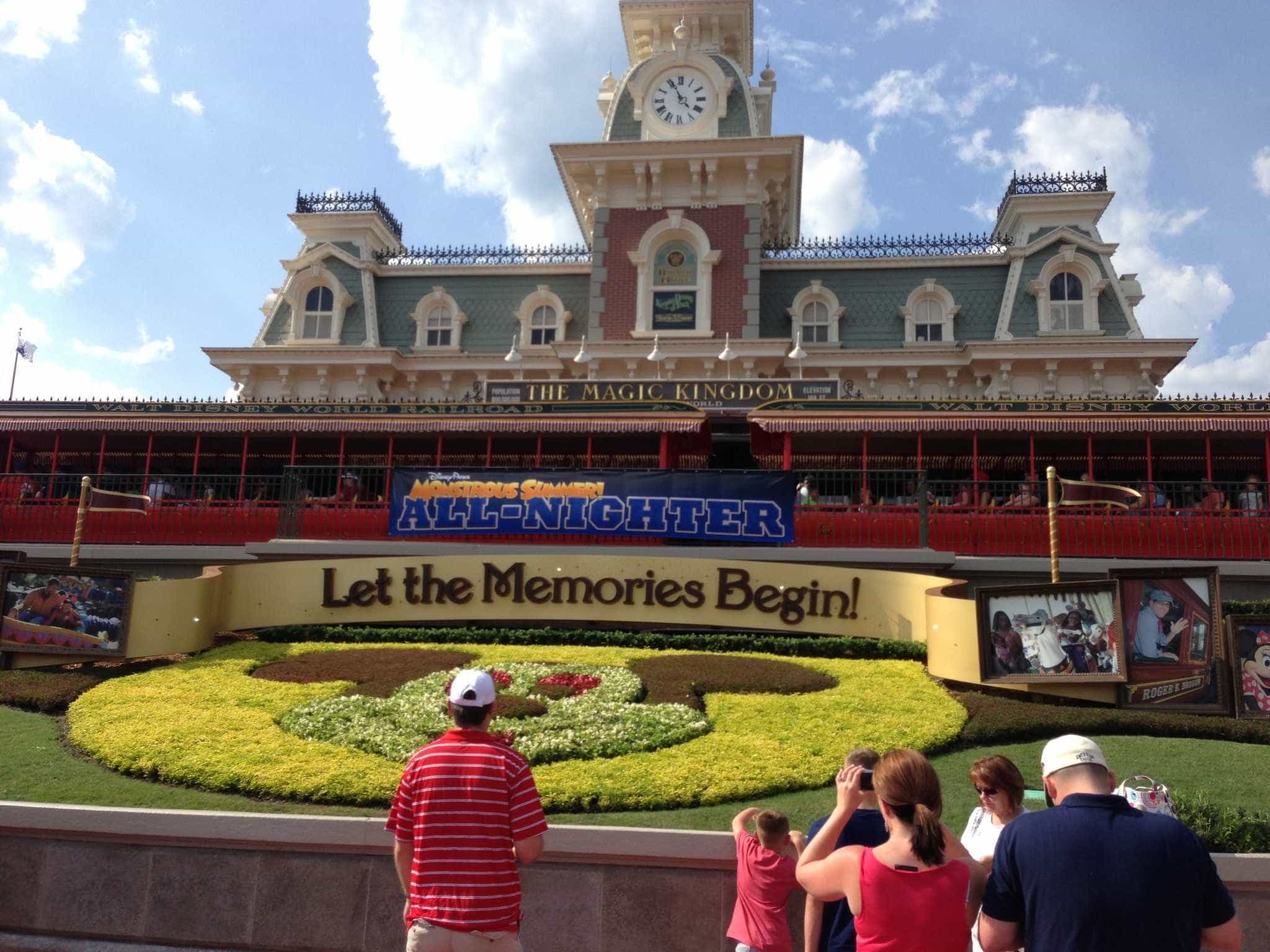
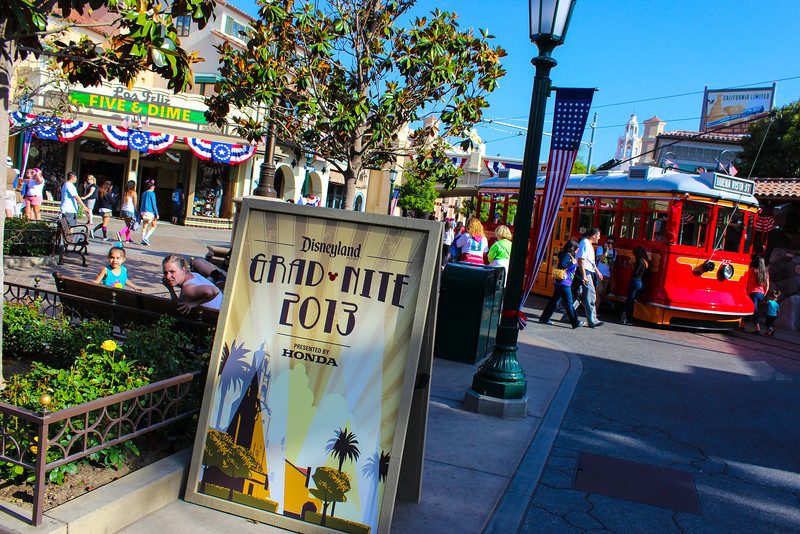
A Monstrous Summer All-Nighter sign at the entrance to Main Street USA in Town Square.


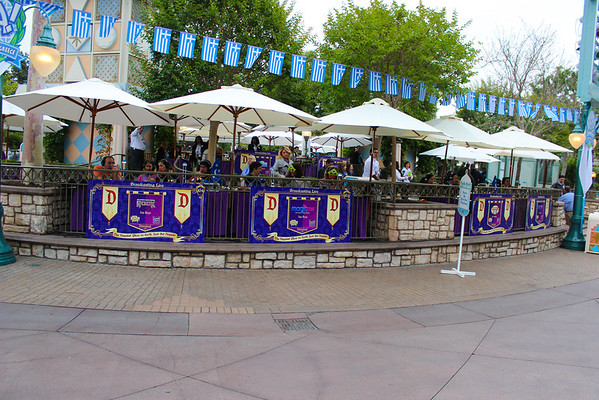
Radio stations recorded live and were set up near It’s a Small World.


The first ride Tim went on was…


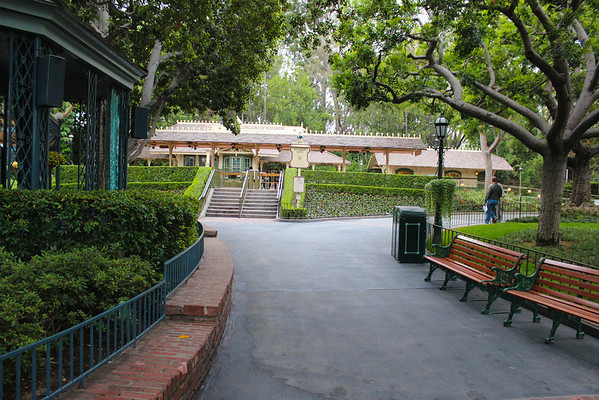
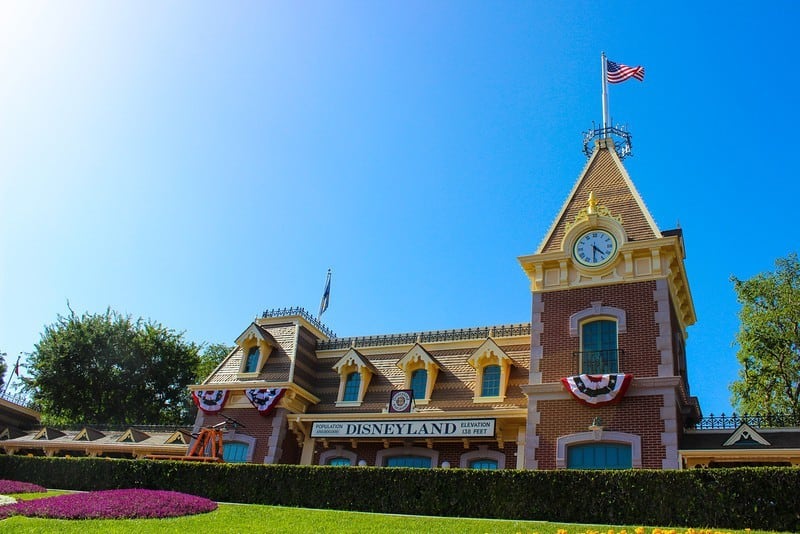
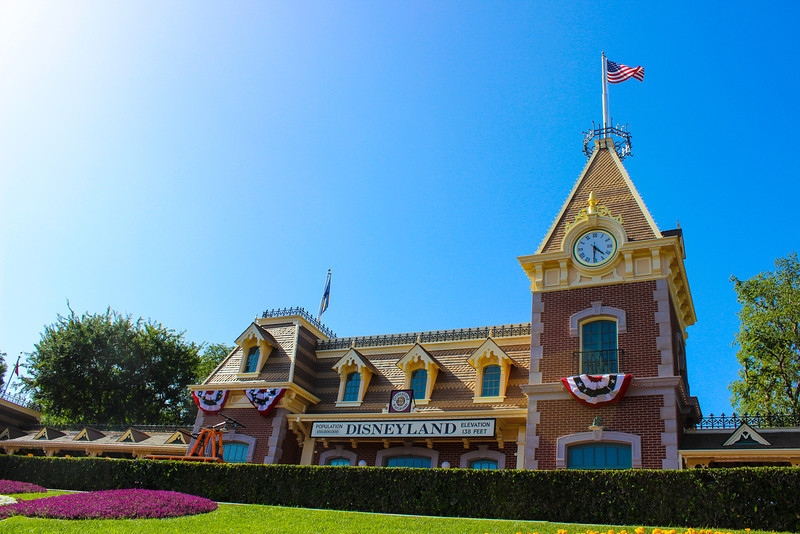
Refurbishment work was finally wrapped up at the New Orleans Square Train Station just in time for the event.


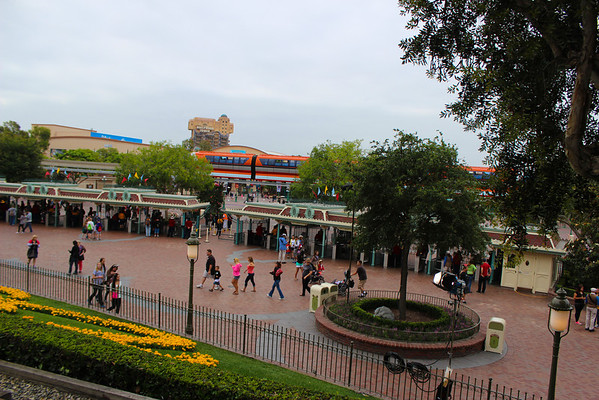
A look at the crowds streaming into Disneyland at approximately 7:00 AM. Very light.


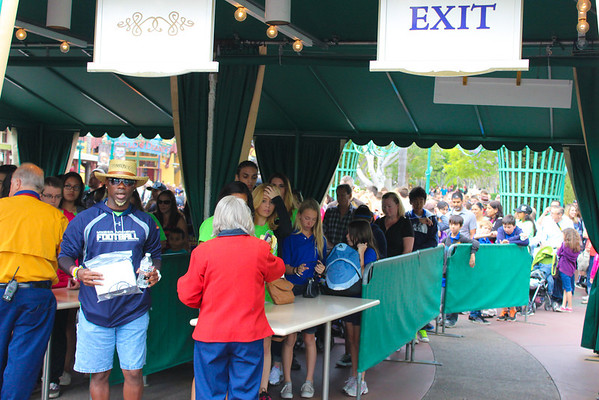
However, most of the security checkpoints were bogged down for several hours after opening.


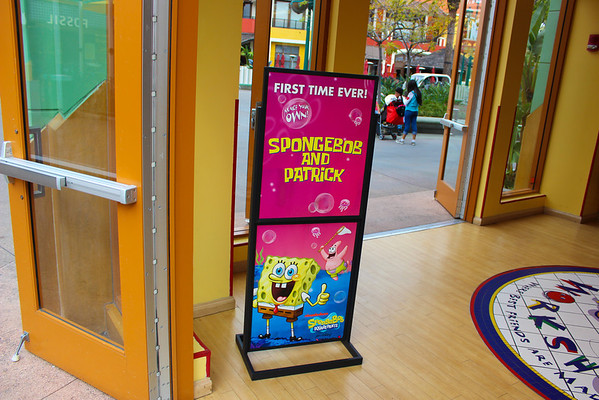
Nickelodeon cutting into Disney’s turf at Build-a-Bear Workshop?


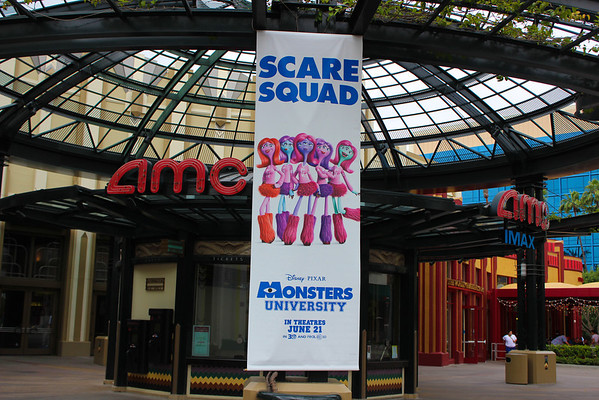
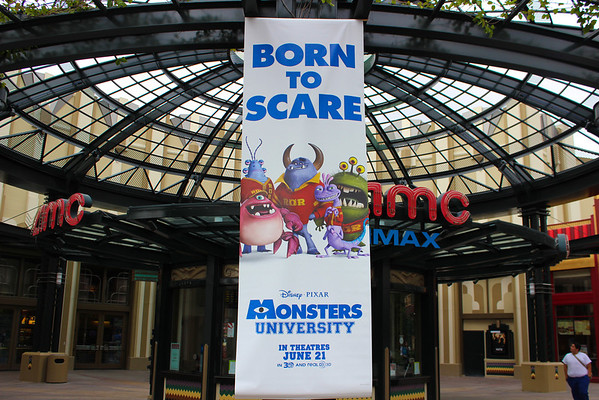
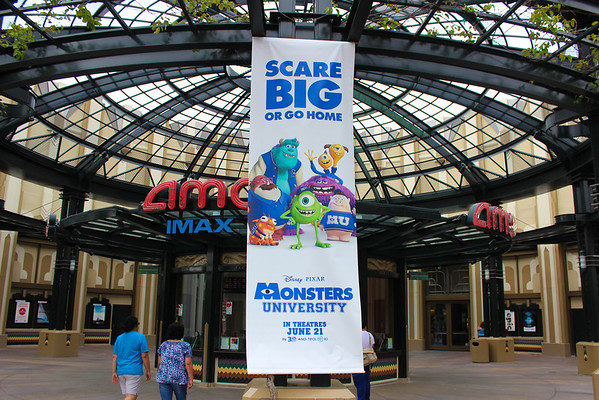
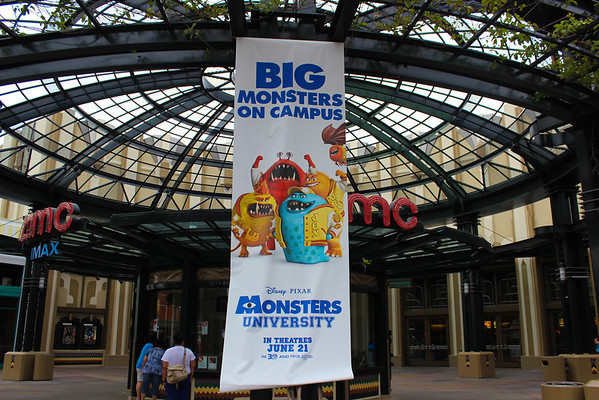
New Monsters University posters at AMC Theaters in Downtown Disney


One of these monsters seems all too familiar…


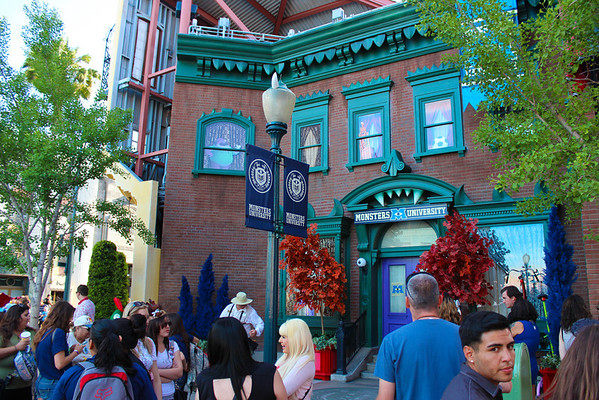
The Oozma Kappa (OK) Frat.


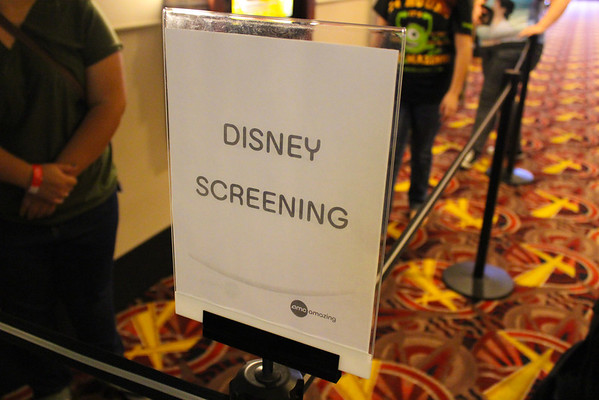
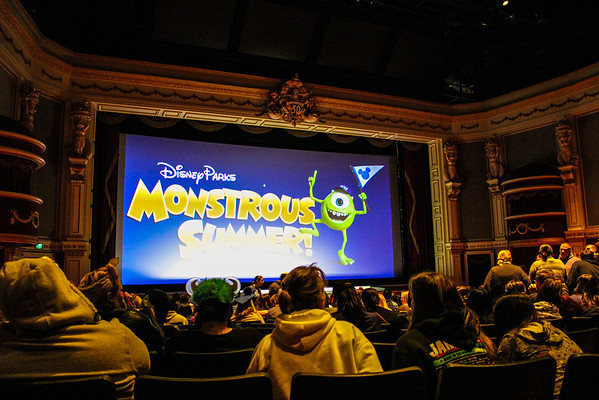
DLNT Reporter Tim was very fortunate to secure a special screening pass to Monsters University at AMC Theaters in Downtown Disney. 199 other lucky Annual Passholders were granted access to see Monsters University nearly a full month before Release. More details on how this was done on the podcast later.


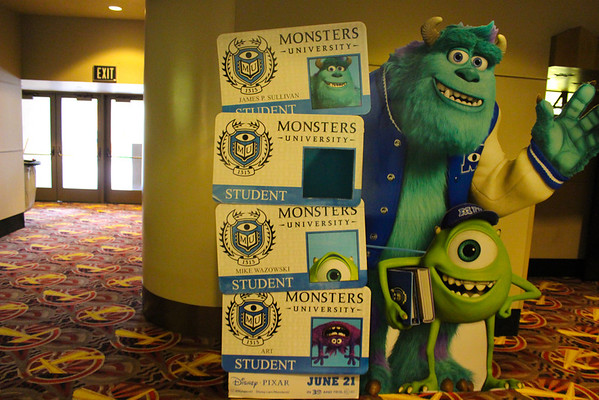
The quickest way to obtain a Monsters University Identification Card.


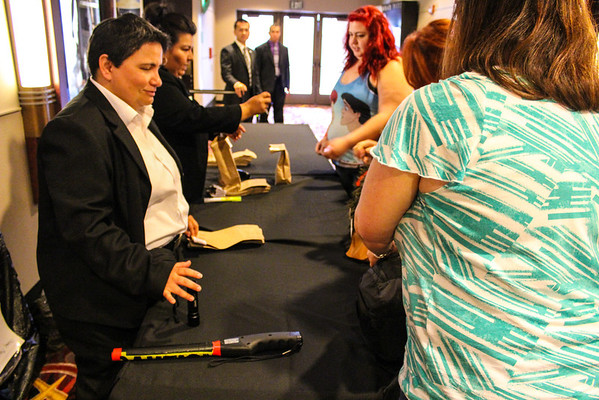
Before being granted access to the theater, all cell phones, cameras, camcorders and other equipment had to be checked in. Additionally, “Secret Service” style security guards used Metal detector wands on each guest to ensure all equipment was turned over. As an added caution, two guards were placed at each exit of the theater to constantly watch all guests in attendance.


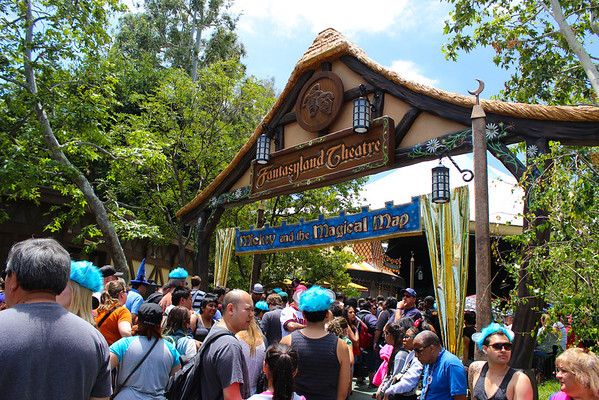
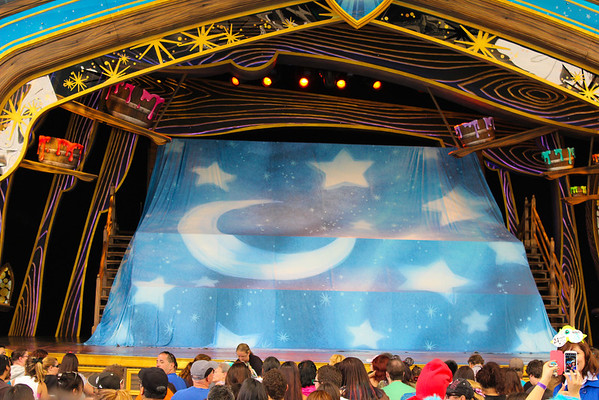
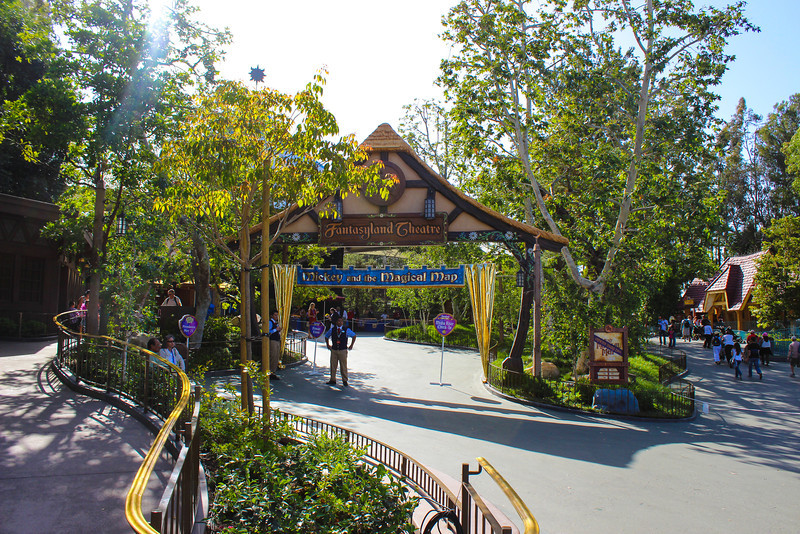
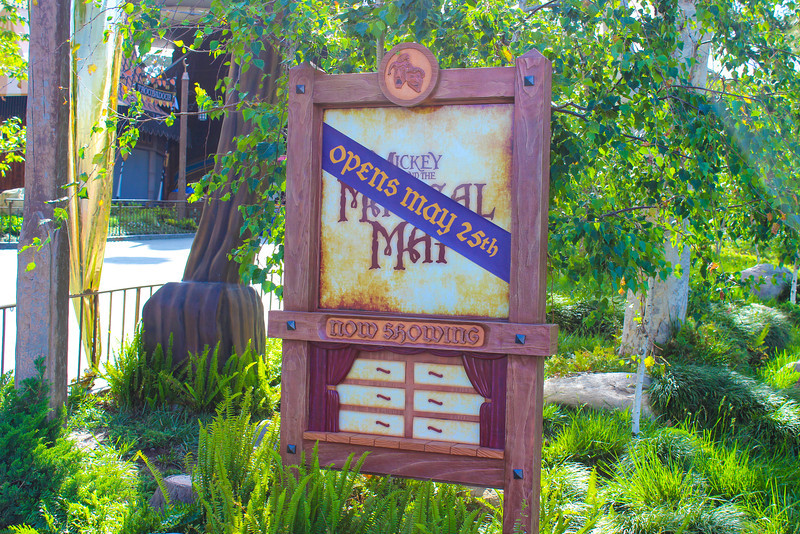
Fantasyland Theater is now showing Mickey and the Magical Map several times daily at the Disneyland Resort.


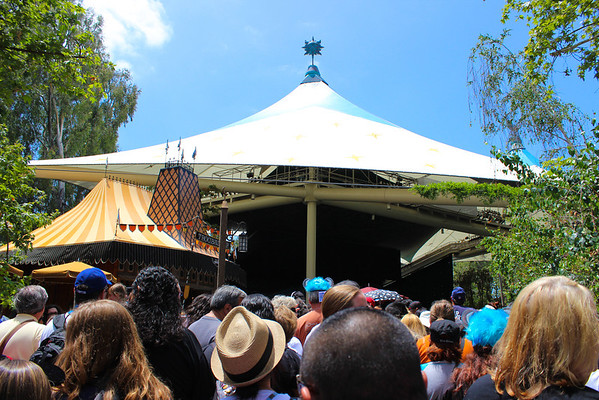
Annual Passholders await entrance into Fantasyland Theater to see the first public showing of Mickey and the Magical Map.


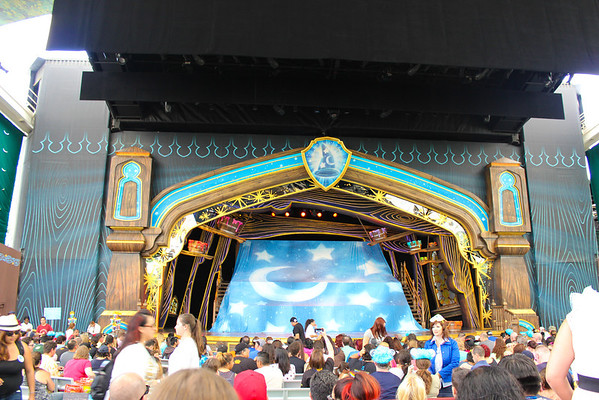
The stage to Mickey and the Magical Map. Look for the complete show video on the website very soon.


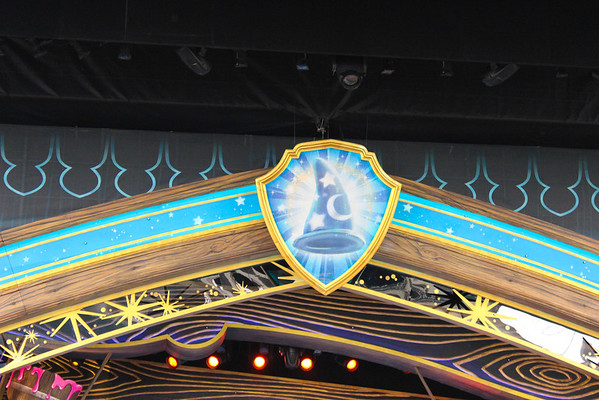
The Sorcerer’s Hat.


A closer look at the stage.


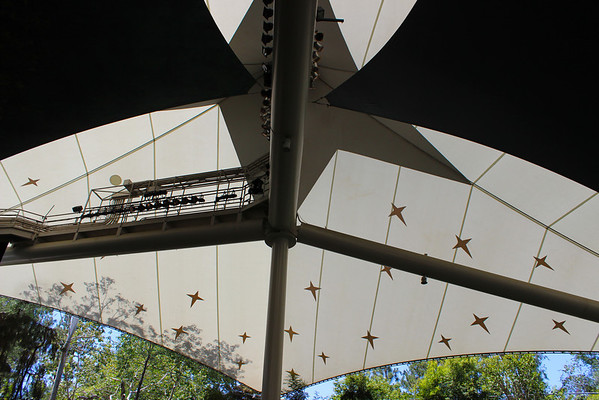
A closer look at the new Fantasyland Theater.


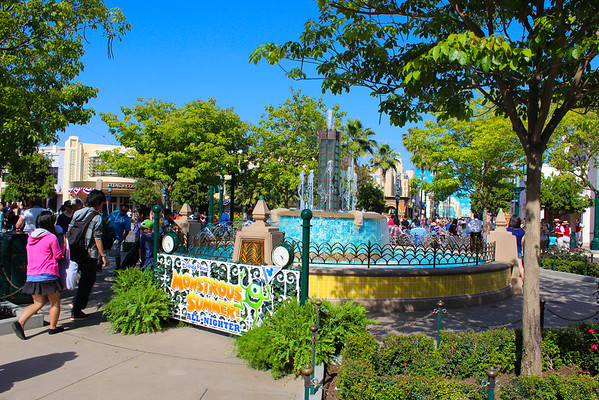
Over to DCA now, a similar Monstrous Summer All-Nighter sign has been placed near Carthay Circle.


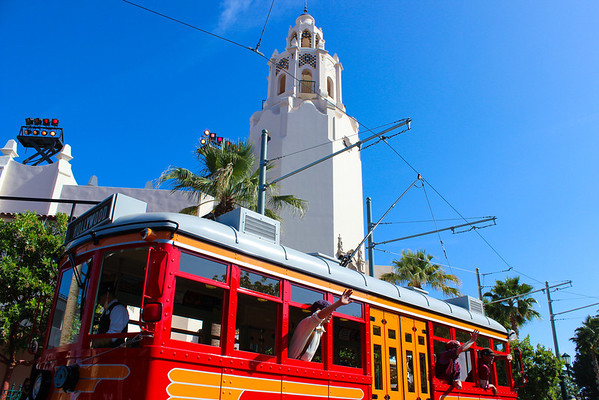
Red Car News Boys still going strong nearly one year later.


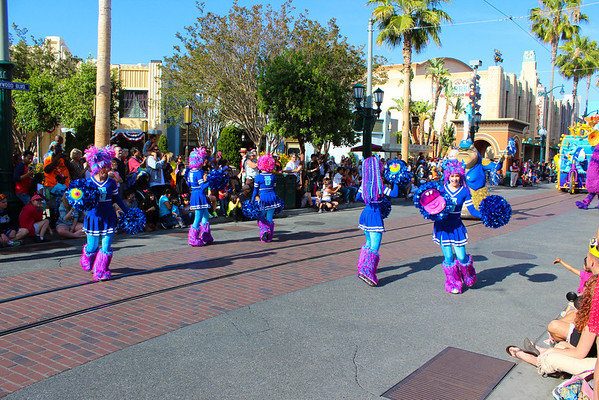
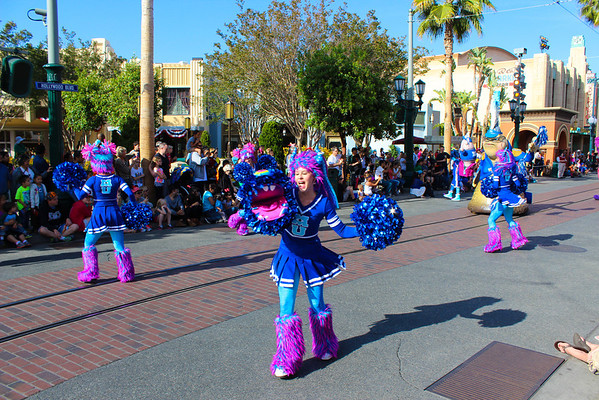
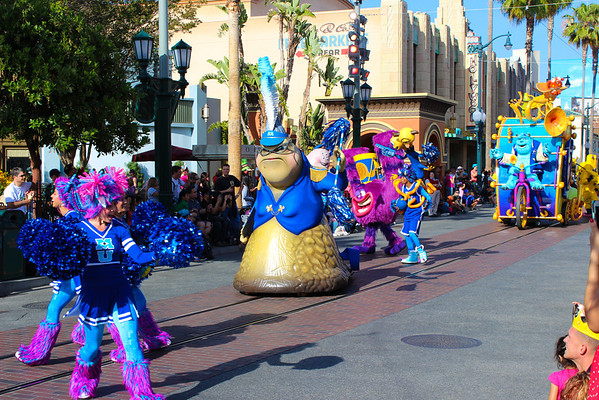
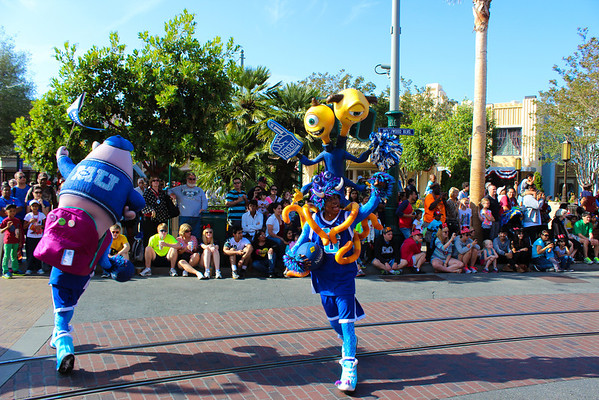
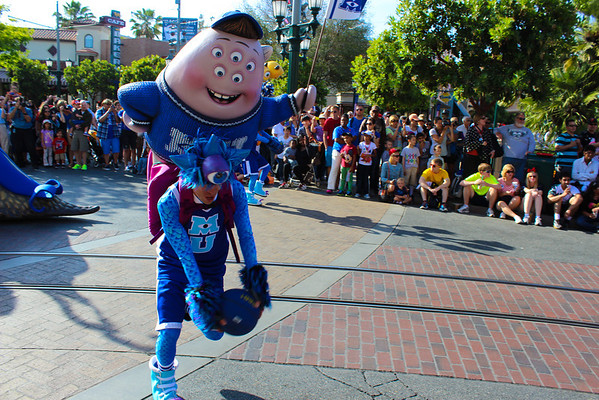
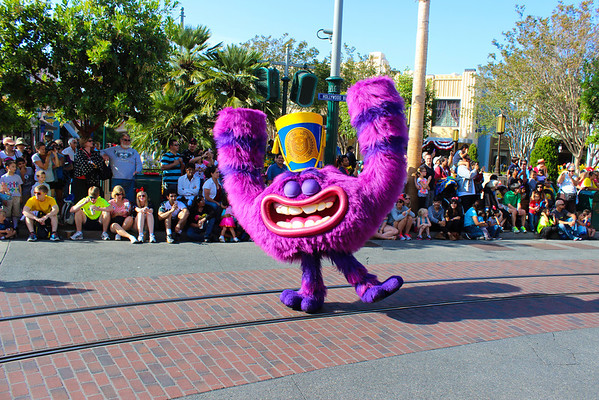
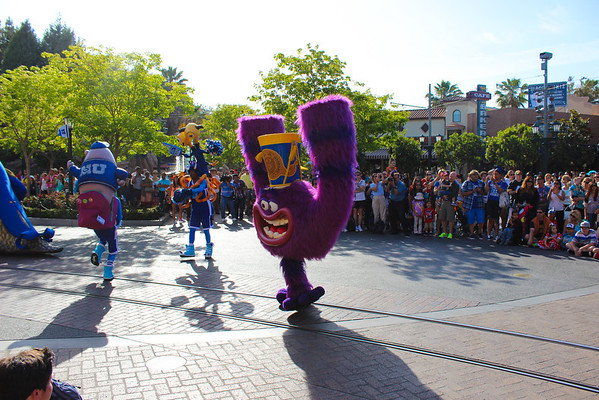
Mike and Sully act as Grand Marshall’s for the Pixar Play Parade along with a whole host of friends from Oozma Kappa (OK).


Everyone seems to be in school spirit. Even Roz.


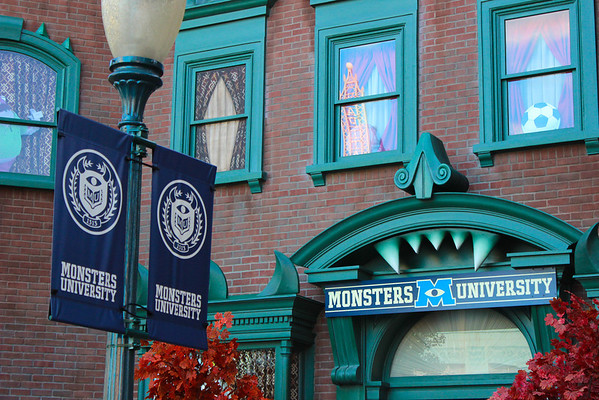
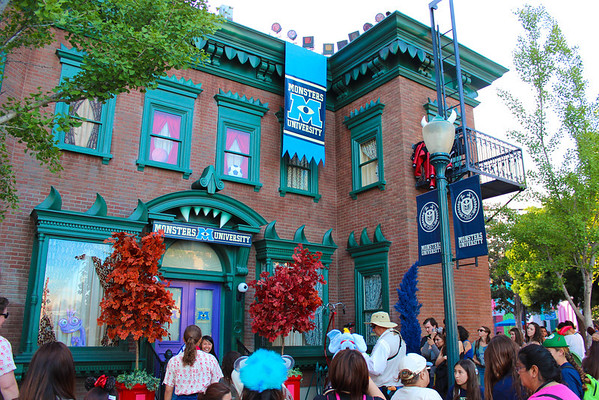
The new Monsters University Meet and Greet is located between Mad T Party and the Hyperion Theater and is very well done.


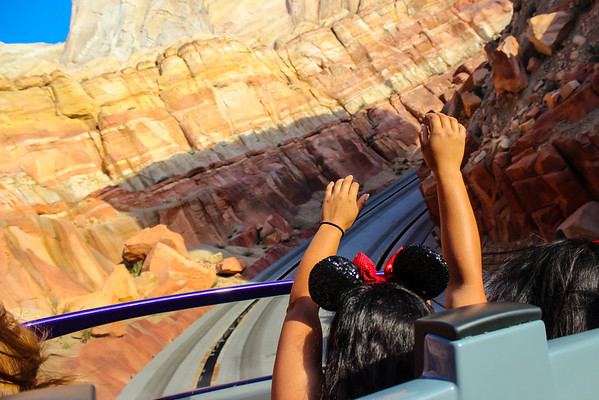
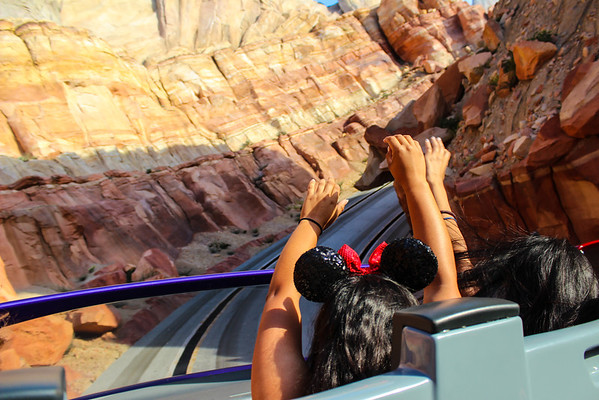
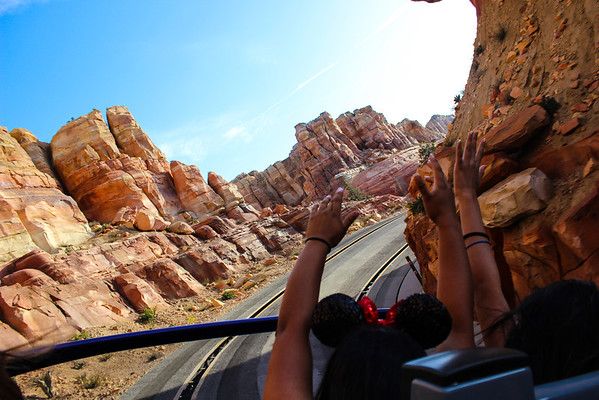
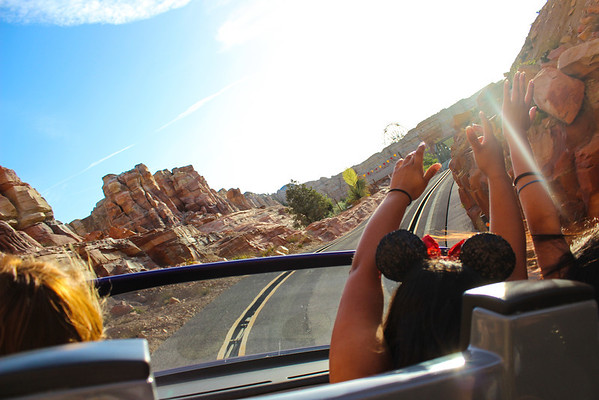
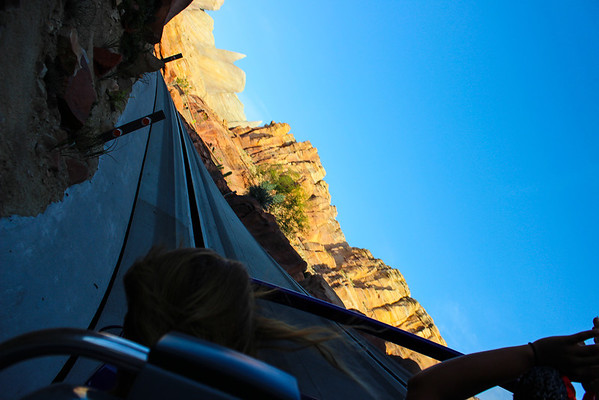
On Radiator Springs Racers.
“Careful on the turns, Kid” ~Doc Hudson


As part of the Monstrous Summer All-Nighter, Monsters Inc. was shown several times throughout the day and night at Muppet Vision 3D Theater, including 1:00 AM and 3:00 AM. Many guests, evidently, found it a convenient place to take a nap.


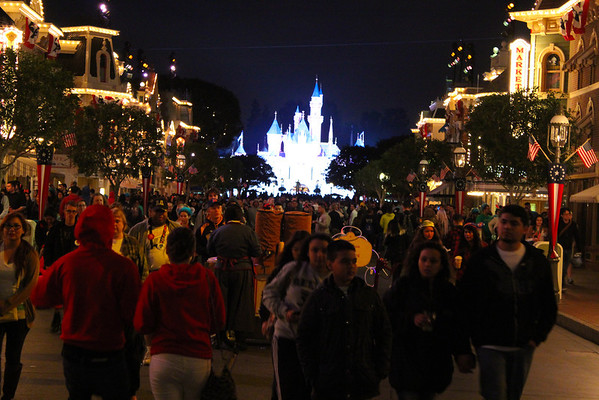
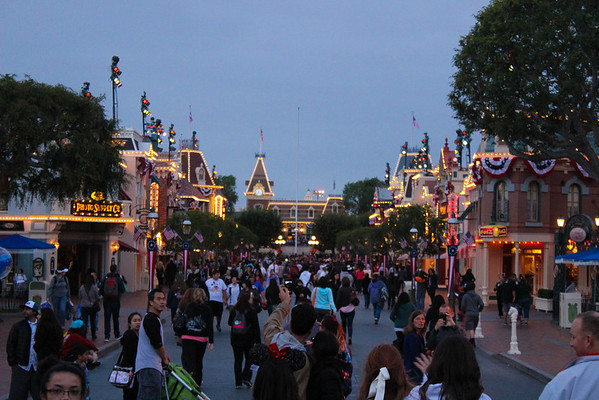
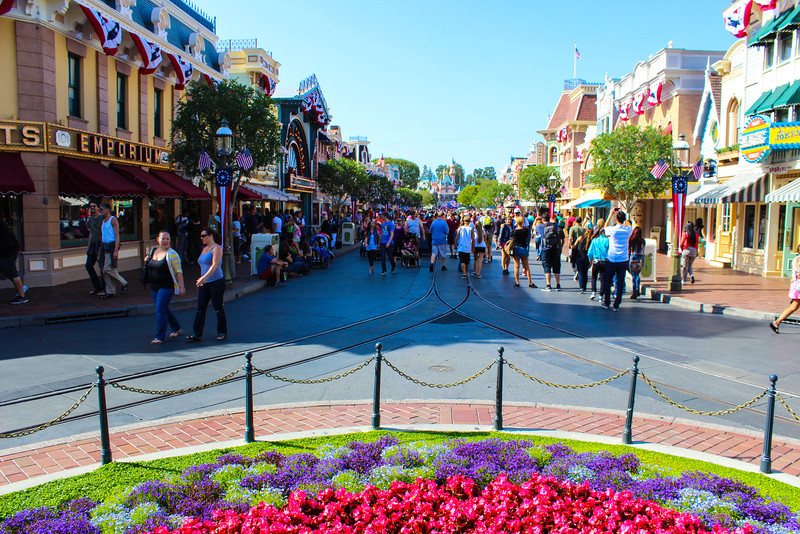
Main Street USA at approximately 2:45 AM.


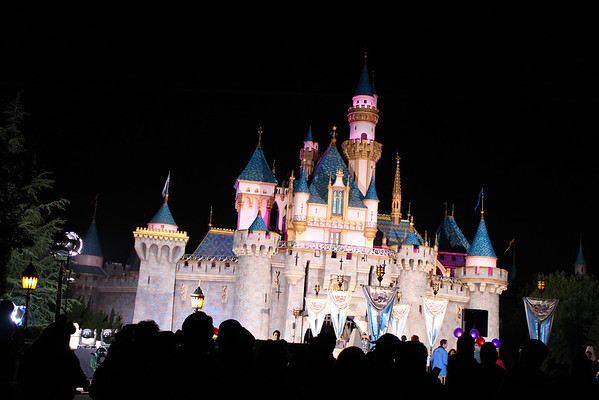
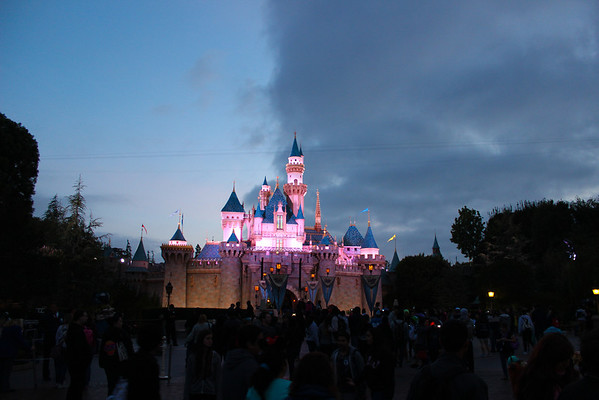
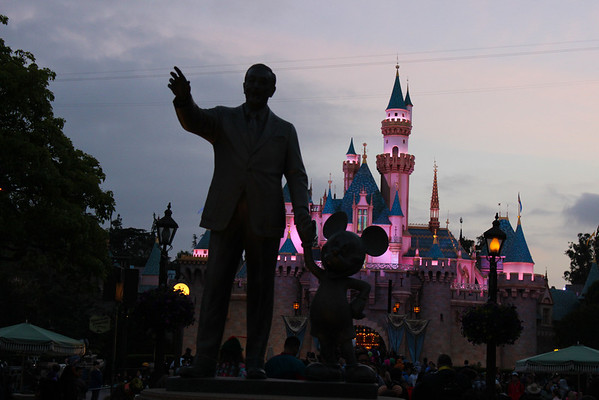
Sleeping Beauty Castle was basked in a brilliant white light to show off for a live taping of Good Morning America.

See the Good Morning America Live taping here: http://gma.yahoo.com/video/disneyland-stays-open-24-hours-130827269.html


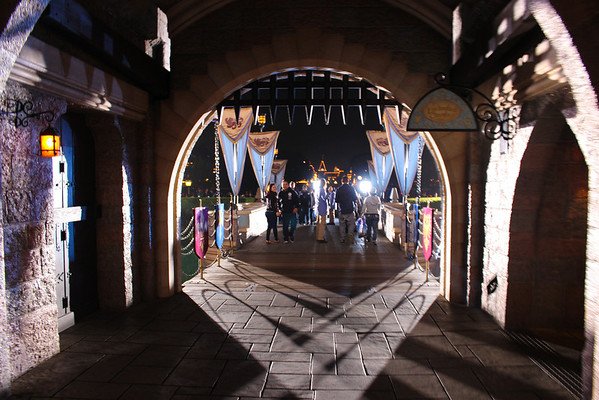
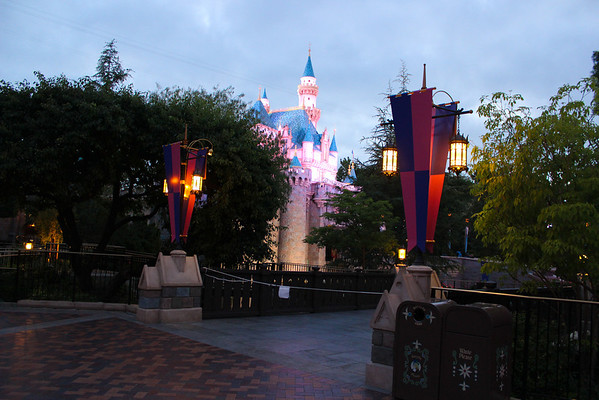
Bright floodlights stream into the castle gates.


A closer look at the castle before the taping of Good Morning America.


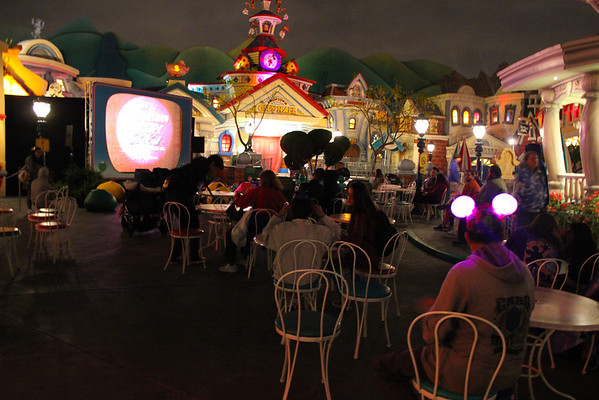
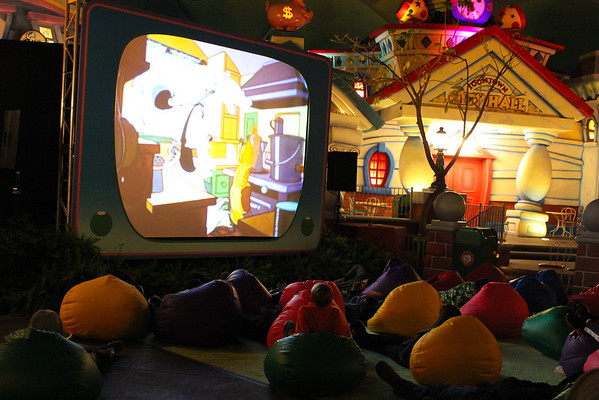
Over in Toontown, guests had a Pajama Party with their favorite Disney Cartoon Characters and also enjoyed classic run Disney Cartoons on an oversized TV.


Children had beanbags for a comfortable front row experience.


The sun rises over Disneyland and Sleeping Beauty Castle. Time is approximately 5:15 AM.


The view from Princess Fantasy Faire.


Main Street USA at approximately 5:30 AM. Certainly not as busy as One More Disney Day. The parks never did reach capacity.


I hope you enjoyed the post. Thank you for viewing!

VIDEO: Special Entertainment During the Monstrous Summer All-Nighter at the Magic Kingdom

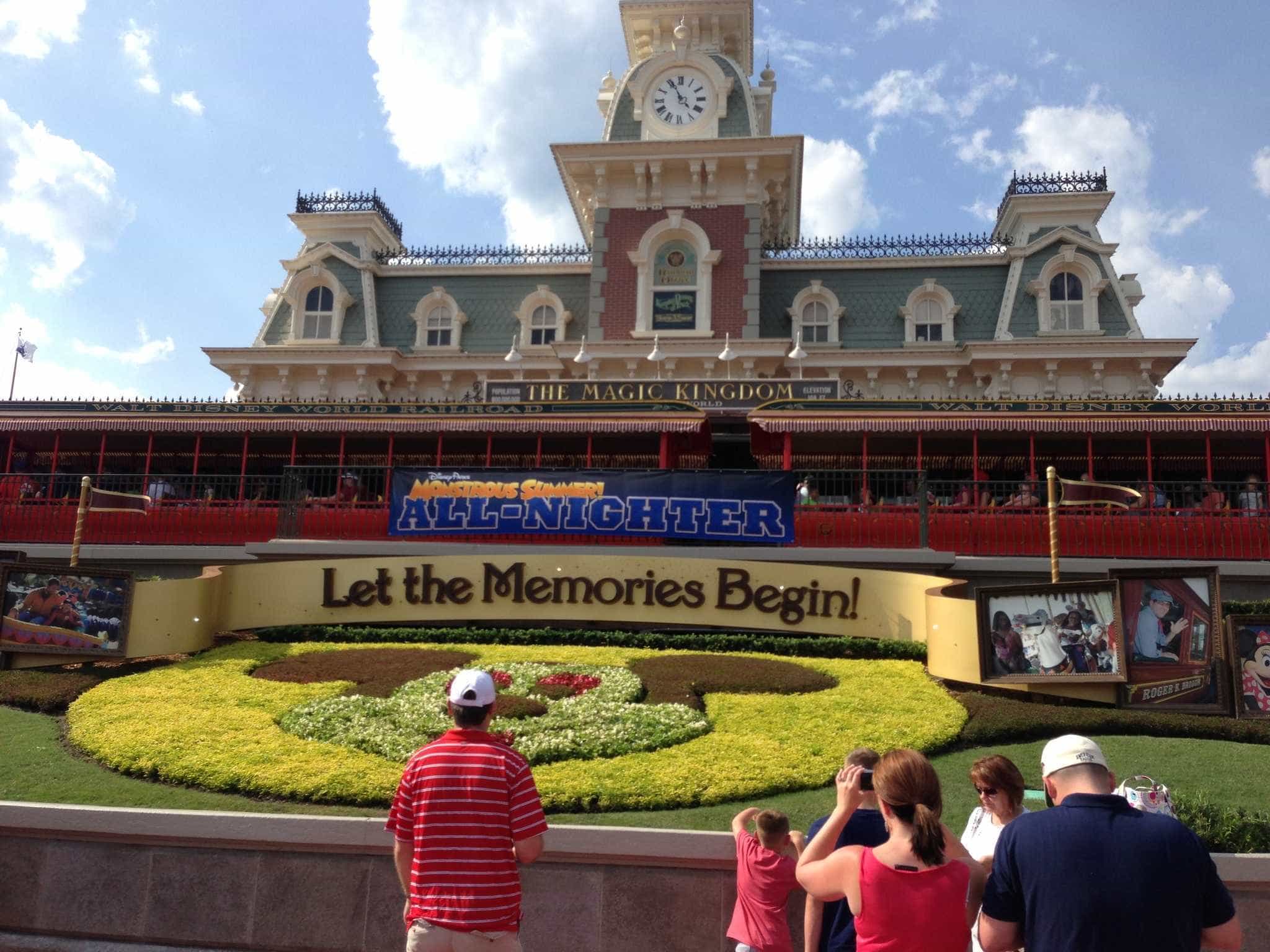
On Friday, the Magic Kingdom celebrated the start of the Monstrous Summer with the All-Nighter, another 24 hour day. Unlike 2012, this edition had many more special entertainment offerings mostly revolving around the upcoming Monsters University film.

IMG_2077

Mike and Sulley were the grand marshals in a special pre-parade at the Magic Kingdom, including a marching band playing the MU fight song:

Mike and Sulley also appeared in the “Move It! Shake It! Celebrate It!” Street Party:

Finally, throughout the evening, guests could meet their favorite Disney pals in their pajamas (This particular encounter included a cast member who commandeers my camera):

WDWNT: The Magazine – Arrow Dynamics: Disney’s Coaster Partner

Arrow Dynamics: Disney’s Coaster Partner

by Michael Truskowski

Arrow Dynamics is a name that is well know to coaster lovers, but many Disney fans may be unaware of the fact that Arrow was instrumental in the creation of Disneyland. Throughout its history, Arrow redefined theme park attractions and helped jump-start the modern coaster boom that continues to this day.

Disneyland

Arrow caught the attention of Walt Disney in the early 1950s as his plans for Disneyland were moving from an idea on a park bench to the real world. This was to he an innovative park, and would not simply be a collection of off the shelf carnival rides. This was particularly evident in the dark rides of Fantasyland. Just a short list of Arrow built Disneyland attractions include Mr. Toad’s Wild Ride, Pirates of the Caribbean, The Haunted Mansion, Snow White’s Adventure, The Mad Tea Party, and Dumbo. Arrow was instrumental in creating the ride systems that powered these attractions.

This was not a minor partnership. Walt himself visited Arrow, and the two companies worked closely to ensure that Disneyland was ready to open as scheduled. On opening day, nearly all of Fantasyland consisted of Arrow attractions. It proved that Arrow could go beyond simple carousels (although Disneyland did include one of theirs as well). What came next though, is what really put the company on the map.

mhb319312LARGE

The Modern Coaster

If you went back in time to 1955, Disneyland and Arrow Development would have seemed the least likely to change the roller coaster industry forever. Up to this point, Arrow had been known exclusively for its flat rides. Disneyland had famously eschewed thrill rides all together. Roller coasters were largely still wooden. Steel coasters were little more than copies of their wooden counterparts that used the same trains and same track designs. The famous Coney Island Cyclone, for example, is categorized as a wooden coaster, even though a large part of the structure is steel (though the track is traditional wood).

When Walt finally decided that Disneyland was ready for a coaster, it had to be something new and fresh, like Disneyland itself. So Disney and Arrow set out to make something that would have a permanent effect on the thrill industry, one that has enabled nearly all of the record-breaking coasters of today. It is an idea that now seems so simple; tubular steel tracks.

The Matterhorn Bobsled coaster would not be an off the shelf ride. It was to be themed. It would not look like a traditional coaster, but would need to fit the Disneyland aesthetic. So Arrow, a company that had not previously built a roller coaster, went to work on this new concept.

The tubular track gave them the ability to do some very important things that made the Matterhorn unique. It allowed for a much more compact coaster, one that could fit in the middle of Disneyland without looking out-of-place. The coaster’s compact size allowed for the sort of theming that was required to fit in to the park. It also enabled a quick succession of unexpected turns and drops. These features allow a ride to be thrilling without needing to be extremely tall or fast, and is an element that Disney has relied on for its coasters ever since. And although it is not nearly as smooth today as it was 50 years ago, the new track allowed for a less rickety ride, and has allowed it to run nearly daily for over half a century.

The Matterhorn was also unique at the time in allowing multiple vehicles on the track at the same time, thanks to the innovative use of multiple braking zones along the track. Rather than having to wait for an entire ride cycle to complete, vehicles could be regularly dispatched, allowing for a much higher hourly capacity. Just try to imagine the line for the Matterhorn today if this were not the case.

The Matterhorn launched Arrow into one of the premier roller coaster manufacturers in the world. It also proved to Disney that it was possible to build a thrill ride that could still be enjoyed by families, and could be well themed and fit nicely into this new type of park. Many coasters from this era have been demolished, but the Matterhorn not only still stands, but is still ranks among the most popular attractions in the park.

New Rides

The Matterhorn set off decades of innovation from Arrow Development, in part due to a sizable investment from Disney. Most notably, Arrow created the first Log Flume ride in 1963 with El Aserradero at Six Flags Over Texas. Nearly every amusement park in the world would add a log flume to its roster, Disney included.

But most importantly for the modern roller coaster, Arrow was the first company to successfully include inversions. While coasters had previously attempted to turn riders upside down, they were unsafe, painful, and short-lived. The tubular steel track that Arrow had developed allowed for a smooth, safe loop to be added to the track. Arrow’s prototype, Corkscrew premiered at Knott’s Berry Farm in 1975. A coaster by the same name at Cedar Point opened the next year, being the first to have three loops, one of them a vertical loop (although Arrow lost out to the Schwarzkopf designed Revolution as the first coaster with a vertical loop by seven days).

Another important innovation, if less successful, came in 1981. Arrow designed the first modern suspended coaster, The Bat at King’s Island. This was a truly unique ride that placed the track above the riders’ heads, in cars that could freely swing from side to side (not to be confused with the later inverted coasters, which have no floor but cannot swing independently). While extremely popular with the few who were able to ride it, The Bat proved to be problematic for the park. It spent more time closed than open, and required near constant maintenance work to keep it running. It was closed and dismantled three years later. Arrow would eventually get it right, and suspended coasters were popular before being displaced by the more modern inverted coasters. Today, few first generation suspended coasters remain.

In the early 1980s Arrow was purchased by the German ride manufacturer Huss after a decade of ownership by the Rio Grande Railroad company. The Arrow Huss company lasted only five years before Huss filed for bankruptcy. In 1986, Arrow Dynamics (the name the company would be best known by) emerged.

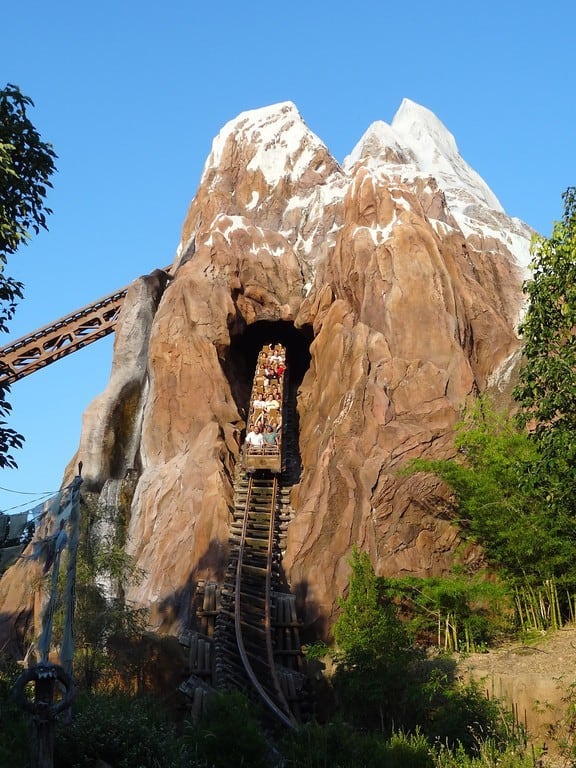
One of the most famous and most popular Arrow Dynamics coasters came in 1989, Cedar Point’s Magnum XL–200. This was the first roller coaster to reach a height of 200 feet, and began a new golden age of taller, faster roller coasters. Notably, the coaster had no inversions, after years of Arrow and others chasing more and more of them. Instead, the ride focused on its height, its speed, and a considerably amount of airtime. Magnum regularly tops the best coasters list to this day.
DSC03765-XL

Transitioning

Thorough this period, Arrow continued its work for Disney. It followed up the very successful Matterhorn with another steel coaster, this time in Florida. Space Mountain took the Matterhorn design and added the extra thrill of darkness, giving the relatively tame coaster (its maximum speed is about 27 mph) a heightened sense of speed and lack of control.

Arrow had already created many mine train style coasters when Disneyland contracted them to build Big Thunder Mountain Railroad. Arrow would also work on Walt Disney World’s Big Thunder Mountain, but this would be the final time Disney would use Arrow for its coasters. When Tokyo Disneyland looked to create its own Big Thunder, they instead turned to rival Vekoma. This began a new partnership which would also include Rock ’n’ Roller Coaster, Expedition Everest, as well as the Paris Big Thunder.

Decline

In the early 1990s, a new company entered the coaster wars, Bolliger & Mabillard (B&M). This new company would perfect the Stand Up Coaster, and invented the Inverted Coaster, which places the track above the rider and nothing beneath their feet. The inverted coaster became the absolute standard for the industry, and nearly every major amusement park added one in the 1990s.

Busch Gardens contracted B&M to build two new coasters for them, one in their Tampa park, and one in Williamsburg Virginia. The ride that opened in Tampa, Kumba was an immediate hit. It is one I personally remember riding and being absolutely blown away by. It was tall, fast, and had multiple inversions, yet was a completely smooth ride. Its layout still inspires B&M coasters to this day.

But B&M was not able to keep up with its current workload, and so the Williamsburg coaster passed to Arrow, which had built that park’s popular Loch Ness Monster coaster. Feeling pressure to match B&M’s achievements, Arrow stepped out of their comfort zone with Drachen Fire. For as much as Kumba had a reputation for being smooth and comfortable, Drachen Fire would be the complete opposite. The ride quickly gained a reputation for being rough and even painful. It closed in 1998, and was dismantled in 2002. As B&M rose, Arrow began to decline.

An interesting note about Drachen Fire. It was one of only three coasters to have an inversion known as a cutback. One of the others is Space Mountain: Mission 2 at Disneyland Paris, a Vekoma coaster.

Arrow’s last innovation was a truly unique coaster, X at Six Flags Magic Mountain. This “4th dimensional” coaster places the riders on the side of the track, with vehicles that could move independently from the train itself. The ride was, and remains incredibly popular, but was plagued with problems.

Arrow Dynamics filed for bankruptcy in 2001, and was purchased by S&S Power, a company mostly known for its drop towers and other pneumatic rides. S&S Arrow has continued to make a few 4th dimension coasters, but nowhere near the level of constructions from their time as an independent company.

Despite all this, Arrow Dynamics coasters have remained a staple of parks around the world. It is nearly impossible to take a trip to Disneyland and not ride an Arrow attraction, even if you do skip the Matterhorn. Arrow Dynamics helped build the modern theme park.

Tim Alcoser’s 05/23/2013 Photo Report (Memorial Day decorations)

Disneyland News Today reporter Tim Alcoser was at the Disneyland Resort the day before the 24 hour Monstrous Summer Event and captured a few photos of newsworthy items:

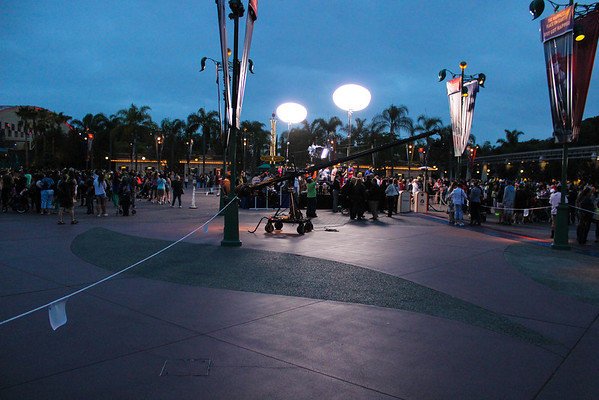
Studio equipment is ready to go for the Monstrous Summer Event in the middle of the Esplanade.

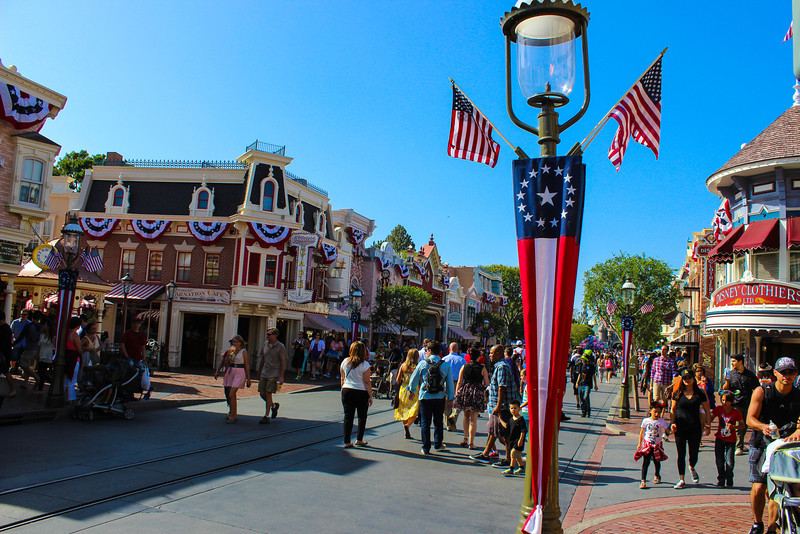
Red, White and Blue is showing up at both parks in lieu of Memorial Day/Independence Day.

The Market House will be closed until the Fall when it will reappear as a Starbucks.

The Mickey and the Magical Map Media Event took place on May 23rd closing down most of Fantasyland with a Grand Premiere of the show.

Mickey and the Magical Map is now open and showing several times daily at the Disneyland Resort!

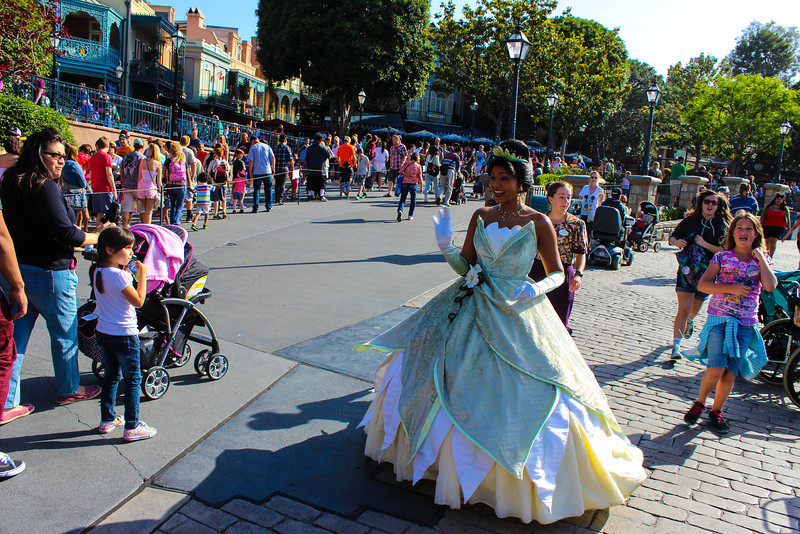
When you are at the Happiest Place on Earth, you just never know who is going to show up and where

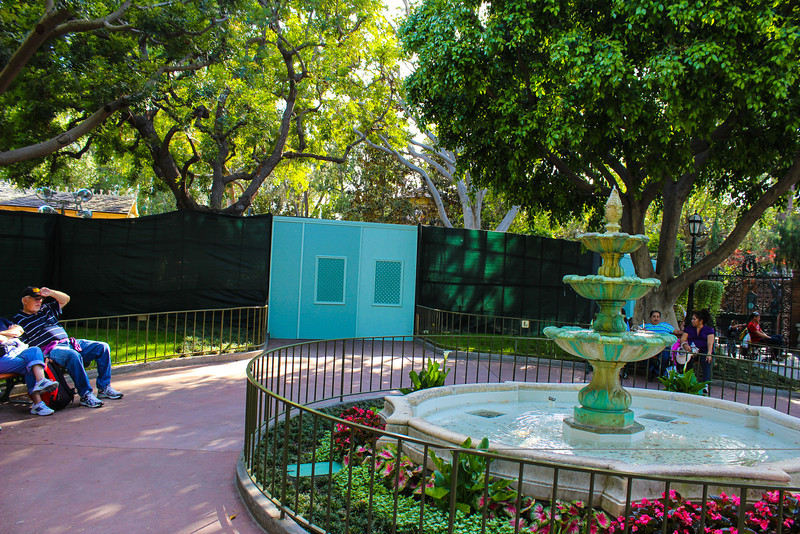
Refurbishment of the Disneyland Railroad’s New Orleans Square Station has now wrapped up.

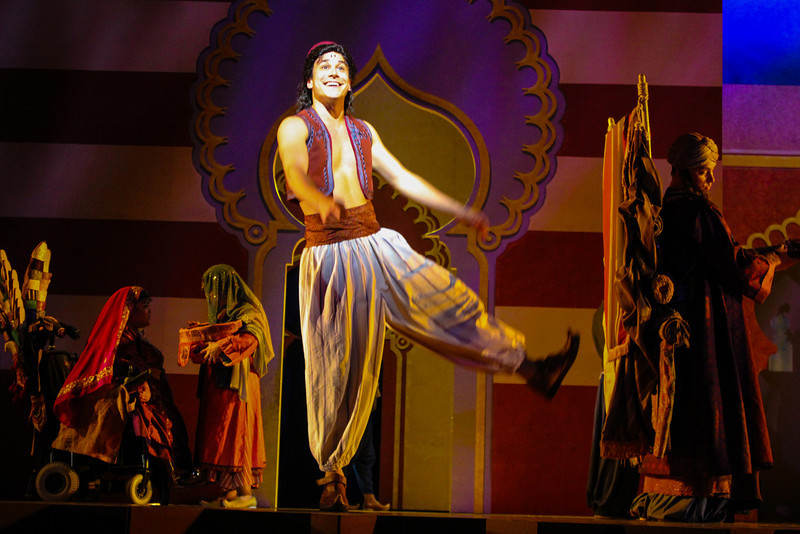
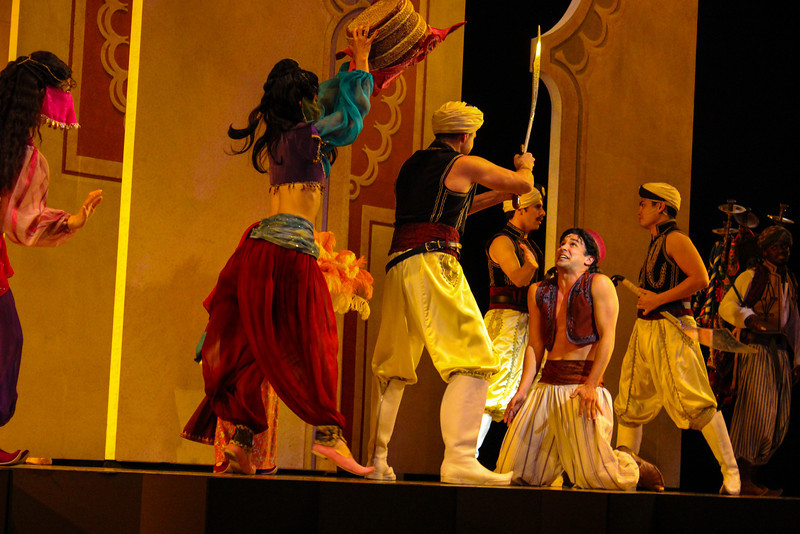
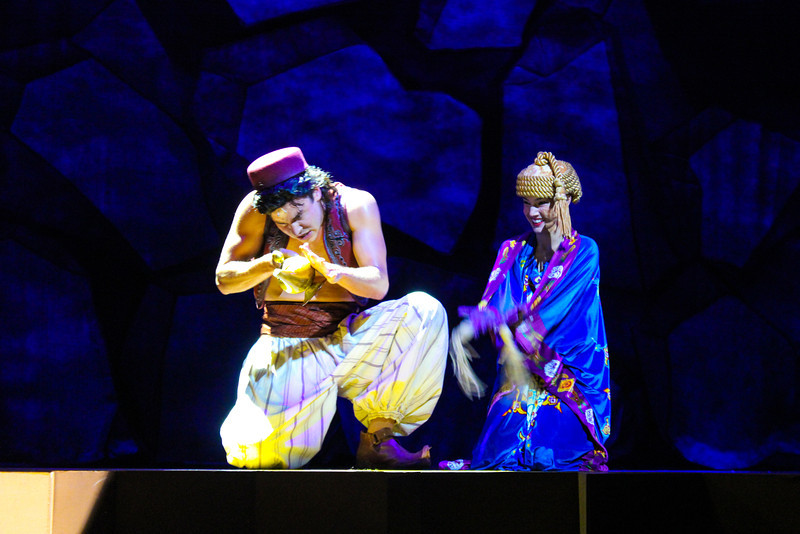
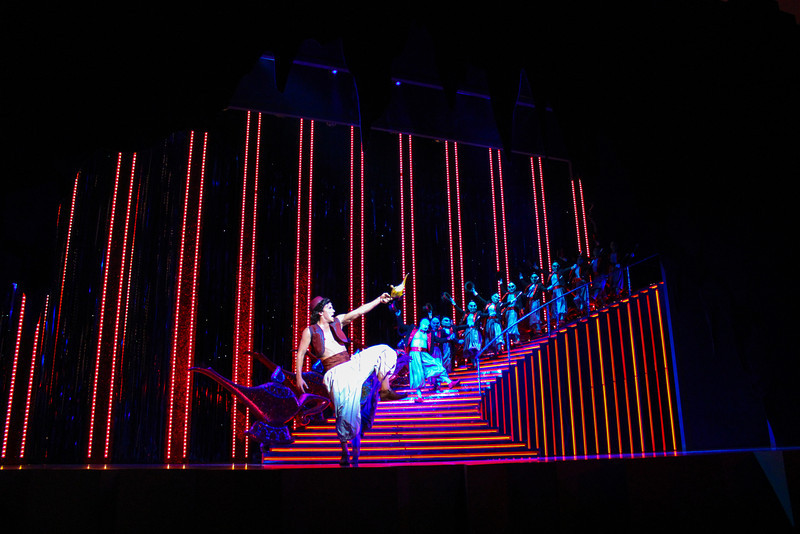
A few pictures of Aladdin: A Musical Spectacular!

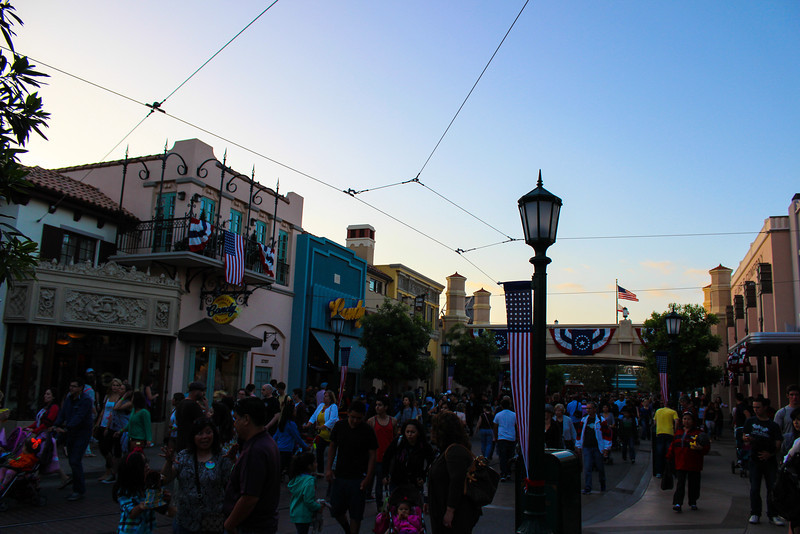
Buena Vista Street seasonal decorations are also present Memorial Day through 4th of July.


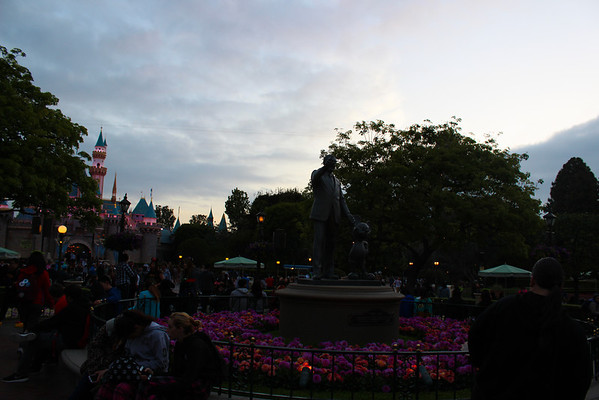
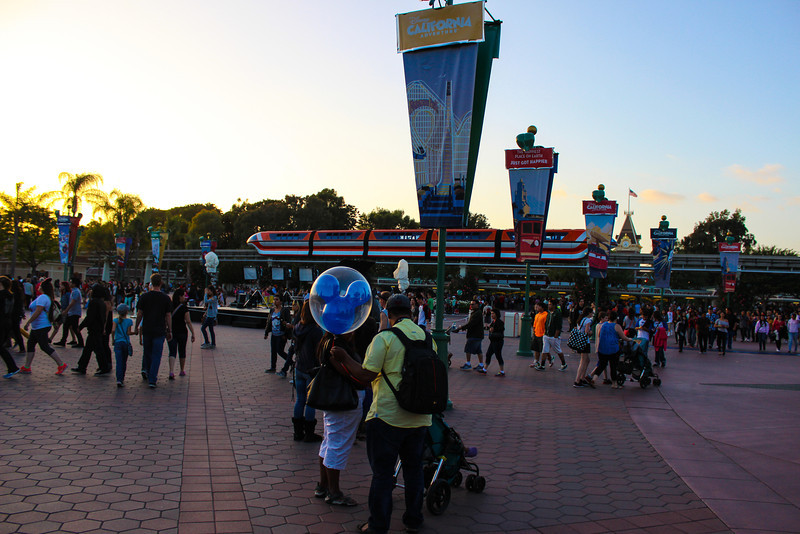
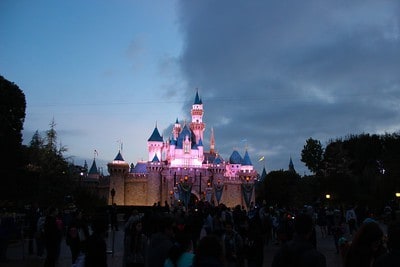
The sun sets over Disneyland. It preps for the Monstrous Summer 24-Hour event the next morning.

Thank you for reading!

Indiana Jones Explained

Indiana Jones Explained
Release Date: January 10, 2014
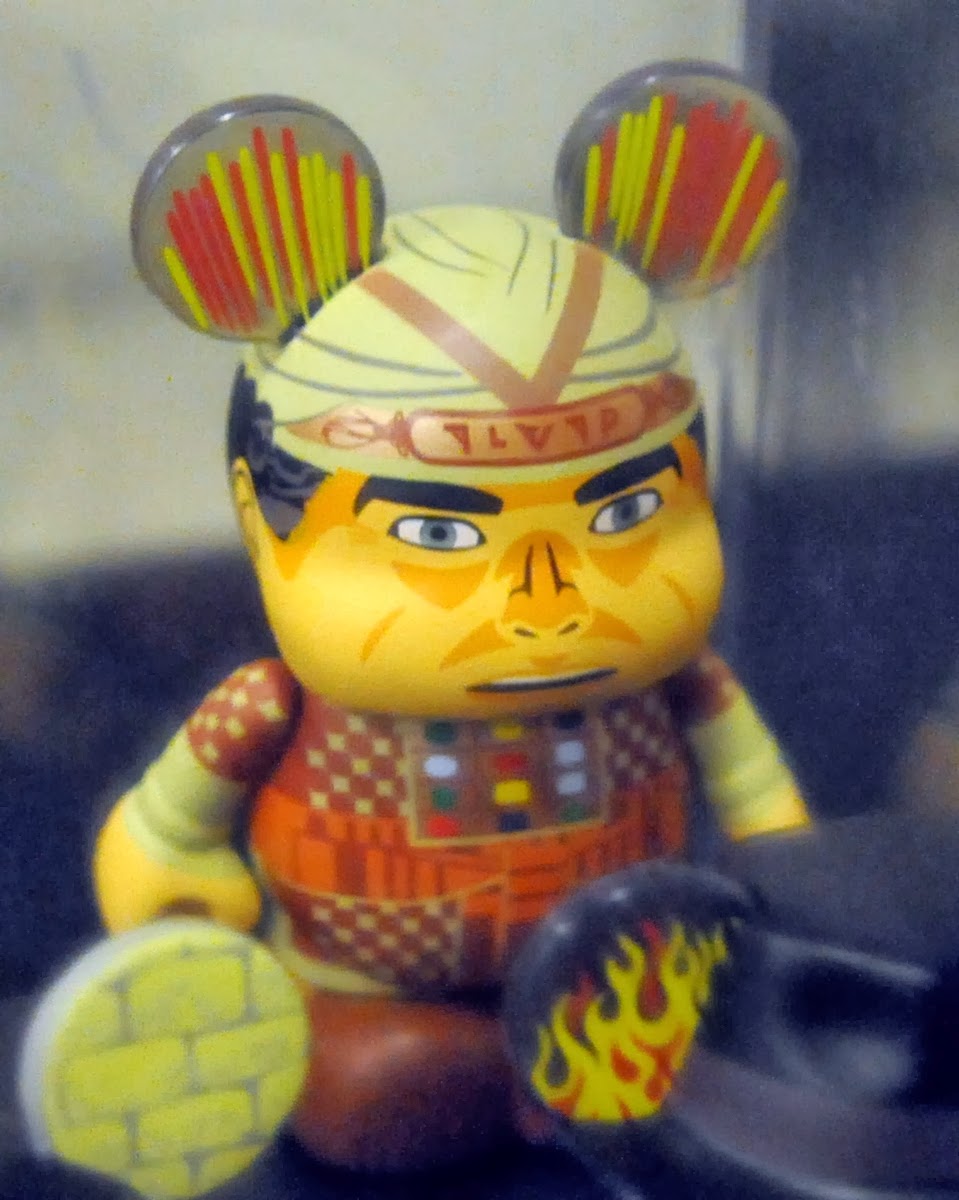
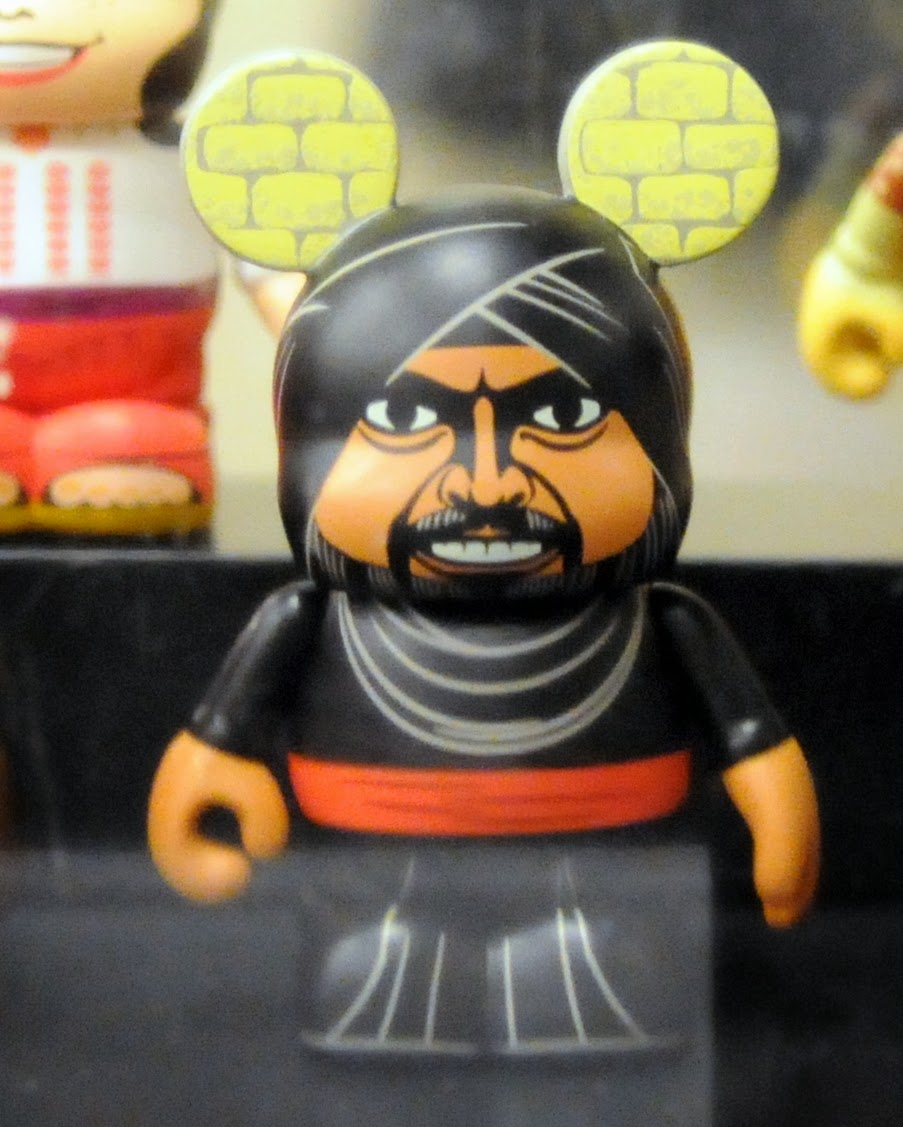
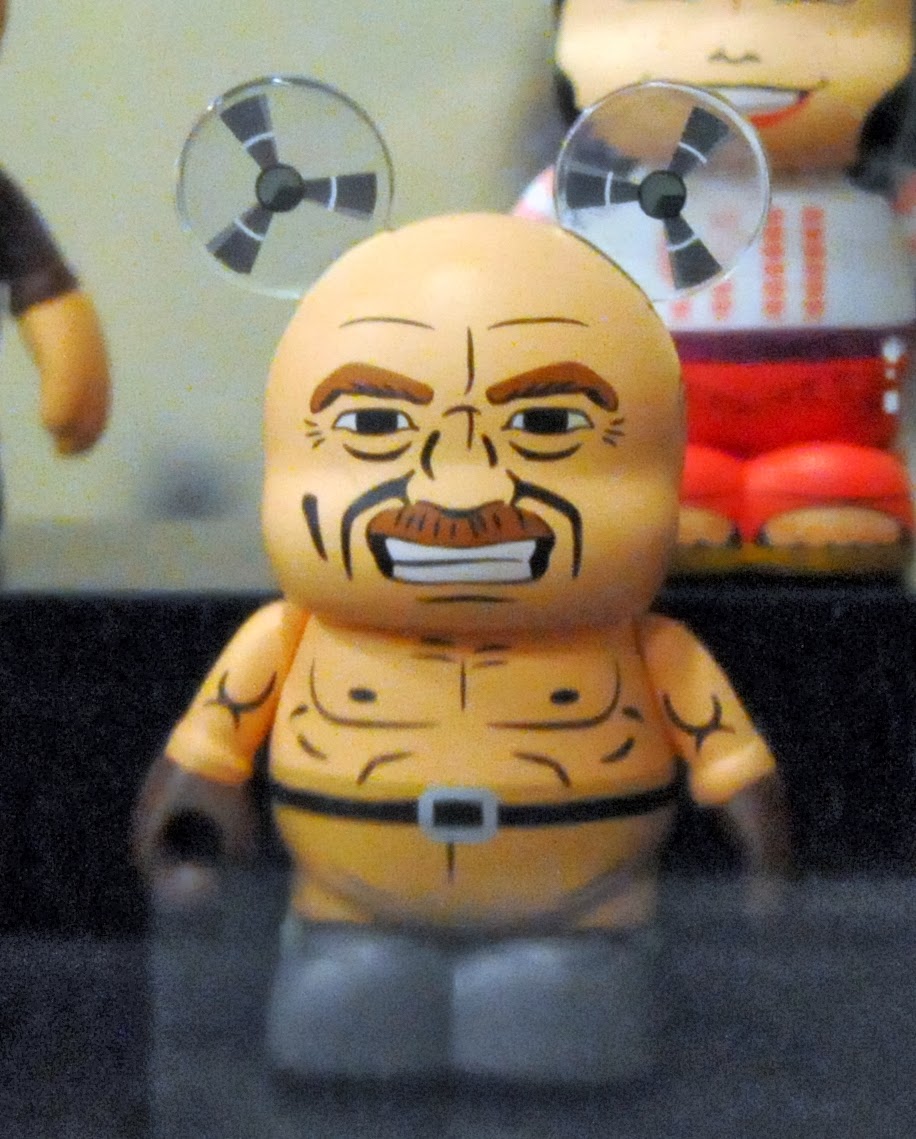
8 figure mystery set based on Indiana Jones and the Raiders of the Lost Ark.
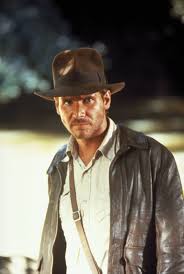
Indiana Jones
played by Harrison Ford

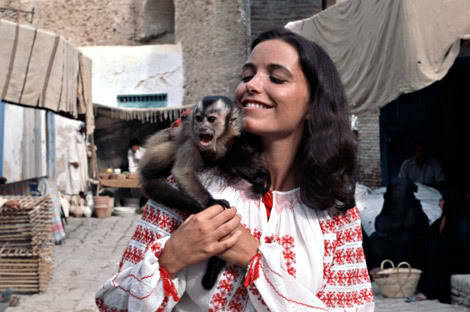
Marion Ravenwood
played by Karen Allen

Sallah
played by John Rhys-Davies

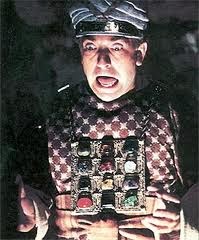
Maj. Arnold Toht
played by Ronald Lacey

Belloq 
(Opening Ark)
played by Paul Freeman

Arab Swordsman
played by Terry Richards

German Mechanic
played by Paul Roach

Mystery Chaser

(click to reveal)

Indiana Jones
(in disguise)

Combo Topper
expected Jan 24th

Plus: Accessory Staff of Ra!

WDWNT: The Magazine – 2013 Disney Dining Plan: Finding the Value

2013 Disney Dining Plan: Finding the Value

by Ron D’Anna

Screen Shot 2013-06-13 at 10.40.34 AMThere appears to be little about Walt Disney World that is as rationally and hotly debated as the Disney Dining Plan (“DDP”).  Convenience, value, amount of food, access to reservations, and the food quality are all aspects that are questioned constantly on innumerable podcasts, blogs, FAQs, and forums. While many of these topics are unquantifiable, one is easy to test: value. Are you getting your moneys worth on the Dining Plan? A quick answer is impossible to come by.

I’ve always been fascinated by numbers and how easily they can show us complex situations in a simple format, so a few years ago, I decided to break down the relative value of the DDP. I have updated it year by year, which isn’t an easy task. With over 85 participating counter service and over 70 table-service locations, there were a lot of items to go through. In fact, if you were to eat one dinner entrée a day, it would take you over four and a half years to sample every one of them! And since these menus change constantly, the task may actually be impossible. As such, please do not take this as absolute results; it is meant to be a general guide, not a play-by-play way to game the system. In fact, the data is already out of date: in the month it took me to compile the pricing, multiple locations changed menus. I have decided not to try and update it any further and let the general rules stand. I would like to thank TouringPlans.com for an excellent and regularly updated menu and pricing depository, without which this study could not have been done.
For those that are unfamiliar, there are three basic dining plans: the Quick Service Dining Plan (QSDP), the Plus (or standard) Dining Plan (PDP) and the Deluxe Dining Plan (DxDP). All plans also include the refillable mug you can use at your resort. The costs can vary by season, but the non-peak prices are $35.58 for QSDP, $55.59 for PDP and $99.97 for DxDP. Prices listed are per person, per night.

  • The QSDP includes one snack credit and two quick service credits per night of your stay.
  • The PDP contains one snack credit, one counter service credit and one table service credit per night. Both counter service and table service credits entitle you to an entrée, a drink and a dessert (if used for lunch or dinner).
  • The DxDP contains three table service credits, appetizers with lunch and dinner table service meals, and two snack credits per night.

Table service meal credits can be used at counter-service locations, but that is a definitively poor use for the plan. To figure out if any given restaurant is worth using on the plan, the components of the plan had to be broken down price wise. I did this with some relatively basic algebra and a few assumptions. The first assumption was that the refillable mug is just a bonus. Since you only get one per person whether you buy the dining plan for a week or for a night, its price isn’t something that can be calculated on a general scale. Second, the generally accepted snack credit value has been about $4 for a few years. Some snacks can definitely be purchased above that value, but that had been the general cap. I just set the value at $3 for my purposes for two reasons: 1) it gives a perceived premium value to the dining plan, and 2) Disney knows a lot of people just use them on things like sodas and bottled water, items priced well below the maximum value. My third assumption was that the Deluxe Plan was priced in such a way that Disney assumes two table service and one counter service use per day.

With these assumptions, the pricing was easy to work out with just a little playing around–the value of a counter-service credit is $17.29, a table service credit is $35.30 and the value of the appetizer for the DxDP is $3.04. I justified the relatively low cost for the appetizer in two ways: 1) you do not get it at breakfast and 2) Disney assumes people aren’t eating that much and will split them sometimes. Some final assumptions had to be made when pricing out the individual restaurants.

While there are many places that will offer milkshakes or other premium drinks, it was not always possible to tell which ones would be included without extensive hands-on research, which was not possible. Additionally, results could vary from server to server, so for simplicity’s sake, I priced all counter service meals to include a large soda, and have added $2.50 to all table service meals. There are also conflicting reports that certain items are exempt on certain menus, but these are inconsistent reports, so for the purposes of this article I’ve included all menu items. The value of items that say “for two” have been cut in half as I’ve heard they can be split.

There are a few general statements that can be made about working with the dining plan to maximize your value. The first one is: avoid using credits for breakfast. This is universally a bad deal across both table and counter service restaurants. The only exception would be breakfast at Akershus, where the $37.99 price tag is already above the credit’s value. While it is true that Cinderella’s Royal Table is more expensive, it is considered a signature restaurant, and therefore requires two of your table service credits. This is the second general rule: avoid dining at Signature Restaurants. It is almost impossible to extract value from them even if you order all the most expensive items, so go ahead and skip getting up at 6 AM to make that coveted Le Cellier reservation—sleep in!!


Let’s start looking at the counter service locations. There are many locations where you are never going to be able to get to that target of $17.30 to come out ahead. The chart below lists them out.

Dining Value Chart 1

The outright winners for best value were the two Wolfgang Puck Express locations (over $30 at West Side!), but I cannot guarantee they will honor the dining plan for these items, since they aren’t operated by Disney. The Pepper Market, Bongo’s Window, Sassagoula Food Court, Cosmic Ray’s, Fairfax Fare, Pecos Bills, Tangerine Café, Cookes of Dublin, & Katsura Grill can all top the $20 mark if priced right. There were only five locations that the average meal price will beat the DDP cost: the two Wolfgang Puck Express locations, Tangeriene Café, Bodies, and the Pepper Market are the highest average values. Sorry folks, but perennial favorite Earl of Sandwich is actually the bottom of the list as far as average value goes: under $12.

Table service restrains get a bit more complicated when you add in the DxDP. Tutto Italia tops the list for best potential value with $63.50 for an entrée, appetizer, and dessert. San Angel Inn is the best value if you are on the PDP. There are only seven non signature restaurants that cannot get to the minimum value to make your money back: Big River Grille, Trails End, The Plaza, Beaches & Cream, Tusker House, 50s Prime Time, and the ESPN Club. The vast majority of restaurants have an average cost under the $35.30 threshold. The below restaurants have an average cost that will give you a good value for dinner:

  • 1900 Park Fare
  • Chefs de France
  • Kouzzina
  • Cape May Café
  • Tutto Italia
  • Restaurant Marrakesh
  • Hollywood & Vine
  • Chef Mickey’s
  • Tokyo Dining
  • Garden Grill
  • Boma
  • Teppan Edo
  • Akershus
  • Liberty Tree Tavern
  • Coral Reef
  • Crystal Palace
  • San Angel Inn
  • ‘Ohana
  • Biergarten

Overall, the average maximum value you can receive for table service meals is $28.66 for breakfast, $37.35 for lunch, and $42.18 for dinner, so on average, ordering the most expensive items will get you your value. The overall average values are $28.38 for breakfast, $32.76 for lunch, and $39.01 for dinner. Dinner seems like a good use of the credit!

At counter service, the average values are $10.92 for breakfast, $17.49 for lunch and $17.81 for dinner. Both lunch and dinner will get you your value. The average maximum values you can get are $12.28 for breakfast, $20.67 for lunch, and $21.55 for dinner.

Let’s also just look at the average cost per item across all of property. Starting with the signature restaurant, the average lunch entrée costs $26.18 and dinner is $37.09. A signature lunch appetizer is $12.17, and at dinner it is $14. Desserts will run you $8.83 and $10.11 on average for lunch and dinner respectively. Remember, it will cost you two credits to get those. At standard restaurants, the lunch entrées are $17.96 and dinner is $20.26. The desserts are $7.58 for lunch and $7.02 for dinner. Lunch appetizers average $9.21 and dinner is $9.27. Note that prices for all-you-care-to-eat places, such as buffets, include only the entrée portion of those averages. Counter service entrees average $9.13 for both lunch and dinner and $3.61 for the dessert.

What’s the most you can spend in a day? Well, let’s say you have a Parkhopper and don’t want to eat at the same place twice. You can eat $57.85 on the QSDP, $77.85 on the PDP, and $162.74 on the DxDP.

Given all this, I guess I should answer the question—would I recommend the Disney Dining Plan? While there can be substantial savings, you still have to do some work to get them, so I cannot recommend it outright. However, I cannot completely dismiss it as a waste of money either, simply because you can get your value out of it if you know where to avoid.

I’ve included a link to my summary sheets for those who want more information and specific details—just remember that these numbers are not exact, should only be used as a general guide, and are subject to change at any time:

2013 Summaries

edited by Amy Yacullo

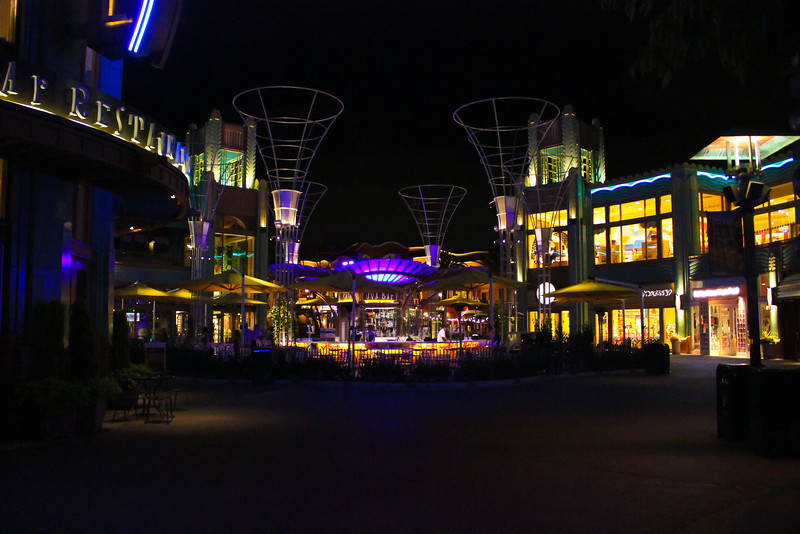
Downtown Disney District Extended Hours for Monstrous Summer All-Nighter at the Disneyland Resort

The Disneyland Resort has posted operating hours for entertainment, restaurants, food carts and merchandise stores at Downtown Disney. In addition to both California Adventure and Disneyland, Downtown Disney will be open, and some locations will continue operating all night.

Disneyland and Disney California Adventure parks aren’t the only places to have a monstrous time during
this Friday’s all-nighter at the Disneyland Resort … the Downtown Disney District is also getting in on the fun with extended hours and more. Check it out

Restaurants, Food Carts and Quick Service Locations:
Downtown Disney District restaurants will be open until 2 a.m. on Saturday, May 25 (excluding ESPN Zone)
Ralph Brennan’s Jazz Kitchen Express will be open until 3 a.m. on Saturday, May 25
Special extended hours at ESPN Zone
The Arena – open until 3 a.m.
The 19th Hole Bar – alcohol available until 1 a.m.
Non-alcoholic drinks served until 3 a.m.
Limited food menu served until 1 a.m.
“1/2 price” special on all Arena games from 12-3 a.m.
House of Blues and Tortilla Jo’s will open for breakfast at 6 a.m. on Saturday, May 25

The following will be open 24 hours on May 24-25:
Café Renee
Planet Popcorn
Wetzel’s Pretzels
Jamba Juice
La Brea Bakery Express

The following will be open until 2 a.m. on Saturday, May 25:
Wetzel’s Pretzels Cart
Gelato Cart
Churro Carts
Merchandise Stores and Carts

Downtown Disney District stores will be open 24 hours on May 24-25
Merchandise carts will be open until 2 a.m. on Saturday, May 25
Live Entertainment
6–10 p.m. – Downtown Disney District live entertainment
11 p.m. – 4 a.m. – DJ Wendy on the Main Stage
11 p.m. – 4 a.m. – DJ Justin at House of Blues area
For more information, click here, and join the conversation on Twitter using the hashtag #Disney24.

Looks like the entire Disneyland Resort will be open for ’round the clock fun.

The Villas at the Grand Floridian Go On Sale This Week!

Screen Shot 2013-05-22 at 4.07.51 PM

For those of you wondering when you might be able to buy into the Disney Vacation Club Villas at Disney’s Grand Floridian Resort, it will be May 23rd for DVC members and June 19th for non-members:

This video also provides our first-look inside a model villa.

So, what do you think of the Villas at the Grand Floridian?

VIDEO: Laser Effects Return to DINOSAUR at Animal Kingdom After 15 Years

Screen Shot 2013-05-21 at 6.53.05 PM

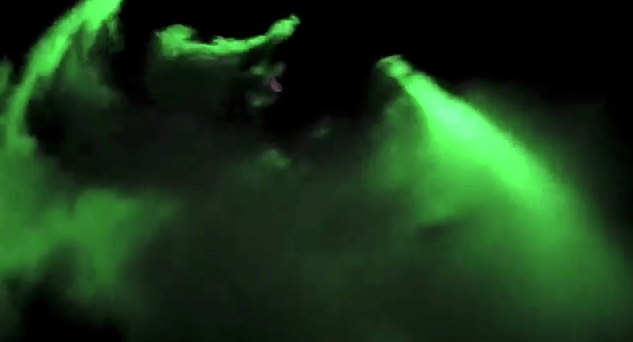
The DINOSAUR attraction at Animal Kingdom has been somewhat notorious for vanishing effects since it opened as Countdown to Extinction in April 1998. Some of the more fabled effects were laser-related and were located at the very beginning and end of the attraction. Well, for some reason, laser effects returned to the ride this week:

So, what do you think of the return of the laser effects at DINOSAUR?