2013 Christmas Special: Episode SP4 Toy Soldier

 |
Arrow Dynamics is a name that is well know to coaster lovers, but many Disney fans may be unaware of the fact that Arrow was instrumental in the creation of Disneyland. Throughout its history, Arrow redefined theme park attractions and helped jump-start the modern coaster boom that continues to this day.
Arrow caught the attention of Walt Disney in the early 1950s as his plans for Disneyland were moving from an idea on a park bench to the real world. This was to he an innovative park, and would not simply be a collection of off the shelf carnival rides. This was particularly evident in the dark rides of Fantasyland. Just a short list of Arrow built Disneyland attractions include Mr. Toad’s Wild Ride, Pirates of the Caribbean, The Haunted Mansion, Snow White’s Adventure, The Mad Tea Party, and Dumbo. Arrow was instrumental in creating the ride systems that powered these attractions.
This was not a minor partnership. Walt himself visited Arrow, and the two companies worked closely to ensure that Disneyland was ready to open as scheduled. On opening day, nearly all of Fantasyland consisted of Arrow attractions. It proved that Arrow could go beyond simple carousels (although Disneyland did include one of theirs as well). What came next though, is what really put the company on the map.

If you went back in time to 1955, Disneyland and Arrow Development would have seemed the least likely to change the roller coaster industry forever. Up to this point, Arrow had been known exclusively for its flat rides. Disneyland had famously eschewed thrill rides all together. Roller coasters were largely still wooden. Steel coasters were little more than copies of their wooden counterparts that used the same trains and same track designs. The famous Coney Island Cyclone, for example, is categorized as a wooden coaster, even though a large part of the structure is steel (though the track is traditional wood).
When Walt finally decided that Disneyland was ready for a coaster, it had to be something new and fresh, like Disneyland itself. So Disney and Arrow set out to make something that would have a permanent effect on the thrill industry, one that has enabled nearly all of the record-breaking coasters of today. It is an idea that now seems so simple; tubular steel tracks.
The Matterhorn Bobsled coaster would not be an off the shelf ride. It was to be themed. It would not look like a traditional coaster, but would need to fit the Disneyland aesthetic. So Arrow, a company that had not previously built a roller coaster, went to work on this new concept.
The tubular track gave them the ability to do some very important things that made the Matterhorn unique. It allowed for a much more compact coaster, one that could fit in the middle of Disneyland without looking out-of-place. The coaster’s compact size allowed for the sort of theming that was required to fit in to the park. It also enabled a quick succession of unexpected turns and drops. These features allow a ride to be thrilling without needing to be extremely tall or fast, and is an element that Disney has relied on for its coasters ever since. And although it is not nearly as smooth today as it was 50 years ago, the new track allowed for a less rickety ride, and has allowed it to run nearly daily for over half a century.
The Matterhorn was also unique at the time in allowing multiple vehicles on the track at the same time, thanks to the innovative use of multiple braking zones along the track. Rather than having to wait for an entire ride cycle to complete, vehicles could be regularly dispatched, allowing for a much higher hourly capacity. Just try to imagine the line for the Matterhorn today if this were not the case.
The Matterhorn launched Arrow into one of the premier roller coaster manufacturers in the world. It also proved to Disney that it was possible to build a thrill ride that could still be enjoyed by families, and could be well themed and fit nicely into this new type of park. Many coasters from this era have been demolished, but the Matterhorn not only still stands, but is still ranks among the most popular attractions in the park.
The Matterhorn set off decades of innovation from Arrow Development, in part due to a sizable investment from Disney. Most notably, Arrow created the first Log Flume ride in 1963 with El Aserradero at Six Flags Over Texas. Nearly every amusement park in the world would add a log flume to its roster, Disney included.
But most importantly for the modern roller coaster, Arrow was the first company to successfully include inversions. While coasters had previously attempted to turn riders upside down, they were unsafe, painful, and short-lived. The tubular steel track that Arrow had developed allowed for a smooth, safe loop to be added to the track. Arrow’s prototype, Corkscrew premiered at Knott’s Berry Farm in 1975. A coaster by the same name at Cedar Point opened the next year, being the first to have three loops, one of them a vertical loop (although Arrow lost out to the Schwarzkopf designed Revolution as the first coaster with a vertical loop by seven days).
Another important innovation, if less successful, came in 1981. Arrow designed the first modern suspended coaster, The Bat at King’s Island. This was a truly unique ride that placed the track above the riders’ heads, in cars that could freely swing from side to side (not to be confused with the later inverted coasters, which have no floor but cannot swing independently). While extremely popular with the few who were able to ride it, The Bat proved to be problematic for the park. It spent more time closed than open, and required near constant maintenance work to keep it running. It was closed and dismantled three years later. Arrow would eventually get it right, and suspended coasters were popular before being displaced by the more modern inverted coasters. Today, few first generation suspended coasters remain.
In the early 1980s Arrow was purchased by the German ride manufacturer Huss after a decade of ownership by the Rio Grande Railroad company. The Arrow Huss company lasted only five years before Huss filed for bankruptcy. In 1986, Arrow Dynamics (the name the company would be best known by) emerged.
One of the most famous and most popular Arrow Dynamics coasters came in 1989, Cedar Point’s Magnum XL–200. This was the first roller coaster to reach a height of 200 feet, and began a new golden age of taller, faster roller coasters. Notably, the coaster had no inversions, after years of Arrow and others chasing more and more of them. Instead, the ride focused on its height, its speed, and a considerably amount of airtime. Magnum regularly tops the best coasters list to this day.
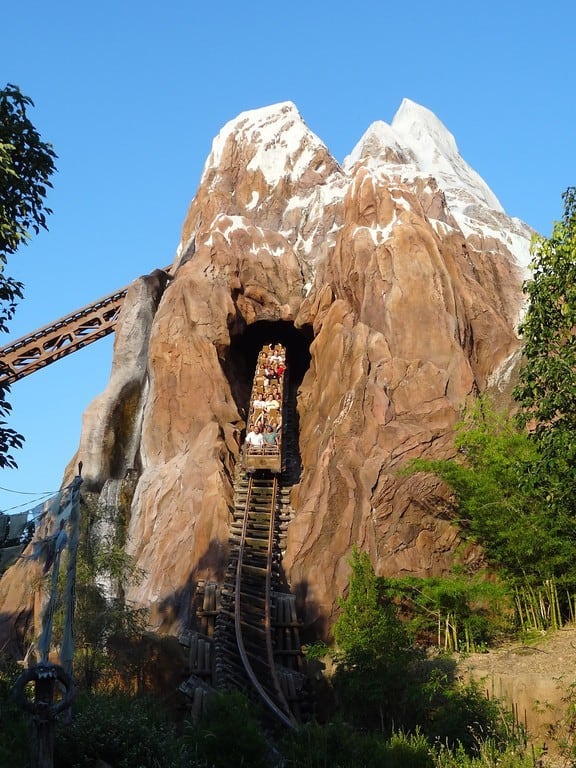
Thorough this period, Arrow continued its work for Disney. It followed up the very successful Matterhorn with another steel coaster, this time in Florida. Space Mountain took the Matterhorn design and added the extra thrill of darkness, giving the relatively tame coaster (its maximum speed is about 27 mph) a heightened sense of speed and lack of control.
Arrow had already created many mine train style coasters when Disneyland contracted them to build Big Thunder Mountain Railroad. Arrow would also work on Walt Disney World’s Big Thunder Mountain, but this would be the final time Disney would use Arrow for its coasters. When Tokyo Disneyland looked to create its own Big Thunder, they instead turned to rival Vekoma. This began a new partnership which would also include Rock ’n’ Roller Coaster, Expedition Everest, as well as the Paris Big Thunder.
In the early 1990s, a new company entered the coaster wars, Bolliger & Mabillard (B&M). This new company would perfect the Stand Up Coaster, and invented the Inverted Coaster, which places the track above the rider and nothing beneath their feet. The inverted coaster became the absolute standard for the industry, and nearly every major amusement park added one in the 1990s.
Busch Gardens contracted B&M to build two new coasters for them, one in their Tampa park, and one in Williamsburg Virginia. The ride that opened in Tampa, Kumba was an immediate hit. It is one I personally remember riding and being absolutely blown away by. It was tall, fast, and had multiple inversions, yet was a completely smooth ride. Its layout still inspires B&M coasters to this day.
But B&M was not able to keep up with its current workload, and so the Williamsburg coaster passed to Arrow, which had built that park’s popular Loch Ness Monster coaster. Feeling pressure to match B&M’s achievements, Arrow stepped out of their comfort zone with Drachen Fire. For as much as Kumba had a reputation for being smooth and comfortable, Drachen Fire would be the complete opposite. The ride quickly gained a reputation for being rough and even painful. It closed in 1998, and was dismantled in 2002. As B&M rose, Arrow began to decline.
An interesting note about Drachen Fire. It was one of only three coasters to have an inversion known as a cutback. One of the others is Space Mountain: Mission 2 at Disneyland Paris, a Vekoma coaster.
Arrow’s last innovation was a truly unique coaster, X at Six Flags Magic Mountain. This “4th dimensional” coaster places the riders on the side of the track, with vehicles that could move independently from the train itself. The ride was, and remains incredibly popular, but was plagued with problems.
Arrow Dynamics filed for bankruptcy in 2001, and was purchased by S&S Power, a company mostly known for its drop towers and other pneumatic rides. S&S Arrow has continued to make a few 4th dimension coasters, but nowhere near the level of constructions from their time as an independent company.
Despite all this, Arrow Dynamics coasters have remained a staple of parks around the world. It is nearly impossible to take a trip to Disneyland and not ride an Arrow attraction, even if you do skip the Matterhorn. Arrow Dynamics helped build the modern theme park.

With the Epcot International Flower and Garden festival for 2013 now underway, here is your complete guide to everything you can expect from this year’s festival.
Festival Dates: March 6th through May 19th, 2013
What’s New This Year


Other Highlights
Flower Power Concerts

| March 8-10 | The Monkees Lead Singer Micky Dolenz “Last Train to Clarksville” |
| March 15-17 | Chubby Checker & The Wildcats “The Twist” |
| March 22-24 | The Guess Who “American Woman” |
| March 29-31 | Nelson “Garden Party” |
| April 5-7 | The Turtles featuring Flo & Eddie “Happy Together” |
| April 12-14 | Paul Revere & The Raiders “Good Thing” |
| April 19-21 | NEW! The Village People “Y.M.C.A.” |
| April 26-28 | The Orchestra featuring former members of ELO and ELO Part II “Don’t Bring Me Down” |
| May 3-5 | NEW! Tommy Roe “DIZZY” |
| May 10-12 | Herman’s Hermits starring Peter Noone “I’m Henry the VIII, I Am” |
| May 17-19 | Starship starring Mickey Thomas “We Built this City” |

Fun Facts and Trivia
Food & Drink at Flower & Garden
(** indicates TRYit items, Disney’s new campaign that encourages children to try something new.)

 Fruits by the Glass – World Showcase Plaza
Watermelon Passion Fruit Cocktail
Wild Berry Slush – Non Alcoholic
Sea Dog Blue Paw Wild Blueberry**
New Planet™ 3R Raspberry Ale (Gluten Free)
Florida Orange Groves, Mango Mama, Mango Wine
Florida Orange Groves, Blueberry Blue, Blueberry Wine
DeLoach Vineyards Heritage Reserve Chardonnay
DeLoach Vineyards Heritage Reserve Pinot Noir
Florida Fresh – World Showcase Promenade
Watermelon Salad with pickled Red Onions, Baby Arugula, Feta Cheese and Balsamic Reduction**
Shrimp and Stone Ground Grits with Andouille Sausage, Zellwood Corn, Tomatoes and Cilantro
Angel Food Cake with macerated Florida Berries**
Florida Orange Groves, Hot Sun, Tomato Wine
Florida Orange Groves, 40 Karat, Carrot Wine
Orange Blossom Pilsner
Strawberry Slush – Non Alcoholic
Jardin de Fiestas – Mexico
Tacos de Carnitas (Pork Tacos topped with Tamarindo salsa, served on a flour tortilla with Chicharrón)
Tostada (Crab tostada served with Chipotle Mayo and Valentina Salsa)
Flan de Guayaba (Guava Custard)
Conga Fruit Punch – Non Alcoholic
Corona Light Draft Beer
Rosita Margarita
Organic Tequila Flight
Lotus House – China
Beijing-Style Candied Strawberries
Spring Pancake with Grilled Chicken and Green Apple**
Pan-Fried Vegetable Bun
Peach-Oolong Bubble Tea
Kung Fu Punch (Vodka and Triple Sec with Mango and Orange Juice)
South Sea Storm (Guava with Light and Dark Rum)
Plum Wine
Tsing – Tao Beer
Lychee Aerated Water
Peach Aerated Water
Bauernmarkt: Farmer’s Market – Germany
Savory Bread Pudding with Spring Peas and Wild Mushroom Ragout
German Meatloaf Sandwich with Sweet Mustard and Fried Shallots
Potato Pancakes with house made Apple Sauce**
Florida Avenue American Wheat Ale
Krombacher Hefeweizen
Goose Island Brewing Company’s Honker Ale
Blue Point’s Toasted Lager
Beer Flight
Hugo – Charles De Fere “Organic” Brut with Elderflower and Mint
Krombacher Hefeweizen
Primavera Kitchen – Italy
Asparagi con Aragosta all’Ortolana (Green asparagus, lobster, garden cocktail sauce)
Lasagna Primavera (Spinach Lasagna, green peas, zucchini, mushrooms, broccolini, béchamel and fresh tomatoes, with garlic and basil leaves) **
Panna Cotta al Limoncello (Limoncello flavored Panna Cotta, wild berries)
Fontana Candida, Pinot Grigio
Castello di Querceto, Chianti
Bosco del Merlo, Prosecco
White Peach Bellini
Strawberry Rossini
Italian Primavera
Birrificio Del Ducato – Nuova Mattina (Spring Saison Ale)
Birrificio Le Baladin – Nora (Specialty Ale)
Birra Del Borgo – Rubus Lamponi (Specialty Wild Fruit Ale)
Beer Flight
 The Smokehouse: Barbeque and Brews – American Adventure Courtyard
Pulled Pig Slider with Cole Slaw
Smoked Beef Brisket with Collard Greens and Jalapeño Corn Bre ad
ad
Rocky Road Brownie Mousse
Mama’s Little Yella Pils (Czech style Pilsner)
Liberty Ale from Anchor Brewing Company, San Francisco, Ca. (India Pale Ale)
Red Ale from Orlando Brewing, Orlando, Fla. (Red Ale- Organic)
Blackwater Porter from Orlando Brewing Company, Orlando, Fla. (Stout- Organic)
The Original Rib Shack Red Wine
Beer Flight
Hanami — Japan
Frushi (Fresh strawberries, pineapple and cantaloupe rolled with coconut rice, atop a raspberry sauce sprinkled with toasted coconut and whipped cream)**
Chirashi Hanazushi (Grilled Salmon, cooked shrimp and crab stick served over a bed of fragrant ginger rice with Volcano and Dynamite sauce)
YakiSoba Pan (Fresh grilled carrots, onions and cabbage with Japanese noodles and teriyaki sauce served on a bun with mayonnaise and Beni Shoga)
Green Tea Flan (Silky custard with macha green tea and caramel glaze)
Yuzu Rita
Fruit Sake
Hana Awaka
Frozen Kirin Ichiban
A Taste of Marrakesh – Morocco
Spiced Lamb Kebab with Vegetable Couscous Salad
Harissa and Lamb Confit Chicken Drumettes with Chermoula and Cucumber Salad
Baghrir (Moroccan pancake with honey, almonds and Argan Oil)**
Desert Rose
White Sangria
Guerrouane Red
Casa Beer
Mint Iced Tea
L’Orangerie – France
Tarte à la ratatouille et fromage de chèvre (Zucchini, eggplant, bell peppers, onions and tomato tart with goat cheese)**
Terrine Campagnarde, baguette et compote de cerises (Country style pâté served with baguette and cherry compote)
Verrine charlotte au pèches (Caramelized peaches and rosemary and light vanilla cream)
La Vie en Rose Frozen Slush (Grey Goose Vodka Orange,
St. Germain liquor with White and Red Cranberry Juice)
Muscat Pétillant, Sparkling Muscat Charles de Fère
Chardonnay, White Burgundy, Macon Village Georges Duboeuf
Cabernet Sauvignon, Bordeaux Beau-Rivage
Kronenbourg Blanc 1664, (Fruity White Beer with Citrus Notes)
The Cottage: Savories, Trifles and Teas – United Kingdom
Potato, Chive and Cheddar Cheese Biscuit with Smoked Salmon Tartare and Sour Cream
Baked Goat’s Brie with Kumquat Chutney**
Waterkist Farms Heirloom Tomatoes with house-made Mozzarella, Minus 8 Vinegar and Basil**
Chocolate Trifle
Berry Trifle
Ginger and Tea Trifle
Trio of Trifles
Hot Teas (Earl Grey, English Breakfast, Lemon Green Tea, Jasmine Green Tea, Spiced Apple Chai, Pumpkin Chai, Mixed Berry Black Tea, Pomegranate and Raspberry, Camomile Honey & Vanilla, Honeybush, Mandarin and Orange, Pure Peppermint, Lemon & Ginger)
Peach Cold Brewed Iced Tea
Mixed Berries Cold Brewed Iced Tea
Poema Cava Brut Rosé
Chilled Rose Blush Lemonade – Non alcoholic
Pineapple Promenade – World Showcase Promenade
Dole® Whip
Dole® Whip with Siesta Key Spiced Rum
Pineapple Upside Down Cake featuring Dole® Pineapple
Dole® Pineapple Fruit Cup
Frozen Desert Violet Lemonade – Non Alcoholic
Samuel Adams® Cream Stout
Intermissions Café
Beet Lollipop**
Grapes
Fruit & Cheese Plate
Vegan Trio
Southwest Chicken Wrap
Tuna Salad with Pita
Italian Salad
Asian Tuna Salad with Noodles
New Planet™ 3R Raspberry Ale (Gluten Free) (12 oz.)
Blue Point’s Spring Fling (12 oz.)
Florida Orange Groves, Mango Mama, Mango Wine
Florida Orange Groves, Blueberry Blue, Blueberry Wine
DeLoach Vineyards Heritage Reserve Chardonnay
DeLoach Vineyards Heritage Reserve Pinot Noir
Poema Cava Brut Rosé
HGTV and DIY Network Seminars
 March 8-10 – Chris Lambton, Going Yard: ”Going Yard for Your Lifestyle”
For More Information: www.epcotinspring.com
Una Comunidad de Fanáticos de Disney en Español
A Spanish Disney Fan Community
By: Brandon Brush

The Disney Parks have always been a source of family entertainment for guests of all ages, nationalities, and languages. While many Disney fans enjoy learning the history and future of the parks through community websites, it appears that most sites cater specifically toward English speakers. In 2007, Oscar Feito decided it was time for a new Disney fan site. Disney Hispana has been a popular blog among Spanish Disney fans for five years and has expanded its reach to message boards, social networks, podcasting, and Disney travel books.
Oscar Feito, originally from Madrid, Spain, has been a fan of Disney for as long as he can remember. He has lived in London and Washington DC and is fortunate enough to be fluent in both English and Spanish. Once fluent in English, he began exploring the online Disney fan community by listening to popular podcasts such as WDW Today, Inside the Magic, and Lou Mongello’s old show MouseTunes. Feito explains, “I was amazed at how much more enjoyable the Disney park experience could be if you participated in these communities, read the blogs and listened to the podcasts.” He was sure that there were other Spanish speaking fans out there that may not be as fluent in English, and they were missing out on a great experience. Feito questions, “What good is the Internet as a global information and entertainment tool if the content you like is not in your language?”
As a solution, Feito launched Parques Disney en Español in 2007–http://disneyhispana.blogspot.com. This later helped developed a message board, http://www.magiadisney.com, and a “Disney Adictos” Facebook community of over 30,000 fans. The site’s presence in the podcasting world started with El Podcast de el MagiaDisney.com. While the team working on Disney Hispana isn’t sure if they have been the first in everything for Spanish fans, they have “definitely been pioneers in delivering quality Disney content to Spanish speakers worldwide,” according to Feito.

“El Podcast de el MagiaDisney.com” focuses mostly on the Walt Disney World Resort in Florida. However, they do cover Disneyland on some episodes. The show covers news, offers travel tips, shares memories, and delves into the origins of Walt Disney Imagineering. The episodes cover topics from the Lucasfilms acquisition all the way to how to deal with post-Disney depression. While their podcast usually only covers the parks, Disney Hispana’s blog focuses on all aspects of the Walt Disney Company. They have written extensive articles about the origins of Disney animation, music, books, and video games. Recently, they published the largest Spanish Walt Disney World book, La Guía Esencial de Walt Disney World which is available as an eBook on Amazon for five dollars. Eventually, Feito hopes to have print copies in circulation. The text acts as a guidebook with some history and fun facts. It is a great addition to the Spanish Disney fan community.
Unlike the Disney online fan community that most of us are familiar with, Disney Hispana’s fans are usually very “cooperative and civilized.” Feito comments, “To be honest, there have been very few cases of inappropriate behavior, rudeness or extreme reactions from our Community.” Many of Disney Hispana’s fans are always eager to help out, and they love participating in fun activities offered by the site. Last year, Disney Hispana organized a “Disney Short Story” contest. They received around twenty terrific submissions.
Disney Hispana reaches fans from Spain, Mexico, Argentina, United States, Chile, Colombia, and Venezuela. Feito has established great friendships with many readers and listeners who are extremely appreciative of the work the site does. Feito recounts, “A fan recently told me that it’s become a tradition in their family to listen to our show while they have dinner, since it’s definitely happier than the news we see on TV nowadays.” The relationships with the fans is the most rewarding part of all the work put into the sites.
If you are interested in any of Disney Hispana’s sites or projects, you can find them on Facebook at the page “Disney Adictos.” They consistently deliver interesting and unique content catering to all types of Disney fans. Their sites can expand your Spanish understanding of the parks far beyond a simple “¡Por favor manténgase alejado de las puertas!”
by Daniel Butcher
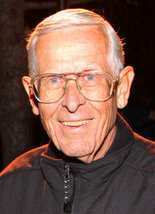
Everyone who has visited a Disney park worldwide has experienced the creativity of Bob Gurr. When reviewing the numerous vehicles and attractions that he has helped bring to life, his two and a half decades as an Imagineer seems too short for the magnitude of his achievements. Bob Gurr’s design career did not end after he left Disney, but continued to grow into new and unexpected areas. With a legendary career and an infectious personality, Bob continues to be a Disney fan favorite.
On October 25, 1931, Robert Henry Gurr was born to Henry and Helen Gurr in Los Angeles, California. Young Bob was a creative boy who was an energetic handful for the teachers unable to keep him occupied. In fact, Gurr was expelled from the third grade and sent to the Burbank Military Academy where he enjoyed their project centered curriculum in place of the repetitive grammar school curriculum. Gurr’s enjoyment of unique and varied projects would stay with him for a lifetime. When the Army took over the academy during World War II, he returned to public school, but now in Junior High he could select electives, courses he would excel in while he tended to lag in the required courses. An architecture teacher noticed young Bob’s desire and ability to design automobiles and allowed him to free draw cars when his assignments were completed. That same teacher later encouraged Gurr to attend the Art Center School in Los Angeles and its newly formed Automobile Design department.
Gurr entered the Art Center School in 1949, the first year it was authorized to offer four year baccalaureate degrees. In 1954 the school would be renamed the Art Center College of Design. The instruction focused on something Gurr excelled at, real world skills. The curriculum prepared students for jobs and immediate employment. Gurr, like many graduates, found themselves employed quickly. Before graduating, General Motors, who had provided him a scholarship halfway through his program, hired him as an automobile stylist. In May 1952, Gurr left California for Detroit, Michigan with his Bachelor of Arts Degree in Industrial Design and hopes for his future in the automobile industry. Before he even arrived in Detroit, his position was moved to Ford. Dissatisfied with the politics of major auto companies and designing hub caps, he left a year later and returned to California.
In California he made ends meet by two means. The first was writing books on car design including How to Draw Cars of Tomorrow, which he published after graduating college, and Automobile Design: The Complete Styling Book. The second paycheck was contracted automobile design jobs for local and Detroit based firms. One day the Placement Officer of the Art Center College would ask Gurr a fateful question, “Do you ever do outside work?” To that point Gurr hadn’t, but today he said yes. The yes would change his career path and introduce him to a new concept, the theme park.
After Gurr’s return to California he spent much of his free time with a member of his car club the “Road Burners”, Dave Iwerks. This included frequent dinners at the Iwerks’ home where Dave’s father Ub talked about his day at Walt Disney Productions. Ub Iwerks was already a Disney legend as the original animator of Mickey Mouse and was at the time engrossed in his work at the Special Process Lab. At one of these meals the senior Iwerks mentioned a small car driving around the studio that was only had a chassis. Gurr did not realize that this small comment would be linked to his own future. The outside work that Gurr was referred to in the summer of 1954 was to design the body of that little car under the supervision of Studio Machine Shop Manager Roger Broggie. The car was for an attraction for Walt Disney’s new project, Disneyland, to open in 1955.
Gurr was brought to the studio to serve primarily as the stylist for this little car. Walt Disney had decided to design his own car for his driving attraction instead of buying an off the shelf model. Gurr soon found out that he was also expected to draft the car’s parts so they could be massed produced. Suddenly the designer found himself working as a mechanical engineer. Bob spent his evenings drafting for Disney and his days working at an automobile design firm. Every Saturday he drove down to the studio to show his designs and drawings to Broggie and other Disney employees. One Saturday in December 1954, Broggie remarked that he wanted to keep Gurr busy with Disney work. Gurr remarked maybe he should quit his other job. Broggie jumped at the comment, took Gurr to the Personnel Department, and signed Gurr on as a full-time employee immediately. Gurr provided his own first official title, Director of Special Vehicle Development when a title was needed for business cards. Bob was officially a regular employee for WED Enterprises and added to the full-time team targeting Disneyland’s opening.
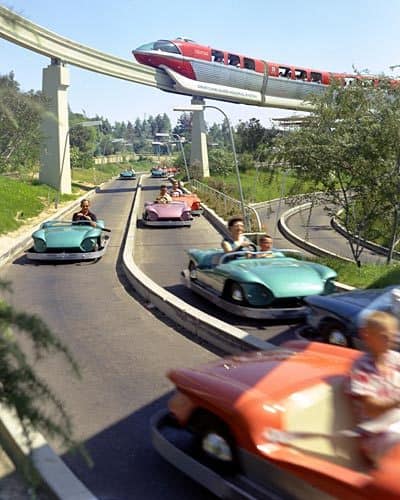
Gurr designed the body for Disney’s new attraction car. His alma mater the Art Center College made the clay model of the design, saving Disney money by using student labor. Additionally, Gurr redesigned the chassis that was to be put under his car design. Disney contracted Glasspar to craft 40 of the Gurr fiberglass bodies for the car and MAMECO Engineering to assemble the vehicles for the Richfield Autopia, sponsored by Richfield Boran Gasoline. As each of the 40 cars were completed they were delivered to Disneyland, without bumpers. Aluminum bumpers were added at the suggestion of Disneyland sponsor Kaiser Aluminum. The cars had a maximum speed of 25 miles per hour, but pre-set governors limited the speed to 11mph. The original cars had two accelerators pedals; one was built for the shorter legs of children. And each car had automatic braking which engaged when the foot was lifted from the gas pedal. There was also a parental hand brake placed under the dash and a long brake handle mounted to the body for ride operators. In testing Gurr discovered that unlike steel bumpers the aluminum models failed to spring back into shape and were becoming warped as ride operators tested the cars. As he prepared for opening day, Gurr’s biggest worry was the damage that guests would do to the bumpers on the 40 Autopia vehicles. Gurr had also made plans for an Autopia bus to give small children rides, but it was never built.
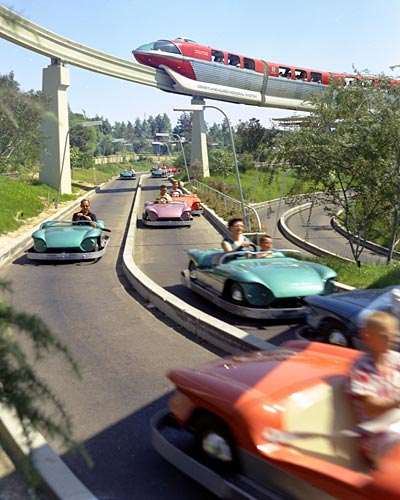
On July 17, 1955, Walt Disney presented his new project to the world on ABC television. During the Dateline: Disneyland program, Bob lead 20 of the Autopia cars in the Opening Day Parade. After the parade chaos ruled at the Autopia attraction. The cars were in disastrous shape. The bumpers, as Gurr feared, were distorted from guests bumping. There were a large number of other car problems ranging from brake damage to shot bearings. Cars could pass each other on the two lane road, and accidents did occur including spin outs on the roadway. The guests, after waiting in long lines to drive, were treated to cars without padding on the steering wheels, which lead to Gurr taking several children to First Aid with broken teeth. Additionally the ride operators were beat up between collisions with drivers and bruises from kick starting stalled cars. By the end of the week only two of the 37 cars used on the attraction were still running (one car of the original 40 was a special model for Walt Disney, and two were styled as police cars for ride operators). Gurr pulled his own tools out of the trunk of his car and began to reconstruct the broken vehicles. Soon after Disney provided two mechanics to repair the broken cars while Bob spent the summer redesigning the cars to survive the daily wear and tear of guest usage. By the end of the summer he had turned most of the original cars into improved Mark II or Mark III models. Gurr and the Autopia team soon after designed a new drive package for the cars and converted all Autopia vehicles into Mark IVs. By 1958, park operations decided to redesign the cars yet again creating the Mark V model for use in the Tomorrowland Autopia and in a new Fantasyland version of the ride. This updated version of the cars would run until 1965.
While designing the Autopia vehicles, Walt Disney asked Gurr to add another project to his workload. Disney wanted authentic antique vehicles travelling on Main Street U.S.A. to help set the mood for the turn of the century community. While shopping for authentic cars to use in the park Bob realized that they would never handle the day-to-day wear of life in a theme park. So instead of refurbishing antiques, he decided to create vehicles that looked authentic but actually used modern, off the shelf parts. On opening day, three “Gurr-mobiles” were present in the park. Two were travelling from the train depot to the central plaza; one red horseless carriage and a two-story Omnibus ferried guests, while a Carnation truck stayed parked for viewing. Though built with modern parts, Bob made sure that each authentic reproduction antique both ran and sounded period accurate. In 1957 a yellow horseless carriage and a second omnibus were added to the fleet. A year later Gurr remarked to Disney that they did not have a fire engine, which he thought they should have, leading to his commission of creating an antique fire truck. Bob drove the engine down the Santa Ana Freeway himself to deliver it to the park. And the fire engine was such a hit with Walt Disney he often drove it around the park before the gates opened. Gurr’s Main Street vehicles with their one way trips have carried weary guests for generations. The vehicles typically take 7.5 minutes to make a round trip at four miles an hour. They accommodate approximately 150 guests an hour. Gurr did not build any backup vehicles, but luckily in their first 20 years of operation there was only one breakdown.
During the early years of Disneyland Gurr completed a number of projects. One was a streamlined narrow train that ran from Tomorrowland to Fantasyland. Gurr added to the Disneyland Railroad by designing the Excursion Train which debuted in 1958. Then he moved out of simply creating vehicles and started designing other show elements. For example he developed the mechanics behind the dancing tribesmen of the Jungle Cruise and the dancing tall flowers of Alice in Wonderland. Despite the magnitude of these projects, arguably Bob’s greatest triumphs were yet to come.
With Disneyland open, Gurr continued to create attractions, especially transportation themed, for the park. These new projects would include trains, spaceships and a return to Autopia. Bob would also be asked to contribute to the animation of a beloved President.
 Walt Disney and many of those that worked for him, including Gurr’s boss Roger Broggie, loved trains. Disney decided he wanted a streamlined train for his park and Bob was tasked with designing this train. Gurr observed the General Motors Aerotrain running between Los Angeles and Las Vegas, and loved the design. In February 1957, Bob drafted the design drawings of a train based on the Aerotrain and had the drawings completed in 20 days. He went to a local junkyard and purchased 1954 Oldsmobiles which he used to design the cowl, windshield and front doors, shortening the bodies since the train would be smaller than a car. A Chevrolet 327 engine and an eight-wheel drive gave the new train greater speed than the typical train, giving it the label of the world’s fastest miniature train. On June 26, 1957, the Viewliner began operation between Fantasyland and Tommowland. Despite electrical problems and a coach fire, Walt Disney served as the first fireman of the streamlined train, with Gurr as engineer on the track between Fantasyland and Tomorrowland. Bob missed the first station on the opening ride. He backed up to the platform and was then berated by Walt Disney for not blowing the whistle three times to alert bystanders that he was backing up. The Viewliner would only run until September 15, 1958, when it was removed for the construction of other Gurr projects.
In October 1958, Walt Disney returned from a trip to Europe and requested his designers develop a version of the German Alweg Monorail for Disneyland. The Viewliner served as a foundation for designing the new train. Gurr used the same structure for the new attraction, from the floor up and including the doors, windows and face to face seating, all based on his miniature train. Despite having mechanical precedents to work with in the Alweg Monorail and the Viewliner, Gurr found the new train visually displeasing. He thought it looked like a bread loaf on a rail. Bob reached back to images from Buck Rogers and curved the skirt around the skids to hide the shape and give the train a sleek futuristic look. The original red Monorail train opened on June 14, 1959. The train was on its beam for only two weeks before opening and experienced electrical issues on opening day. Gurr expected the train to catch on fire! For the inaugural ride, Vice President Richard Nixon and family joined Walt Disney with Gurr as Engineer. After the Monorail had left the station Nixon realized he had left his Secret Service detail at the platform. At the insistence of the Nixon children the party took a second trip, with Bob worrying about potential fires and the wrath of the Vice President’s bodyguards. When Nixon left the attraction after the second ride, he was amused to find his detail remained on the Monorail thinking that Nixon was riding again.
Also during 1958, Disney asked Gurr to develop another transportation based vehicle, a bobsled shaped roller coaster car. When his design was completed, Broggie asked Gurr to begin laying out the track to fit within Matterhorn Mountain. Bob worked with Ed Morgan and Karl Bacon of Arrow Development who had developed a new bent steel pipe track roller coaster system. Teaching himself trigonometry, Gurr did the calculations by hand. Once he had a track layout that fit within the confines of the mountain’s structure, Arrow built the fan favorite Matterhorn Bobsleds which opened along with the Monorail on June 14, 1959. The highly successful ride proved Gurr could design beyond wheeled mass transportation.
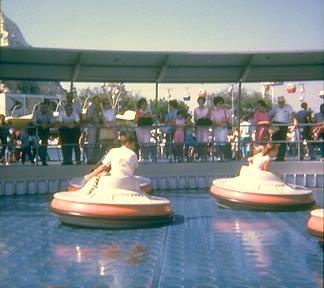 With trains, cars and sleds under his belt, Gurr moved to flying saucers! An inventor brought a bumper car style ride vehicle to WED hoping to sell it to Disney. Bob was one of the first to try out the gas powered hover craft. It was loud and blew dust everywhere, a safety hazard in Gurr’s opinion. But the idea did not go away and Morgan and Bacon developed a concept of using a unpowered vehicle on a platform of pressurized air. Bob designed a flying saucer attraction car for their new concept. The Flying Saucers opened to guests on August 6, 1961, but technical problems led it to run for one day short of five years. In 2012 the concept would be revisited with Luigi’s Flying Tires at Disney California Adventure.
Gurr like others at WED saw much of his efforts redirected to new projects when Walt Disney decided to participate in the 1964 New York World’s Fair, somewhat as an experiment to determine if a Disneyland like theme park could find an audience in the Eastern United States. Bob returned to his Detroit automobile roots with the Ford Magic Skyway, in which he modified Ford, Mercury and Lincoln convertibles into ride vehicles. But the fair also provided Gurr with something new, people! The Disney team had added a late project sponsored by the state of Illinois, Great Moments with Mr. Lincoln. The star of the show was to be full sized animated figure or Audio-Animatronic of Abraham Lincoln. The mechanics of the figure were currently too heavy and it was too limited in movement. In less than 90 days, Gurr dissected the Lincoln frame, analyzed the desired motions and rebuilt the mechanics with lightweight materials.
The years after the World’s Fair were focused on transportation for Gurr. He worked to improve the Disneyland monorail. The Mark II train included a “double bubble” top based on a request from Walt Disney. He thought the driver’s view from the monorail was so breathtaking that guests should be able to share it. The Mark III was lighter and had a lower center of gravity. Additionally, the Mark III provided an updated and more reliable electric propulsion system. Introduced in 1968, the Mark III would run at Disneyland and in Las Vegas until 2006. At the same time Gurr was also assigned a project given the temporary name of PeopleMover, a name that it never seemed to lose. This slow moving transport provided Bob the challenge of loading guests on a continually moving ride vehicle. He solved the problem by loading from a moving turntable, rotating slightly slower than the PeopleMover itself. He also designed the cars used on the PeopleMover, officially known as the WEDway. The WEDway vehicles included automatic doors and roofs for guest convenience. The WEDway opening in 1967 would slowly transport guests through Disneyland’s Tomorrowland until 1995, with a Walt Disney World Magic Kingdom version operating to this day.
Gurr’s experience with slow, continuously moving ride vehicles was key in the development of the Omnimover, initially used for Monsanto’s Adventure Thru Inner Space at Disneyland. The conveyer belt system of ride vehicles allowed Imagineers to turn the guests in any direction. The Omnimover system has been recycled by Imagineers since its 1967 introduction and includes The Haunted Mansion, Spaceship Earth, and The Little Mermaid: Ariel’s Undersea Adventure. And finally, Gurr returned yet again to Autopia, with the Mark VII car. The Mark VI vehicles all suffered cracking due to constant bumping. So Gurr determined that bumping had to be taken into account to design a longer lasting vehicle. The chassis of the Mark VII was built to flex to take into account daily torture. Gurr’s Mark VII’s would run until 2000, when new cars replaced them. The new and improved vehicles would have better engines and electrical systems, on top of a Mark VII chassis!
With the building of a new East Coast resort, the legendary Imagineer was called upon to use his special design and production skill sets. One of his first tasks was to build the Monorail Mark IV for the Florida resort. The new model would be required to carry more guests over a greater distance than its California cousin. Additionally, Gurr had to plan for more extreme weather in Florida, requiring encased components and electrical equipment that could tolerate daily rain. The Mark IV would run in Florida from the opening of the resort until 1989 when two of the trains became the Las Vegas Monorail, operating until 2004. Additionally, Bob oversaw the assembly of the 20,000 Leagues Under the Sea submarines at the Tampa Shipyard. Gurr taught himself electrical design as the drawings of the electrical systems he received from California were inaccurate. And finally, unable to find a third party product suitable for Disney’s needs, Gurr designed the Walt Disney World Tram tractor to transport guests from the parking lots to the ticket center. An updated version of that tractor is used at Disneyland to this day.
From 1979 until 1981, Gurr was assigned to assist in the development of Tokyo Disneyland. Bob traveled to Japan and inspected manufacturing and production facilities. At the office in Glendale he gathered designs from the team working in Japan and forwarded them oversees. He enjoyed his time aiding young designers in Japan but found he had lost his enthusiasm for Disney corporate life. After returning from Japan, he spoke up in a staff meeting about his displeasure. A month later he was asked to leave, and he resigned of his own will. When asked in a November 1997 interview with the E Ticket, he noted that he had risen to Senior Staff Engineer. That role had him reviewing the work of others, including those leading the design efforts in Japan, but did not provide him the opportunity to design himself. He missed that and wished to return to the drafting table. Regardless of Bob’s reasons, over 25 years of Disney employment had come to an end.
In 1981 the time had come for Gurr to leave Disney. He became his own boss as the head of GurrDesign. Bob did not go quietly into the night, but instead continued to find new and exciting projects, 117 to be exact until 2000. Some of these projects were for Disney competitors, including Universal. He designed a mechanical serpent for the Universal Swords and Sorcery Show and a 30 foot animated figure of King Kong for Universal Studios Tour in Hollywood. Gurr also took a number of entertainment projects including the 1984 Michael Jackson Victory Tour lighting systems, a spaceship for the closing ceremonies of the 1984 Summer Olympics, and the Las Vegas Treasure Island Pirate Battle Show. For a man who spent the first half of his career juggling many widely varied projects, these new challenges were business as usual.
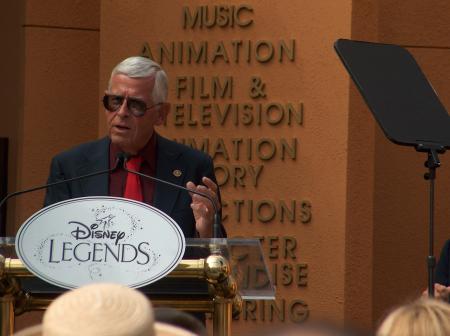
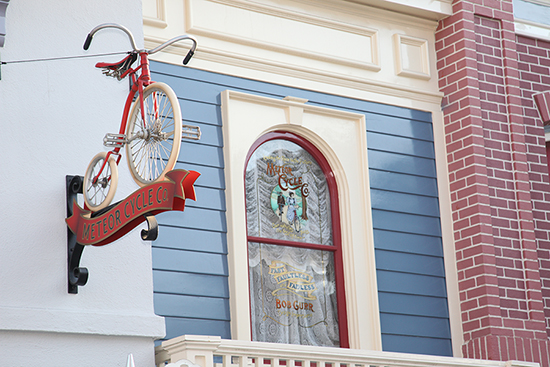
Today guests in Disney Parks around the globe enjoy the legacy of Bob Gurr. Be it a ride on the Disneyland fire truck, a tour on the Monorail, the bumpy circuit of Autopia, a visit to a haunted graveyard, flying tires and so much more, Gurr’s original, updated and adapted designs are unavoidable. However, there are still intentional tributes to this legend in Disneyland and Walt Disney World. In the Disneyland Park above Disney Clothiers one can find a window for the “Meteor Cycle Co” lead by the “Fast, Faultless, Fadless” Bob Gurr. The window claims that “Our vehicles pass the test of time.” The longevity of Gurr’s vehicles continues to be proven daily. The window’s cycle shop theme is based on Gurr’s love of mountain biking, and includes a bike hanging from the building. In Walt Disney World’s Magic Kingdom Park, Gurr also shares a window with Dave Gengenbach, George McGinnis and Bill Watkins. They share in “The Big Wheel Co.” makers of “One-of-A-Kind Unicycles- Horseless Carriages.” Additionally, Gurr has continually shared his stories on blogs and podcasts, highlighting his fun-loving personality and furthering his legendary status with fans. In 2012 he published those stories in his autobiography, Design: Just for Fun.
It is nearly impossible to capture the fullness of Bob Gurr’s career. He has provided over 100 designs for Disney Parks, building his legendary status even before Disneyland opened. Over the years Bob proved that there was no challenge he would not take up, even helping to build a human figure, despite being a trained as an automobile designer. With his fingerprints deeply embedded into every Disney theme park globally, it is impossible to imagine a Disney vacation without Bob Gurr’s creations.
edited by Michele Gaudet
We are currently looking to fill the following Disneyland related positions for WDWNT.com:
Lead Editor – We are looking for a new editor for the Disneyland News Today Podcast. Duties would include editing and publishing the DLNT podcast on a weekly basis. Audio editing experience is preferred but not required, you must be a mac user.
Podcast Staff – We are looking for a few individuals to add to the Disneyland News Today Podcast. Duties include participating in the weekly recording of the show. You must have a decent internet connection and a microphone. Must have general knowledge of all aspects of the parks.
Disneyland Lead Reporter – We are also looking for someone to write and post Disneyland related news on a daily basis on WDWNT.com. For more information about this position, please email us at wdwnewstoday@gmail.com
If you are interested in any of these positions, please email us as soon as possible at wdwnewstoday@gmail.com
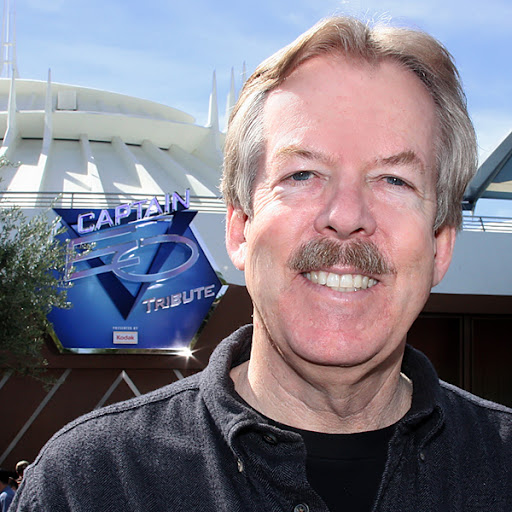
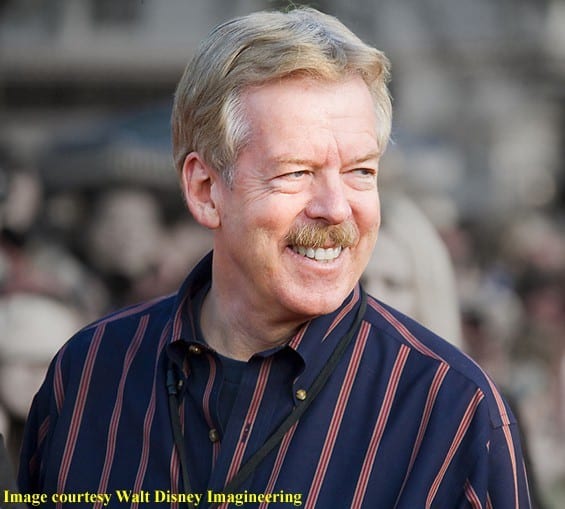
[dropcap style=”font-size: 60px; color: #9b9b9b;”] T [/dropcap]ony Baxter. It’s not necessarily a household name and for most, it’s not even a familiar one. True enough, if I asked you to name an influential person in the history of Disney Theme Parks, Tony Baxter might not even come to mind. But for some of you, this behind-the-scenes giant of Imagineering is the first person who comes to mind.
It’s been a few weeks since Tony announced that he was stepping down from his position as Senior Vice President for Creative Development at Walt Disney Imagineering and reactions have run the gamut from anger to sadness. Tony Baxter has left his mark on the hearts of millions through his designs, his ideas and his imagination.
But who is Tony Baxter and what has he done in the past 47 years?
Travel back in time with me to 1965. There’s a young teenager working at Disneyland; sweeping footpaths, scooping ice cream, and operating a ride or two. He’s working hard to help pay for his college degree in Theatre Design from California State University in Long Beach, California. Starting with that simple cast member position, he would have the same employer for the rest of his life. Having graduated in 1969, he presented Walt Disney Imagineering (originally known as WED Enterprises) with a portfolio including a model of a “Marble Maze”. WDI, impressed by the maze’s precision, gave this young man a job. That young man’s name was Tony Baxter.
Tony’s first assignment as an Imagineer was to work on Walt Disney’s newest project which was not in Anaheim but in Florida, where “the blessing of size” provided plenty of room for the creations of WDI. The Walt Disney World resort opened in 1971 and, with such a large canvas, it’s no wonder that Tony’s talent and vision shined so brightly.
His first big step came in the mid-70s back at Disneyland in California when he designed a concept model for a new attraction with sort of western theme – a runaway mine train. In 1979, Tony’s model of that attraction became a reality when Big Thunder Mountain Railroad first delighted Disneyland guests. Today guests in California, Florida, Tokyo, and Paris continue to experience and enjoy the thrills of an attraction that started as Tony’s model.

The 1980’s parlayed Tony’s success into a more active role within Disney. 1983 saw a complete overhaul and redesign of Disneyland’s Fantasyland. The overall renaissance theme and architecture was changed and replaced with colors and textures of a Bavarian village, thus invoking thoughts and feelings of a true fairytale among guests.
All of this took place under the direction, oversight, and supervision of Tony Baxter.
With such a positive reception, this design standard was repeated and copied at Disney theme parks around the world, proving that Cogsworth knew what he was talking about when he said, “If it’s not baroque (broke), don’t fix it.” That same year, Tony led the creative efforts that brought us the Journey Into Imagination pavilion (now Imagination!) at Epcot.

One day while driving to work, Tony began to brainstorm on an attraction that would bring more guests to Disneyland’s less popular Bear Country (now Critter Country). The light bulb above his head flickered on and the idea for Splash Mountain began to take shape. In 1989 one of the most expansive projects in Disney Theme Park history opened and the first guests took the plunge into the Briar Patch. Two more versions of Splash Mountain now exist at Walt Disney World and at Disneyland Tokyo and all three continue to draw long lines of excited guests.
Even in light of all of this success, 1989 was a trademark year for Tony Baxter. Not just because of Splash Mountain, but because he was named Senior Vice President of Concept, Development, and Design in time for the design of Disneyland Paris which opened as Euro Disneyland in 1992.
The 1990s brought continued success for Baxter. Following in the successful footsteps of the Indiana Jones Epic Stunt Spectacular, another Indiana Jones based attraction was developed and created at Disneyland. The Indiana Jones Adventure: Temple of the Forbidden Eye was designed and constructed by a well-oiled machine of some 400 Imagineers led by Tony Baxter.
In 1998, Tony led a creative team to redesign Disneyland’s Tomorrowland area. The latter parts of Tony’s amazing career have seen the opening of the Finding Nemo Submarine Voyage, the reopening of Captain EO, and the redesign of Star Tours.
On February 1st of this year, Tony informed his fellow Imagineers via an open letter that he would be stepping down from his current role and into an advisory position. He’ll still be an influence – just not a full-time one.
In his 47 year career, Tony Baxter created numerous enduring Disney classic attractions, redesigned others, brought smiles to the faces of people on other continents, and creatively designed an entire Disney theme park, all of which beg to answer just one question: What have you done lately?
[quote]“It has been a wondrous 47 years spanning the opening of Walt Disney World to Big Thunder Mountain Railroad and Star Tours, from Epcot’s original Journey into Imagination to Disneyland Paris and Indiana Jones Adventure. The Imagineers I have known and shared these times with have provided invaluable experiences not to be found anywhere else on earth. The future of Imagineering and Disney Parks is incredibly bright.” – Tony Baxter[/quote]
December 11, 1998 was a landmark day at Epcot. While not officially open, it was the first day Test Track saw riders. After over two years of waiting and delays, Epcot received its first thrill ride. While official Cast Member previews would begin the next day, Epcot cast members and their guests got to experience the attraction before anyone else. However, though I wasn’t working at Epcot, I managed to get in with a group of friends that night as well. After years of waiting for the ride to open, I was there for its first night, and what appeared to be its first breakdown. Just as I pulled into the unload area, the ride suddenly stopped and the Imagineers who had been lining the platforms scattered. It was a truly memorable first ride.
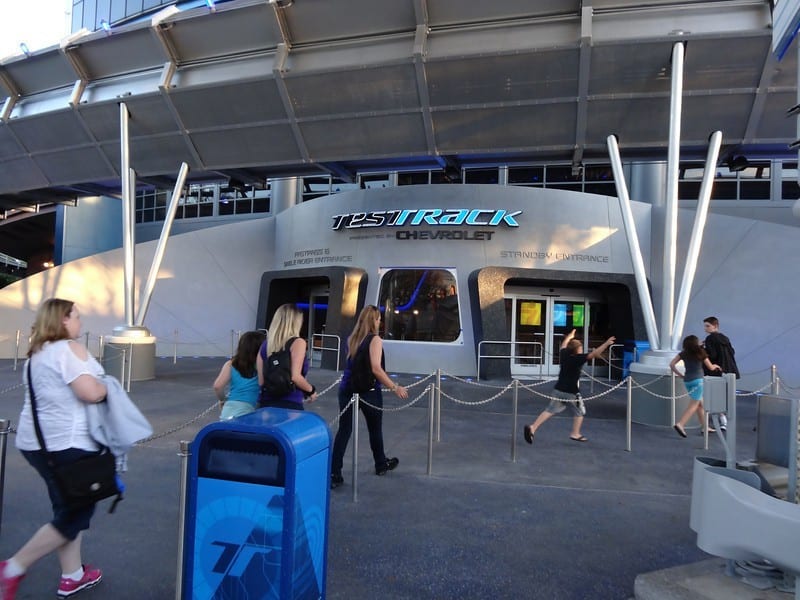
Just a shade over 14 years later, I approach Test Track for the first time again, just after park opening on a Saturday morning. The line is already sticking out past the shade-providing canopy. The ride is down. “At least some things haven’t changed,” I think to myself. I’d seen plenty of reviews and videos of the so-called Tron Track and I hadn’t decided what to think about it. Rationally, I’d decided to wait to experience the ride before condemning it. I decided to get my Fastpass and come back later.
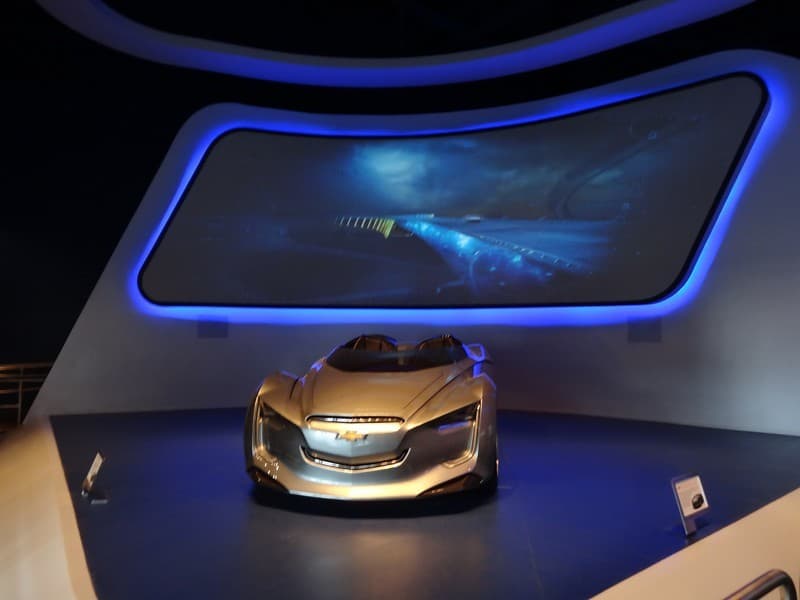
Finally, I came back in the afternoon to ride via Fastpass. Immediately, I saw we were segregated from the main queue, though the few exhibits Fastpass and Single Riders see are interesting enough for the short wait. Finally we come to the design stations. We quickly select our predesigned vehicle, and within a couple of minutes we’re loading on to our Sim-Car and we’re off. Little did I know I had bypassed the most compelling component of the new experience.
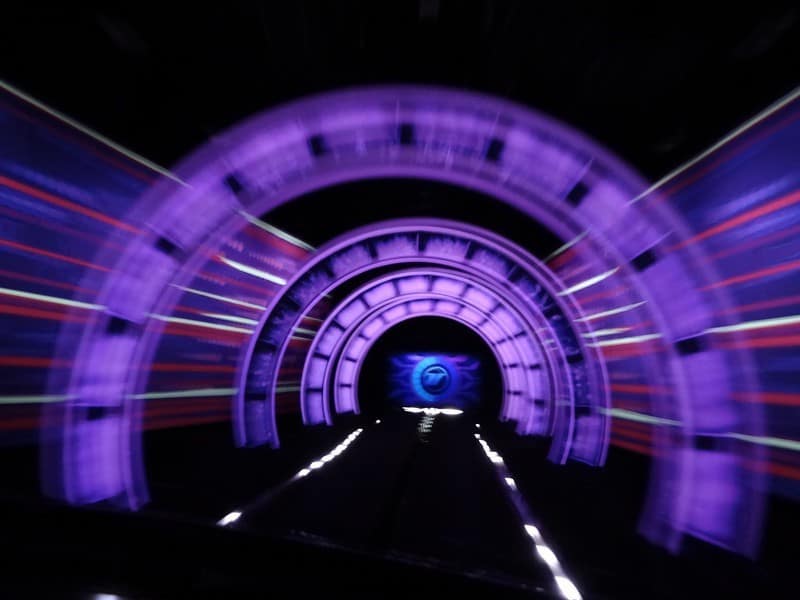
What first hit me was how beautiful the environment of the ride track is. The graphics are incredible, and definitely convey the feeling of being in the computerized environment. However, I immediately began to feel at a loss of where I am and what I’m doing in the vehicle testing storyline. The ride track may be exactly the same, but the change in narration and décor of the building don’t quite impress on the riders what exactly they are testing. When the ride switches to the cornering and high-speed sections this lack of direction is essentially minimized as the ride’s focus switches to the sensations rather than the environment. Along the way the design ranking screens have been displaying how our cars have been doing, but having chosen a pre-made design I felt no real connection to my design.
Any emotional connection to the ride is lost by taking the Fastpass or Single Rider options. The heart and soul of the attraction lie in the design features, and after going back and playing with that, my entire outlook on the ride instantly changed. Exiting into the post show, I still felt somewhat cheated. All the elements of the post show revolve around your design. From the simple performance readouts to the interactive “create your own” commercial and the drive tables, I still had fun but it felt cold and sterile. Something was missing to make the new Test Track the E-Ticket anchor Epcot deserved.
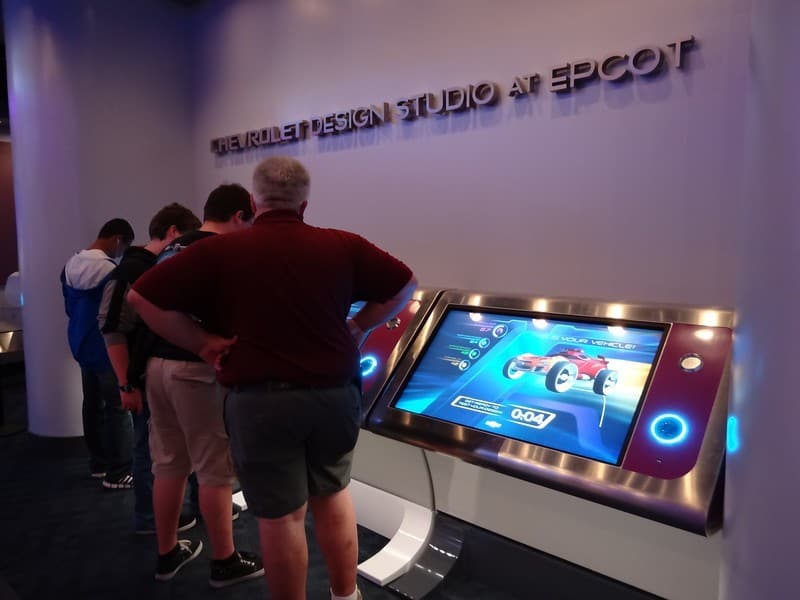
Everything changed again the second I found the design stations in the post-show area. After waiting for the station the person ahead of me had been using to time out (these desperately need a functional “I’m Done” button), I thoroughly enjoyed the design process, playing with option upon option for the full amount of time each section allowed. Everything I had just experienced hit me in a different light. I know the physical experience wouldn’t have changed, and it really hadn’t from the original ride, but I could see the emotional attachment to the car rankings and post show elements.
Unfortunately, I wasn’t able to take my new design back through again because of timing on a busy holiday weekend, the posted wait time was well over two hours. I really wanted to see how it felt with my own car. I found it hard to believe that something so intangible made all the difference in what is billed as a thrill ride. And even more surprising, Disney has finally come up with a compelling reason to skip Fastpass. Hopefully, the advent of MyMagic+ will allow guests to predesign their vehicles and allow those who use the Fastpass option the same experience as those in the standby queue with out the hour plus waits.
In all, the new Test Track is a worthy successor to the original, but the heart of the attraction isn’t the thrill factor, it’s the tie in you get from preshow to post show with the vehicle you create. Unless the option to design your car ahead of time is introduced, I will highly recommend making Test Track your first attraction in the morning, rather than relying on Fastpass to experience the full version.
Ron has been going to WDW longer than he can remember. As a former Cast Member, he has always tried to share his love of Walt Disney World. Ron can be reached at graceysbutler@gmail.com.
[one_half]If you are interested in participating in the Disney College Program, you may have several questions about the program. One of the questions you should have is, “Will I have a life outside of the role Disney casts me for?”As a Disney College Program alumnus, I am pleased to report that the answer is completely up to you.
The Disney College Program offers a diverse amount of options for a cast member’s schedule; you may take as much or as little overtime at your work location as you want. Now, you have no control what you get scheduled, but you control the amount of overtime and what you do with your free time. I know participants who went to Walt Disney World to work, and that was all they wanted to do, and they were happy. They were living their dream, and they knew they would continue to live the dream as long as they wanted to. These people Walt Disney’s words, “You reach a point where you don’t work for money,” quite literally.
There are also people who apply and accept their offer to the Disney College Program so they can move to Orlando, Florida and party while they are there. They request as few hours as possible and try and give away hours whenever they can. They are also happy.
I, and many others like me, go down for the full experience of the Disney College Program and Orlando, Florida. I was completely content with the hours I was given, and I still made time to do almost everything Orlando and Tampa, Florida had to offer. Sometimes I even requested more hours. One week I worked almost 80 hours, and I had no complaints. During a separate week I had a 14 hour shift. Cast Members at the Magic Kingdom kept me busy; they knew if I was there the job would be done.
I was not a slave to Disney though; I did everything I could around the central Florida area that I wanted. I went to competition theme parks, and I went everywhere from Cocoa Beach to Clearwater Beach. I took the stroll down I-Drive, I shopped at the Florida Mall, and I did some of the activities that Disney offers to College Program participants.
Now, having a life doesn’t just happen when you have free time outside of work. Obviously, as you work in the role that Disney has casted you for, you will make friends with co-workers even if you do not work with them every day. You may have a social life at work and outside of work. I made some of my greatest memories hanging out with friends while working at Magic Kingdom such as the rare times when the park was slow or stopping work July 3rd and 4th to watch the Magic Kingdom’s July 4th fireworks show. Watching the same show as the rest of the near 100,000 crowd was a truly magical experience.[/one_half]
[one_half_last]Outside of work, there are many places Disney College Program participants enjoy. A couple of popular hangouts, for when we would get off after hours, were Steak and Shake and I-Hop. I can recount a myriad of times of getting off at 1 or 2 A.M. and going to one of those places with friends from Magic Kingdom or Downtown Disney. Another popular hangout spot is the Disney College Program’s apartment complexes. Each complex has plenty to do within in it, including: exercising, swimming, or playing a sport. Also, if you live in Chatham Square or Patterson Court, you live next to Mickey’s Retreat— a recreational area just for Disney cast members.
There is so much to do outside of working for Disney as a Disney College Program participant. Orlando is a fantastic place to live, work, and play. It has seven world class theme parks, and you can get into four of them for free anytime you want. There are four amazing water parks, and you can get into two of them for free at most times. There is great food, places to shop, and entertainment for everyone. It’s hard to not find something to enjoy. Because of this, Orlando, Florida was voted the #10 Best Vacation Spot in the United States by TripAdvisor in 2012. You do not get that ranking without some great things to do around the area. Additionally, the Tampa, Florida theme park and the beautiful beaches, overlooking the Atlantic Ocean and the Gulf of Mexico, are within reasonable driving distance.
One day, to remind myself from home, I created an exciting, memorable outing. I am originally from Cincinnati, Ohio, and I had a Cincinnati day in Tampa, Florida. I went to Clearwater, Florida for the beach and a Cincinnati restaurant—Skyline Chili. In that restaurant, they had a pennant from my high school. Later that night, the Cincinnati Reds were in town to take on the Tampa Bay Rays. The Reds won the game by a score of 5-0. It was a great reminder of home that I had time to create while attending the Disney College Program.
If you want a social life while working at Disney, you can have one. If you do not want a social life while working at Disney, you don’t have to have one. I recommend having the best of both worlds; if you don’t, the magic will wear off one day. It may not happen immediately, but it will eventually happen. When the magic does wear off, you will want friends to share your magical memories with. The magic will return with time away from Disney. Sometimes people overdose on magic; that’s when you need to step away and breathe in the breath of the sea or experience the frenzy of another local attraction. Once you do that, the magic will return to you, and you will continue to be successful and happy at “The Happiest Place on Earth.”
Have a magical day.[/one_half_last]

When issue 19 of the magazine was released, the Letter from the Editor included a note that the magazine staff was taking a short break, and would use the downtime to consider improvements to the magazine. During that time, the magazine team considered many different options.
Now the break is over, and I’m thrilled to announce that we are significantly changing the way we publish our content. Instead of releasing a monthly PDF version of the magazine, we are going to fully integrate our content into the main wdwnewstoday.com website. Our magazine articles will be published as featured content of the site. The plan is to publish a couple of articles each weekend. The articles will be highlighted as magazine articles to stand apart from the regular news posts on the site. I’ll try to answer some questions that may come up, but please let us know if you have any other questions.
Why are we making this change?
There are a couple of reasons, most notably:
When does this start?
Right now! With the publication of this post, we will begin regular posting of magazine articles to the wdwnewstoday.com website. As noted above, we will be publishing new content on a weekly basis. So check back often.
So is this the end of the print version of WDWNT: The Magazine?
As a monthly print magazine, yes. However, we are working on some ideas that will allow us to publish a quarterly or semi-annual print version that contains a review of articles published during the previous period. In addition, the first 19 issues will continue to be available.
Isn’t this basically just turning the magazine into a blog?
While we are using blog technology, we strongly believe that what differentiates us from a traditional blog is going to be our content. Our publishing model might be changing, but our content and our editorial voice is not going to be changing. We are going to continue to focus on longer articles with creative topics that will appeal to Disney fans. I am extremely proud of the fantastic content that the magazine team has produced over 19 issues, and I am confident that we will continue that going forward.
I hope that this post provides an overview of the new direction for WDWNT: The Magazine. I am very excited about where we are going, and I am certain that we will continue to bring you the most educational and most entertaining content available to Disney fans anywhere.
As always, we want to hear from you. Please email us any questions or suggestions you may have to wdwntthemagazine@wdwnt.com.