WDW News Today Introduces New Features For Easier Navigation & Communication

As many of you are aware, several weeks ago we closed the WDWNT Network Community Forums to allow us to move forward and “keep up with the times”. This community and the world around it has changed greatly since we launched the forums over three years ago, and it was time to move on. In the battle for your precious time, forums were unnecessary with the existence of social media like Twitter & Facebook. In an effort to allow you to comment on the Walt Disney World news & information we post here on WDW News Today without having to then post your feeling in several other places, you can now leave comments on and share our posts through connectivity with a multitude of social media sites (Facebook, Twitter,DISQUS, Google, & Yahoo!). We hope this will make it easier for you to discuss Disney topics with fellow fans and connect with our community. (NOTE: The comment system can be accessed from a small link at the bottom of each post on the main page, but by clicking into each post, you can simply scroll to the bottom to find the comment area)

In addition, we have made several eliminations and additions to our site. The calendar of Walt Disney World events and the “Fantasyland Project Tracker” are history, but we have added links to our most popular news topics to the navigation bar. Right now, Star Tours II & the Fantasyland Expansion are the two hottest topics, so we have links that will send you right to a complete listing of every story we have had on that subject. We hope this will make it easier to track projects step-by-step and to not get lost searching for the topic in the sea of news we post on a regular basis.

So go ahead, try out the new comment system and let us know what you think of these changes below!

Episode 019 Oopsy

Ep. 019 Oopsy
In this episode, Nick and MC review the Sea Creatures and the new mold as it looks painted. They also talk about they know about the Pirates and the 6 piece Steam Park set. A new contest is announced. And like always, the newest in news, release dates, and the Mystery Mailbag.
Listen Now:
icon for podbean
Standard Podcasts [59:36m]: Hide Player | Play in Popup | Download

Episode 018 Balloon Chaser

Ep. 018 Balloon Chaser
In our first Mystery Chaser episode, we celebrate the release of Muppets 2 by recording live from The Muppets Theater. Kermit and the rest of the Muppets join in for this exciting event. Our special guest is Vinylmation Product Developer Donald Ferro. He talks about D-Street’s first birthday and the new Vinylmation mold. We update you on the latest release dates and review Muppets 2. In addition we announce the winner of our Evilos Comment Contest. There are also plenty of Muppet surprises in store for you. Enjoy the show!
Listen Now:
icon for podbean
Standard Podcasts [59:36m]: Hide Player | Play in Popup | Download

Episode 016 Graffitti

Ep. 016 Graffitti
Lots of stuff this episode. Nick and MC review Park 6 and the combo topper. They talk about the latest custom’s articles; Evilos, Celeste, and Cassie. Then they talk about the upcoming releases including Muppets 2 and of course take a questions of the Mystery Mailbag
Listen Now:
icon for podbean
Standard Podcasts [59:36m]: Hide Player | Play in Popup | Download

WDWNT: The Magazine – LAUNCHING SPACE MOUNTAIN

LAUNCHING SPACE MOUNTAIN

by David Smith

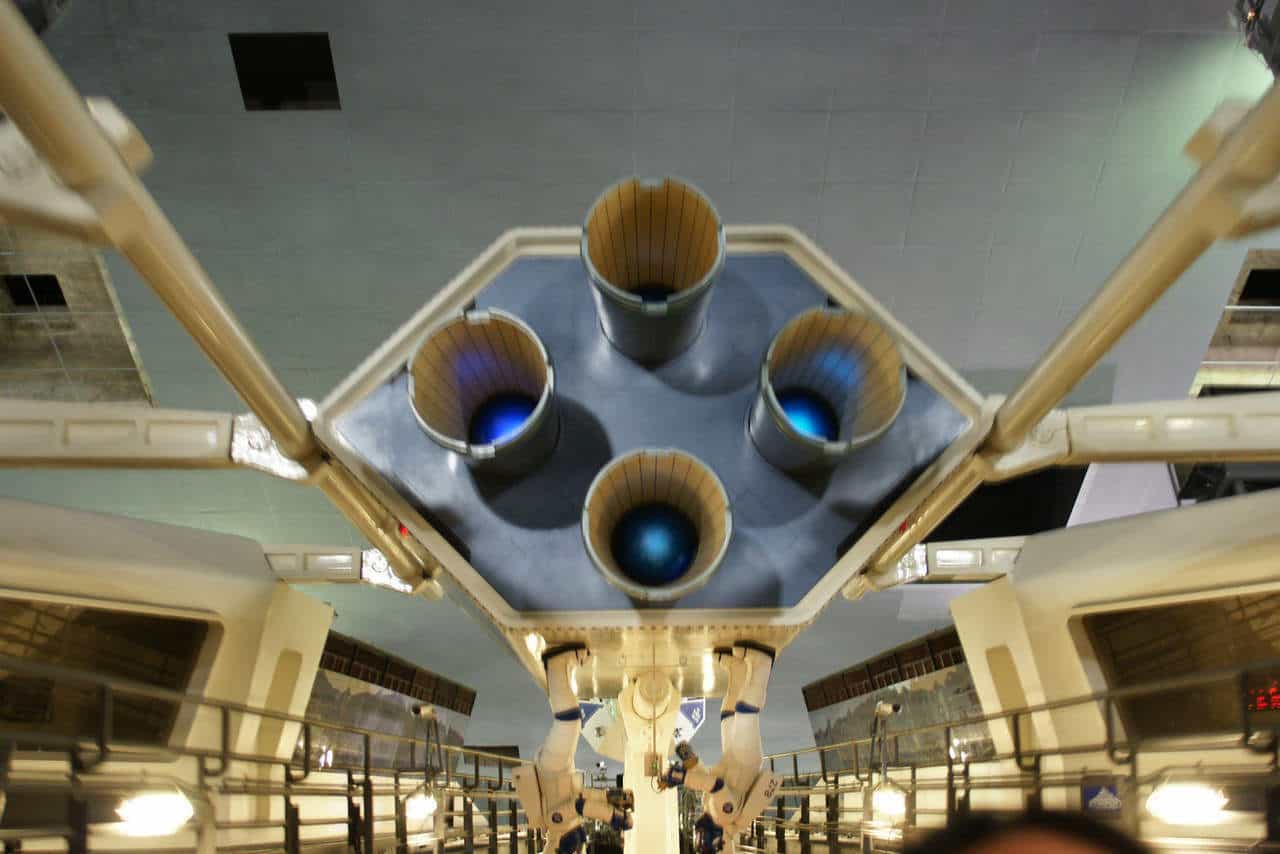
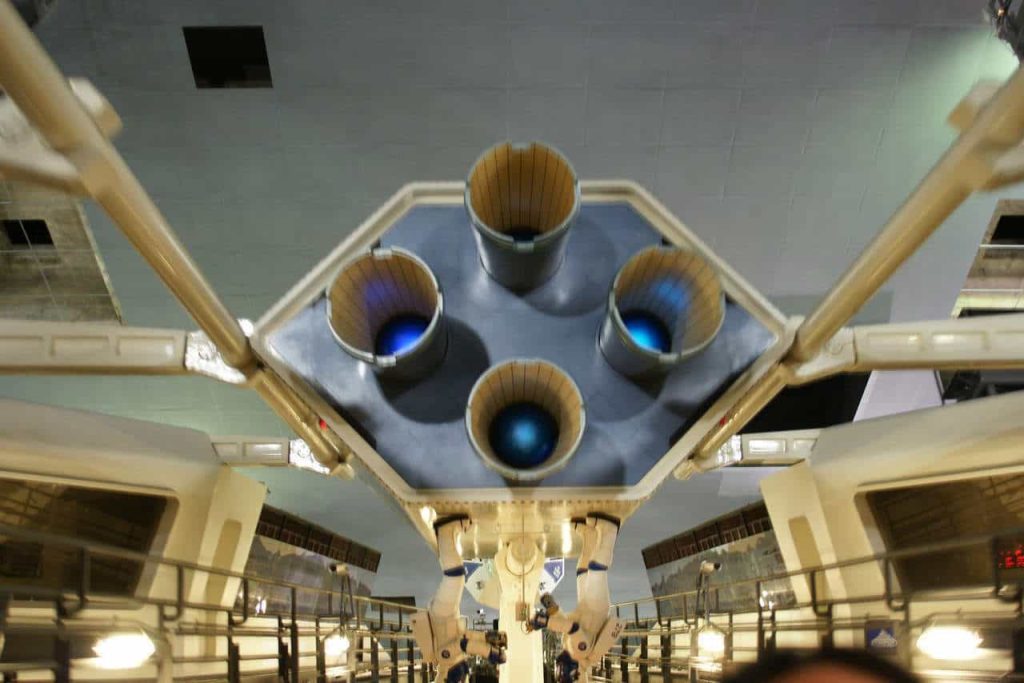
I remember the countdown on the lift hill.  That’s all.  That is not entirely true; I also remember the screams reverberating through the queue line.  I was seven at the time, and I was convinced that those screams represented the final moments of terrified people being flung off the track and into the dark void.  With every passing minute and scream, my fear continued to escalate in much the same manner that the lift hill would physically elevate the “space ships.”  Click, click, click… ever closer to a spiraling doom.  I don’t remember boarding, but I do remember hearing the countdown as the ship climbed the multi-thousand foot hill (at least it felt that way to my seven year-old self).
 DSC00173-X2

“30 seconds to lift-off…”

“15 seconds to lift-off…”

“10 seconds to lift-off”

And then blackness.  Nothing.

I remember very little of my first encounter with Space Mountain in Disneyland.  I had sworn off roller coasters at age 5, but through a strategic combination of insulting reassurance and compassionate accusations of timidity, my family had convinced me to try a roller coaster for the first time.  My friend’s graphic description of the Abominable Snowman on Matterhorn, and my own reticence about riding a runaway train on Big Thunder Mountain left me only one option- Space Mountain.  I mean, what could possibly be scary about space?  (I had not seen Alien yet in this point of my life.)  By the time I was at the crest of the hill ready to launch into the starfield, I was fully convinced I had made a mistake, and if I survived, I would definitely need to find a new family.

I don’t remember the twists and turns, the dips, the speed, or the details of that first ride, but I absolutely remember exiting the attraction and wanting to go again.  Not only had I survived, I was hooked.  I would ride Space Mountain (and roller coasters in general) many more times after that.  What was it about this attraction that played a vital part in turning me, and many others like me, into a Disney theme park junkie?  To answer that question, let’s look back on the history of the attraction leading up to its opening at Walt Disney World and the various iterations that followed.
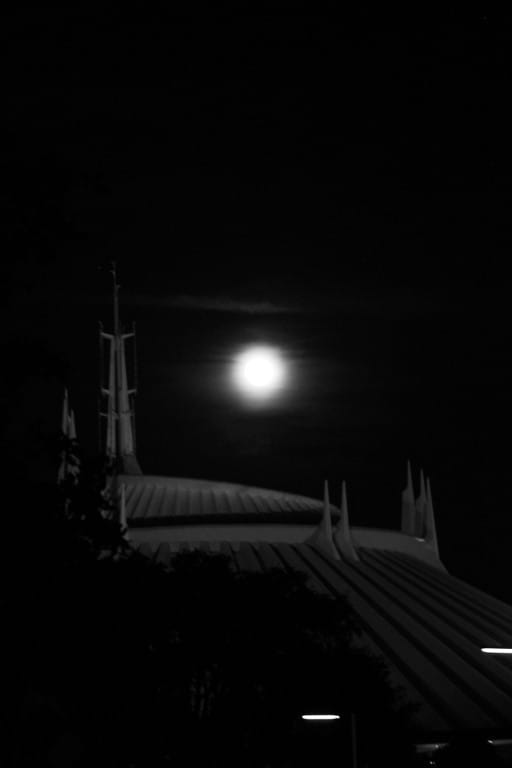
 846a-XL

“Why can’t we have a ‘space mountain’ ride?”

Conceptualization

As with most things in the Disney theme parks, the genesis of Space Mountain has to be traced back to Disneyland and Walt Disney’s vision.  In 1959, Disneyland opened the Matterhorn Bobsleds attraction, decisively establishing that 1) the tubular steel track design was an evolutionary leap forward in coaster design, and 2) thrill attractions could absolutely have a place in Disney theme park storytelling.  With the major Disneyland expansion completed, Walt Disney then turned his attention to renovating Tomorrowland with a planned completion in 1967.

Walt and his Imagineers had been working on creating a cohesive “Space Port” theme for Tomorrowland.  During one design review session, Walt is said to have asked, “Why can’t we have a ‘space mountain’ ride?”  With this single question, the 11-year journey from conception to reality began.  As he often did with things requiring a futuristic motif, Walt Disney asked John Hench in 1964 to begin work on designing a space mountain with the working title, “Space Voyage.”

For engineering the track layout, the Imagineers once again turned to Arrow Development, who had created the ride system for the Matterhorn Bobsleds.  As originally conceived, the attraction would consist of four separate tracks populated by single-car ride vehicles.  As with Matterhorn, the layout would make use of “energy wheels,” which enabled the innovative block zone operations.  Since the attraction was originally going to be installed in Disneyland’s Tomorrowland with southern California’s more predictable weather, the initial track layout included both indoor and outdoor elements that would instantaneously transition riders from blinding sunlight to complete darkness.

As the design team struggled to fit the four-track design into the available space, it soon became apparent that the design was just too large to fit into the available land in Disneyland.  Therefore, the team made the decision to go with two tracks and two-car trains, thus reducing the required space while maintaining capacity.

The design and engineering process continued at a steady pace, until that day in December 1966 that changed everything in the Disney Company.  With Walt’s death, focus shifted away from expanding Disneyland to the Florida project.  The Space Mountain project was put on hold, and many of the team members began working on the Thunder Mesa project.  It would be five years before the Space Mountain project was resurrected.

During the hiatus, the Imagineers encountered many of the same engineering challenges that they had faced, and would face again, on Space Mountain.  Even though the Thunder Mesa project itself would be put on hold, the experience and lessons learned on Thunder Mesa would have a direct impact on the Space Mountain design.

For instance, after visiting Arrow Development in 1968, WED engineer Bill Watkins concluded that Arrow’s “energy wheels” would be prohibitively costly to operate and maintain, and would likely increase the number of attraction shutdowns.  Thus, when development of Space Mountain resumed, it was quickly decided to make it a pure-gravity coaster.

Even prior to the Magic Kingdom’s opening in 1971, park executives recognized that in order to attract the teen and young adult demographic, more thrill rides were required.  There was some talk of replicating Matterhorn in Florida, but the lack of space in the Magic Kingdom’s Fantasyland quickly ended that idea.  Looking at previous ideas, “Space Voyage” quickly came to the forefront, and in early 1971, the project was restarted.

One of the first decisions was to change the attraction from an indoor / outdoor experience to a purely indoor one.  The primary factor behind this was central Florida’s less than predictable weather.  It was also at this point that the track layout was finalized.

Bill Watkins played a key role in engineering the track layout and is one of people most responsible for how Space Mountain feels.  At the time, computers were still too slow to handle the calculations required.  The WED computers that were capable of calculating the track curves would require an entire night to process the necessary data for a single curve.  Therefore, the curve calculations were all done by hand.

Bill used his experience as a pilot to provide a reference for how the curves of Space Mountain were meant to be felt.  During a coordinated (normal) turn, the speed and the bank of the aircraft determine the radius of the curve.  In addition, banking into a turn in an aircraft is usually a smooth transition and the pilot applies pressure to the controls.  Using these concepts as a guide, Bill designed the turns to have a smooth transition into and out of banks while also setting the curve radius to approximate the feel of an aircraft making a coordinated turn.

With the track layout finalized, it was time to start construction.  However, there was one final decision to make.  From the start, the very early sketches of Space Mountain showed the building having a cone shape.  During the design though, there was a sizable contingent of people that wanted the attraction to be covered with a dome shaped building.  A dome would be significantly easier, and cheaper, to build.  After much debate within the company, the decision was handed down that Space Mountain would have a cone shape.  Aesthetic value had won out over economic concerns.

Construction of Walt Disney World’s Space Mountain began in 1972, and the attraction was announced to the public in a joint statement with the attraction’s sponsor, RCA.

“Clearing the Tower”

Opening

On January 15th, 1975, Space Mountain was officially dedicated as a Magic Kingdom attraction.  Guests at the opening were entertained by a 2,000 piece marching band and the release of over 50,000 balloons along with fireworks.  During the ceremony, the Chairman of RCA, Robert Sarnoff, and the Chairman of Walt Disney Productions, Donn Tatum, unveiled a bronze dedication plaque engraved with the words: After nearly twelve years of designs and redesigns, starts and stops, technical obstacles and breakthroughs, cones and domes, Space Mountain was now open to the public and on its way into the stratosphere of American popular culture.


WDWNT The Magazine: A Goofy Weekend

This is a reprint from the printed editions of WDWNT: The Magazine

WDWNT The Magazine: A Goofy Weekend

By Michael Truskowski

Reprint From Issue


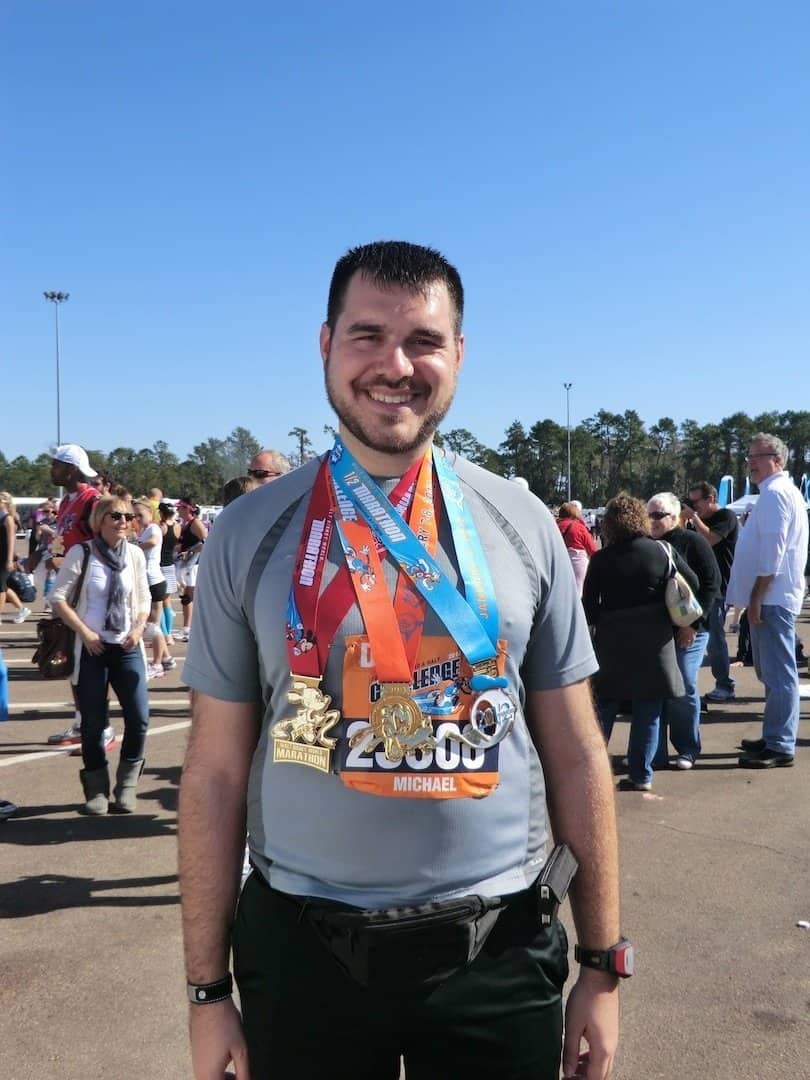
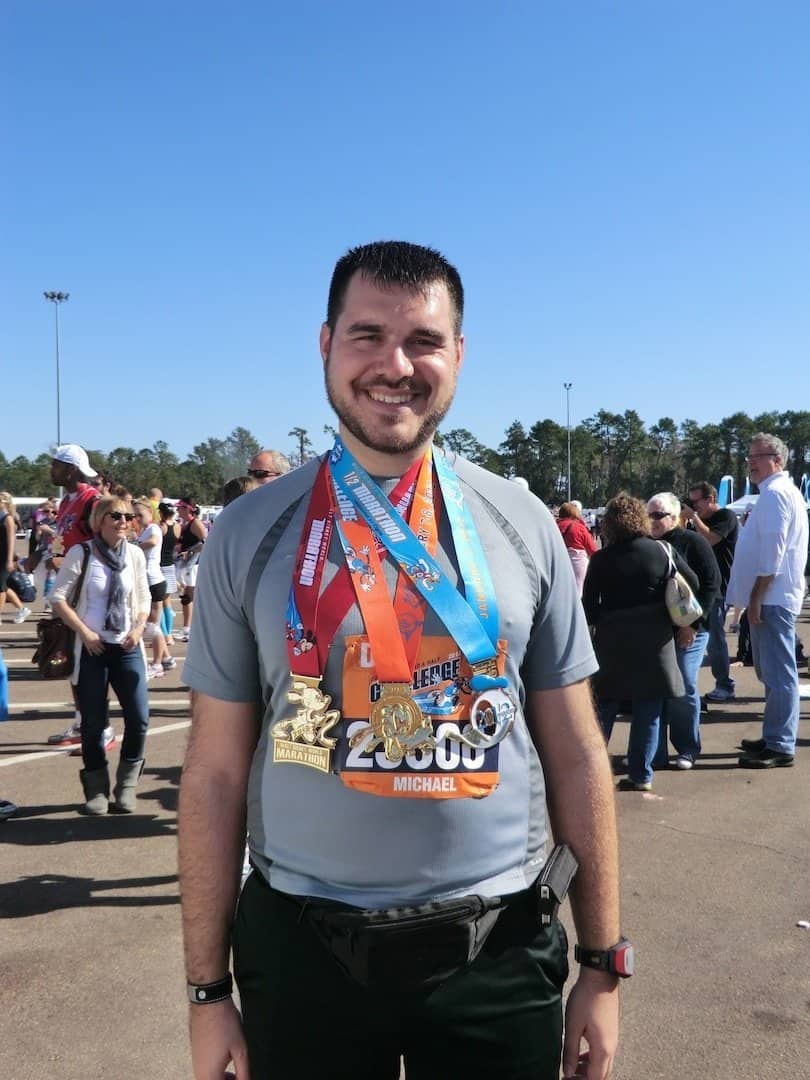
Michael with the Goofy Challenge medals.

Michael with the Goofy Challenge medals.

Running a marathon makes you part of a pretty exclusive club. Less than 1% of the population of the world will ever achieve this. For those of us who have, Disney has made an even more exclusive club, one that a very small, but very proud group of people will join. There is only one thing you can call someone who will wake up at 3AM, twice, to run a total of 39.3 miles- Goofy.

Goofy’s Race and a Half Challenge is an endurance event that is, for many, the ultimate Disney experience they will ever have. The challenge is to run the Walt Disney World Half Marathon on Saturday morning, then return to the start line on Sunday to complete the Walt Disney World Marathon. About 7,000 runners out of the 56,000 who participate in Marathon Weekend will take part in the Goofy. These runners are the most fanatical of all those participating in the runDisney events.

Saturday morning, up bright and early and to Epcot for the Half Marathon. The half is the largest event of the weekend in terms of number of participants, nearly 26,000. It would not be a Disney event without fireworks, and you will get plenty at the start line. Runners are assigned to a corral based on their expected finish time, and each corral gets the full starting treatment (timing devices in your race bib ensure that only your total net time is recorded, regardless of how long the clock was already running when you began). The race heads from Epcot, up World Drive, to the Transportation and Ticket Center. Hundreds of spectators will be out early to cheer you on as you make your way toward Magic Kingdom. One of the more difficult aspects of the course will be the roadway under the water bridge, just before the Contemporary Resort. That hill may not seem very steep on the bus, but trust me, it is.

Running through Cinderella Castle is the highlight of the race for most. Be sure to stop in front to get a photo. There will be multiple race photographers there to take your picture, so you won’t lose very much time at all. Once you leave the Magic Kingdom via the backstage area behind Splash Mountain (ever wanted to see what Splash Mountain looks like from the back?) the course narrows are you head toward the Grand Floridian and Polynesian resorts. Then it is back down World Drive to Epcot.

The most difficult section of the Half Marathon will be at mile 10. There are three long uphill climbs here as you go over several overpasses to get back into Epcot. Then it is a quick run through Future World, and out to the parking lot to the finish line. Congratulations Goofy runners, you are one third of the way there.

My sister joined me in the half this year, her first (and possibly last) race. She may have been nearly an hour behind me, but she got her Donald medal (this year was a special design to denote the 15th running of the half marathon). That medal was around her neck for the rest of the trip, as well as the “I Did It!” shirts that you can purchase at the expo (you didn’t expect Disney to miss putting a gift shop here did you?)

Sunday morning, up early again. The full marathon begins the same way as the half (Mickey starts the race instead of Donald), although you do get to run through Epcot first before heading up to Magic Kingdom. Unlike the half marathon, the course takes a turn through backstage areas on the way to Animal Kingdom. Most notably, runners pass the recycling station for the resort at mile 15.

One of the things that the marathon really makes you appreciate is the size of Animal Kingdom. Once you enter the backstage gates of the other parks, you are in the middle of guest areas very quickly. Not at Animal Kingdom. There is more than a mile of roadway before you exit backstage. I always get a kick out of the guests who arrive at Animal Kingdom that morning and are unaware of the fact that the marathon will be interrupting their morning. Of course, the ones who run through the crosswalks (please follow cast member directions so we don’t hit you) are treated with no wait times at Expedition Everest.

After a very cold week, it got very warm for marathon weekend, and the long, treeless section of the course between Animal Kingdom and Disney’s Hollywood Studios was particularly grueling this year. It was quite a relief to get into the Studios. Having a crowd in the park to cheer you on definitely helps make the last, brutal miles seem easier. One thing I will say about the Goofy Challenge is that you should not run for time. Both the half and full marathons were quite a ways off from my best performances, as I did not want to push too hard in the half, and felt some of the previous days pain in the full.

The big prize, aside from the sense of accomplishment, is the medal you receive at the end (even if you come in last, you get the same medal as those in front of you). For the Goofy, you are rewarded with three, a Donald medal for the half marathon, a Mickey medal for the full marathon, and the much coveted Goofy medal for completing the challenge. Wearing this medal around the parks after the race is over will earn you many congratulations from cast members and guests alike, and even other runners (those without Goofys) seem to look up to you.

One benefit of traveling to Walt Disney World for marathon weekend is that you get to experience holiday hangover time. It is not easy for me to make it down to the parks during the holidays, but I still got to experience the Castle Dreamlights, and the Osbourne Family Spectacle of Dancing Lights, as well as decoration property wide. Although the Christmas background music did start to get somewhat tiring by January 9th.

Probably the hardest part of the entire weekend was waking up at 3AM two days in a row. This is probably the first time since I was a small child that I was in bed by 8PM. This was my third full marathon, and 12th half marathon, but putting the two together was a much bigger challenge than those prior events were. But the sense of accomplishment vastly exceeds the pain. Many of my friends are runners, but none have attempted a race like this. Not to mention the chance to see Walt Disney World in ways few guests ever do.

The runDisney events have seen a surge in popularity in recent years, with all races reaching capacity before event day. In addition to Walt Disney World Marathon Weekend, there are the Princess Half Marathon (Walt Disney World) and Tinker Bell Half Marathon (Disneyland), which are women focused events (but men can run too), The Expedition Everest Challenge, the newly reimagined Tower of Terror 10 Mile, the Disneyland Half Marathon, and the Wine and Dine Half Marathon. Complete any two of at least a half marathon on each coast and receive the special Coast to Coast medal as well. For more information and to sign up to run, visit www.rundisney.com.

There is something else that is important to be said as well. This is a challenge that you the reader can probably complete. That statistic I mentioned earlier about how many people will ever complete a marathon is only part of the story. Of the people who make it to the start line, 98% of them will finish. It takes training and determination to be sure, but you do not need to be an Olympian to do it. I only started running three years ago, and now have over 3000 miles logged and six runDisney medals hanging on my wall (and a New York Marathon too). If you want a Disney experience that is truly unique, and will have your friends amazed, consider signing up for one of the events. Start with a 5K, you may just find yourself going Goofy in the not too distant future.

Check Out The Pilot for “Taylor and the WhatNot”

As we said a long time ago, we were working on a few concepts for original programming for WDWNTube. Well, one new concept has finally gotten around to filming! Please watch this pilot episode of “Taylor and the WhatNot” and let us know what you think via Facebook, Twitter, or email. Enjoy the show:

On a complete side-note, the Hollywood Studios logo you see in the video is a new backdrop for characters across from the Sorcerer’s Hat. There, now this is newsworthy…