Marc Davis: Imagineering Master
By
Daniel Butcher
Everyday guests of the Walt Disney World Resort enjoy the efforts of largely unknown and unnamed Imagineers. Imagineer Marc Davis began to impact theme parks years before Walt Disney dreamed of Disneyland. Davis was a late comer to attraction design, working in animation when Disneyland opened. From animation to attraction design, Davis has left a mark on the Disney experience and his legacy continues today where it started, in film.
Marc Fraser Davis was born March 30, 1913, in Bakersfield California. But California is not where the Davis family stayed. Davis’ father, Harry A. Davis, was a wandering jeweler and magician who attempted to strike it rich in the boomtowns of the United States with his wife Mildred and son in tow. The nomadic life of the Davis family meant that young Marc was always the new kid in town, attending 23 different schools before he graduated. From Florida to Oregon the Davis family was vagabonds. Alone and generally friendless, Davis turned to drawing to fill his spare time. He became a self-taught artist sketching at local zoos and copying illustrations from anatomy books he found in libraries. After high school, Davis sought formal instruction at the Kansas City Institute of Arts and European art schools. Realizing he desired to be a professional artist, Davis attempted to get hired by the Walt Disney Studio and submitted an application under the name M. Fraser Davis. The studio rejected the inquiry, noting they were “not hiring women artists.” Davis used his full first name in future inquiries to overcome the prejudices of the day and on December 2, 1935, started as a Disney artist.

Animator
Davis’ first major assignment at Disney was to serve as an assistant animator to Grim Natwick on Snow White and the Seven Dwarfs. Natwick had helped develop Betty Boop. Natwick further Davis’ skills as an artist. Being noticed for his talent, Davis was moved into the Character Model Department after concluding his work on Disney’s first feature film. In his new role, Davis’ understanding of animal form shined with him developing the models for characters such as young Bambi and Thumper. Walt Disney was especially impressed with the David designed skunk, Flower. Bambi encompassed six years of Davis’ career as he was moved into an animator position. Davis finished the 1940s at the studio animating more animals including Brer Rabbit and Brer Fox in Song of the South for which he was the directing animator. He also began a 17 year teaching position at Chouinard Art Institute, where he met a young female student named Alice Estes who would later become his wife years later.
With 1950’s Cinderella, Davis began over a decade of designing and animating female characters as he continued in feature films. He was the directing animator for the title character Cinderella. Additionally he animated one of Walt Disney’s favorite animation sequences ever, Cinderella descending the staircase in the mouse-made dress. He also animated the Cinderella transformation scene as the fairy godmother dressed Cinderella for the ball. Cinderella was followed by Davis overseeing the animation of Alice for 1951’s Alice in Wonderland. For 1952’s Peter Pan Davis was charged with creating and animating Tinker Bell. In Peter Pan, Davis had to draw a fairy that both communicated and emoted purely through motion being a character without a voice. For Sleeping Beauty in 1959, Davis oversaw the development and animation of both Maleficent and Princess Aurora. And finally Davis contributed the character of Cruella De Vil to 1961’s 101 Dalmatians, a character that he alone animated for the film. Davis’ animation creations alone are sufficient to label him a Disney legend.
Davis’ female characters were known for having strong personalities. A onetime avowed bachelor, Davis was known in the Disney studios for courting strong-willed women, and it was natural that the personality traits that he found attractive would emerge in his creations. He designed characters with large hands so they could be more expressive when animated. Many observed that Davis was able to create characters that audiences were attracted to. However, Davis himself did not enjoy these years of designing female characters. He found rotoscoping, tracing over live action film, uninteresting and desired to animate animals, not heroines and villainesses.
The legacy of Davis’ animation years can be seen throughout Walt Disney World, especially the Magic Kingdom. Be it character development or animation, Davis helped construct the images and personalities of the characters guests love today. At the heart of the Magic Kingdom Park guests find Cinderella’s Castle where one can meet Davis’ creation in flesh and blood at Cinderella’s Royal Table, and Aurora and Snow White may also be found in the dining room as well as through the park. Tinker Bell also can be found throughout the Magic Kingdom from the magic of waking her up at Tinker Bell’s Treasures, flying high in Peter Pan’s Flight or seeing her star in the nightly fireworks streaking across the sky in Wishes. Tinker Bell has been featured in the Magic Kingdom nightly fireworks since she took flight for the first time on July 4, 1985. Fantasmic! at Disney’s Hollywood Studios features Maleficent as the villain ringleader invading Mickey’s dreams including co-conspirator Cruella De Vil. And Snow White and Tinker Bell both make appearances in this nighttime spectacle. From Snow White to Cruella De Vil, everyday Walt Disney World guests enjoy the fruit of Davis’ animation career.

Imagineer
Davis had remained with animation for the early years of Disneyland’s existence. In 1962, Walt Disney invited Davis to visit Disneyland and provide notes on the troubled Mine Train through Nature’s Wonderland attraction. Davis suggested that the mine cars be reorientated to allow guests to better observe the story and provided suggestions on gags to make the ride more playful. Pleased with his feedback, Disney asked Davis to provide direction on reimagining The Jungle Cruise. Davis’ suggestions included the Indian elephant pool and the trapped African Safari, gags which were included in the Walt Disney World version of the attraction. Additionally, Davis supported the development of the Enchanted Tiki Room, in which Davis designed the talking Tiki poles and artwork adorning the attraction walls. The Walt Disney World version of the attraction was available to guests on opening day titled Tropic Serenade and was re-imagined as The Enchanted Tiki Room (Under New Management) including Davis’ Tiki poles and art. In summer 2011, Imagineers returned the attraction to its classic beginnings as the Enchanted Tiki Room. With these attractions under his belt, the veteran animator would not return to feature animation, he would now animate in three dimensions.
Davis was assigned to all of Disney’s projects for the 1964-1965 World’s Fair, including those that would influence Walt Disney World attractions. He was asked to animate the Audio-Animatronic’s movements including standing for Great Moments with Mr. Lincoln a precursor to the Hall of Presidents. He added story elements to The Carousel of Progress which was moved from the fair to Disneyland. On January 15, 1975, it reopened in its new home in the Florida Tomorrowland and is currently Walt Disney’s Carousel of Progress. Finally for it’s a small world, Davis provided story ideas, including gags that adorned Imagineer Mary Blair’s backgrounds. For this attraction he worked with his wife Alice who created costumes for the Audio-Animatronics.
Among the original projects Disney gave Davis was a pirate wax museum that had been in development since 1958. Davis made some initial sketches, but put his work aside for the World’s Fair projects. Past dark rides, enclosed in a show building, retold established Disney stories such as Peter Pan. The pirate ride would lack a story that provided guests a pre-established context. Instead of a story, Davis immersed guests into an experience. He was teamed with former background painter Claude Coates who created the ride’s sets for Davis’ characters and humorous gags. Davis and Coats lead the team which brought the Pirates of the Caribbeanride to completion on March 18, 1967, at Disneyland. “Pirates of the Caribbean” was absent at the opening of Walt Disney World. Davis had plans for an even more elaborate boat dark ride named Western River Expedition which would have taken guests through old west scenes. But due to guest complaints about its absence, executives called for a version of the Disneyland ride. Davis’ river ride was shelved for a new version of Pirates of the Caribbean. Dissatisfied Davis did use the new ride as an opportunity to update the story, ending the ride in a treasure room instead of the arsenal. The pirates of Florida would get their ill-gotten loot opening on December 15, 1973. Meanwhile Audio-Animatronics planned for the Western River Expedition such as buffalos and chickens would make their way to Living with the Land at Epcot. And concepts from Davis’ plans would help inspire Big Thunder Mountain Railroad and Splash Mountain.
A haunted house attraction had been planned for Disneyland as early in 1951 before the park opened. The exterior had been completed during 1963 in New Orleans Square, but the attraction did not yet materialize despite promises of coming soon due to other commitments such as the World’s Fair. A number of Imagineers including Ken Anderson, Rolly Crump, and Yale Gracey had worked on the attraction but progress was slow. In 1964, Davis completed his first recommendations for the attraction, which included the introduction of the narrating Ghost Host. But it was not until 1966 after the death of Walt Disney that Dick Irvine reunited Davis with Claude Coats to oversee the completion of the haunted house attraction. The relationship was tense, with the designers divided between a Davis preferred funny attraction or a Coates preferred scary attraction. Both got some of what they desired, delivering an attraction that included both scary and comedic moments. Davis’s fingerprints are all over the design of the current Haunted Mansion. He painted the stretching room paintings introducing visitors to the special humor of the ride and provided the climax in the graveyard filled with visual gags. On August 9, 1969, the long awaited Disneyland “Haunted Mansion” opened to record crowds of 82,516. While the Disneyland version was being produced, a second version with a Colonial façade was being built in Florida. In April 1971 the attraction was complete and The Haunted Mansion was among the opening day attractions of Walt Disney World on October 1, 1971.
In November 1966, Walt Disney had visited Davis and discussed his future project, The Country Bear Jamboree for Disney’s Mineral King Ski Resort. Disney told Davis his musical bears were a winner. As he left, Disney did something he never did. He said, “Good-by Marc.” Three weeks later Disney died. This had been Davis’ last meeting with Walt Disney. Plans for the Mineral King resort fell through, but the musical bears made an appearance at Disneyland and still perform daily in Florida’s Frontierland. Davis continued working as an Imagineer, developing his favorite attraction, America Sings, a musical Audio-Animatronics show featuring 114 characters which replaced Carousel of Progress at Disneyland.
The Artist’s Mark
In 1978, Davis retired after 43 years with Disney. Even in retirement he still contributed creatively to Imagineering. He consulted on Epcot’s World of Motion attraction and Tokyo Disneyland. Davis’ humor was evident throughout this extinct attraction. Included among the scenes was a train robbery originally intended for the Western River Expedition. He continued to draw on a daily basis, spoke at Disney fan events, and enjoyed his retirement. On January 12, 2000, Davis suffered a stroke. Later in the day with Alice at his side, he passed away.
There are a number of tributes to Marc Davis throughout the Walt Disney World Resort. The most obvious tribute is the window on the west side of Main Street U.S.A that bears his name. The window lists, “Big Top Theatrical Productions” which has been “Famous Since 55.” Also listed on the window are three other Imagineers including Davis’ Pirates and Haunted Mansion partner Claude Coats. Another tribute can be found in Disney’s Hollywood Studio in the Magic of Disney Animation courtyard. There four of Walt’s Nine Old Men including Davis set their handprints in concrete slabs. Additionally there are hidden tributes to Davis throughout the Magic Kingdom Park. In the final scene of Pirates of the Caribbean a family crest with the name “Marco Daviso” can be found hanging from the wall as Jack Sparrow delights in his treasure. In the Haunted Mansion queue a tombstone tribute can be found. The stone reads, “In Memory of Our Patriarch Dear Departed Grandpa Marc. Finally, near Country Bear Jamboree a crate is labeled Davis Tobacco. The subtle and not so subtle nods pay tribute to a true Imagineering legend.
Walt Disney Studios has honored Davis for the entirety of his Disney career. In Disneyland he is honored with another Main Street window, “Far East Imports – Exotic Art” with Davis as proprietor. The window celebrates his love of Papua New Guinea. The neighboring window was revealed May 10, 2012. The window announces Small World Costuming Co., with Seamstress to the Stars Alice Davis. In 1989, Davis was named a Disney Legend. Additionally the company awarded him the Mousecar, a highly exclusive honor, for service to company.
Back to the Movies
Davis’ career began in movies with Snow White so it is only fitting that his work as Imagineer has influenced recent movies. In 2002, The Country Bears was released and though a box office disappointment started a line of Davis’ influenced movies. In 2003, The Pirates of the Caribbean: The Curse of the Black Pearl became a blockbuster and featured gags designed by Davis that were adapted from the ride. The original film was followed by three financially successful sequels. Pirates of the Caribbean: The Curse of the Black Pearl was followed months later by the financially successful The Haunted Mansion starring Eddie Murphy which included Davis gags familiar to park goers including several from the graveyard. Future Disney film projects continue to be influenced by Davis story work with a planned Jungle Cruise movie, sure to have an elephant bathing pool, and a second darker Haunted Mansion film to be directed by Guillermo del Toro. It was just not his story work that has influenced movies but also his life story! The story team for Disney Pixar’s 2009 Up interviewed former Imagineers to determine “What are the most important things in life?” Alice Davis was interviewed and the Davis marriage including their shared love of adventure helped influence the development of the characters Carl and Ellie Frederickson.
Marc Davis has left a long-lasting legacy on the Walt Disney World Resort. The characters he both animated and designed are honored in the rides guests visit today. Additionally, he helped design many of the attractions that today we label as classic. Davis was a renowned story man, using character to move story forward in film and attractions, so it should be no surprise that his work continues to inspire Imagineers, movie makers and guests today.
Daniel Butcher is a husband and father who looks forward to spending time with
his family in Disney Parks. Daniel can be reached at
dbutcher23@betweendisney.com.




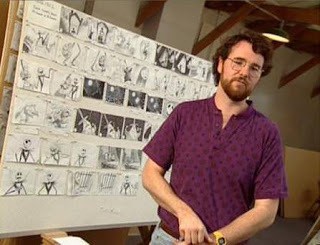
 During his time with Disney, Joe worked on several animated features as a writer and animator; major blockbusters such as Beauty and the Beast, Aladdin, and the Lion King just to name a few. It was also during this time that Joe met John Lasseter. In the early 90s, Joe left Disney and joined Lasseter at Pixar where he took his first job as story supervisor for Toy Story, a role for which he received his only Academy Award nomination (Best Writing). Joe would continue to work at Pixar. He wrote and provided the occasional voice for many Pixar classics such as A Bug’s Life, Monster’s Inc., The Incredibles, and even some small voice credits in Cars (I’m not a Mack, I’m a Peterbuilt!)