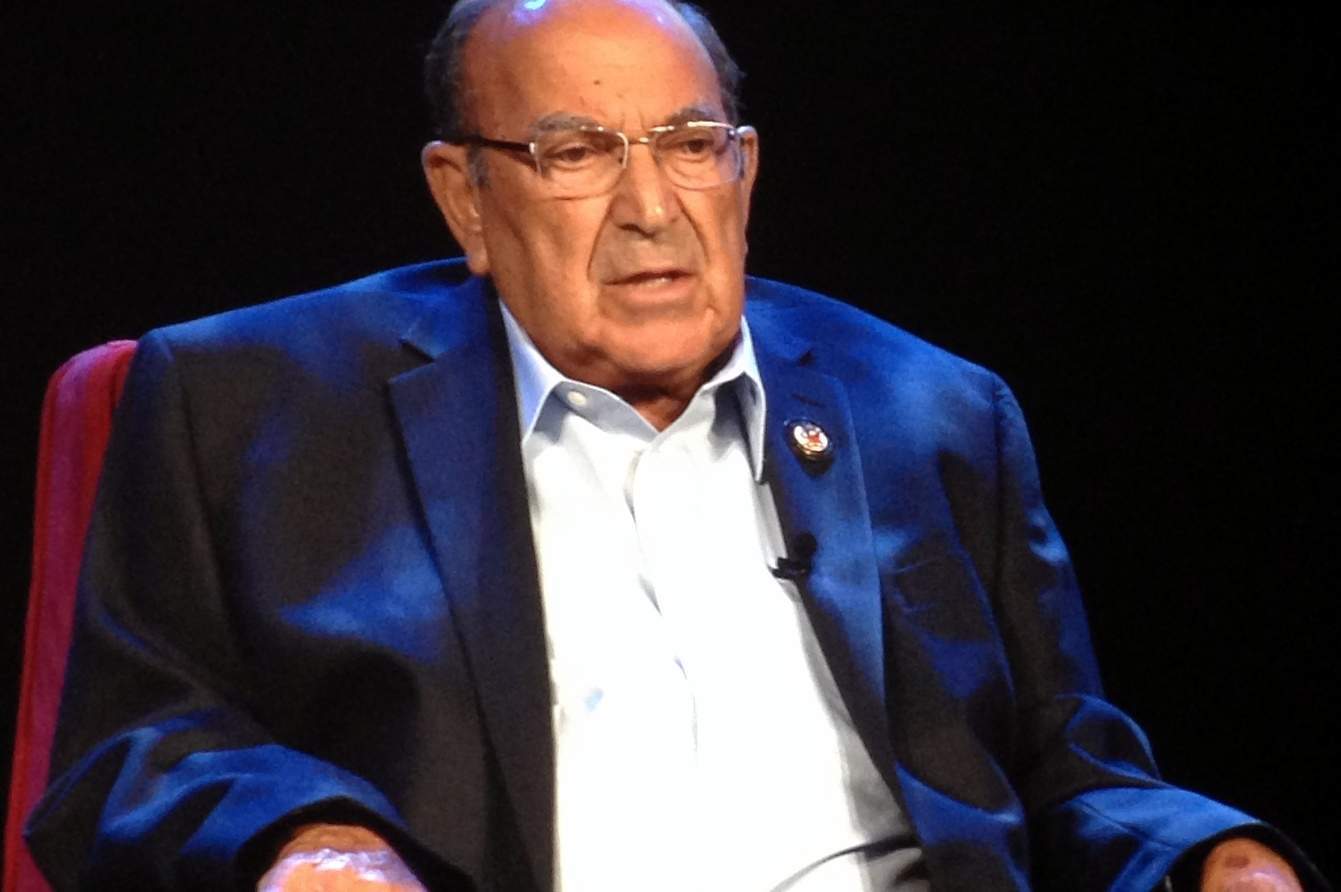
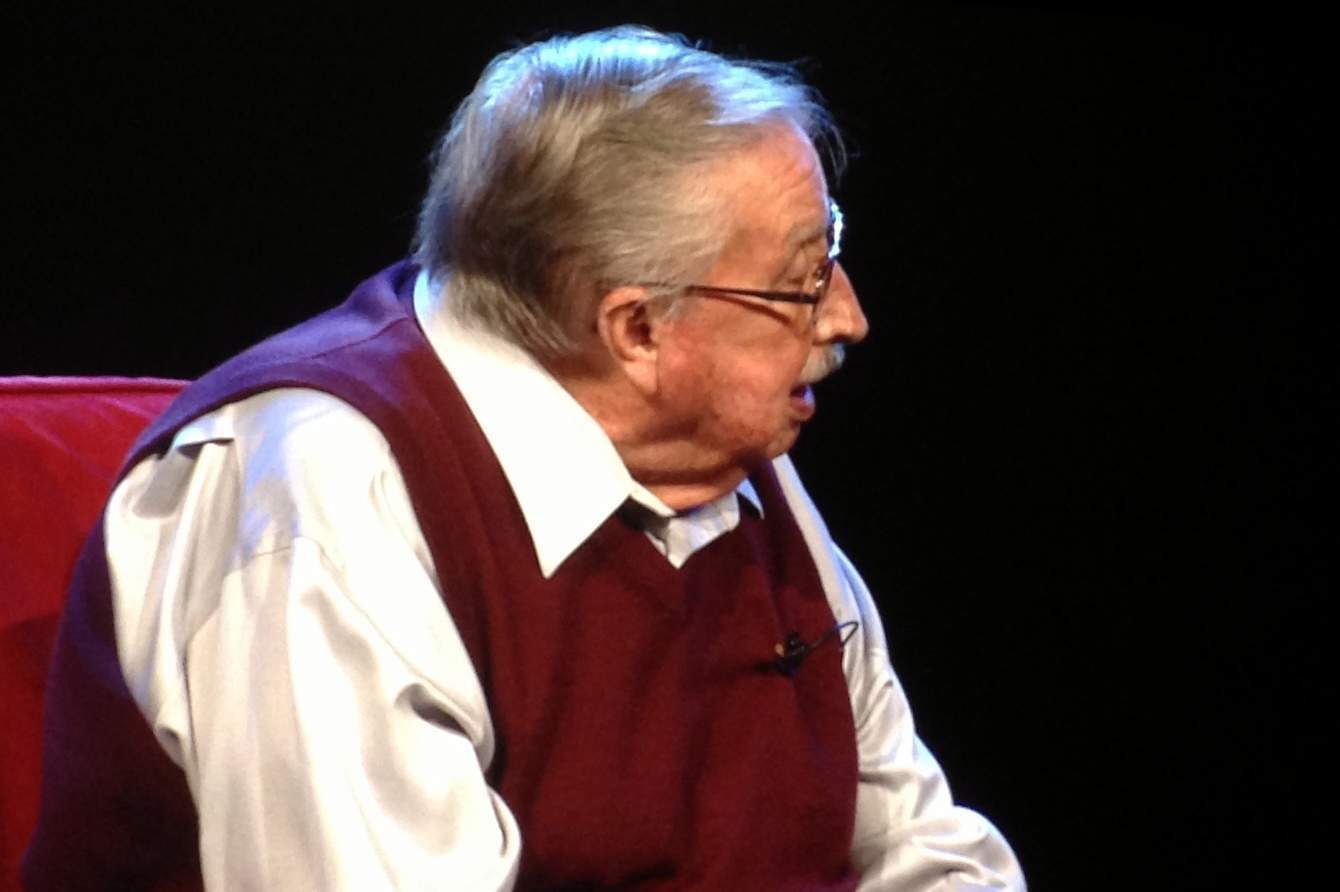
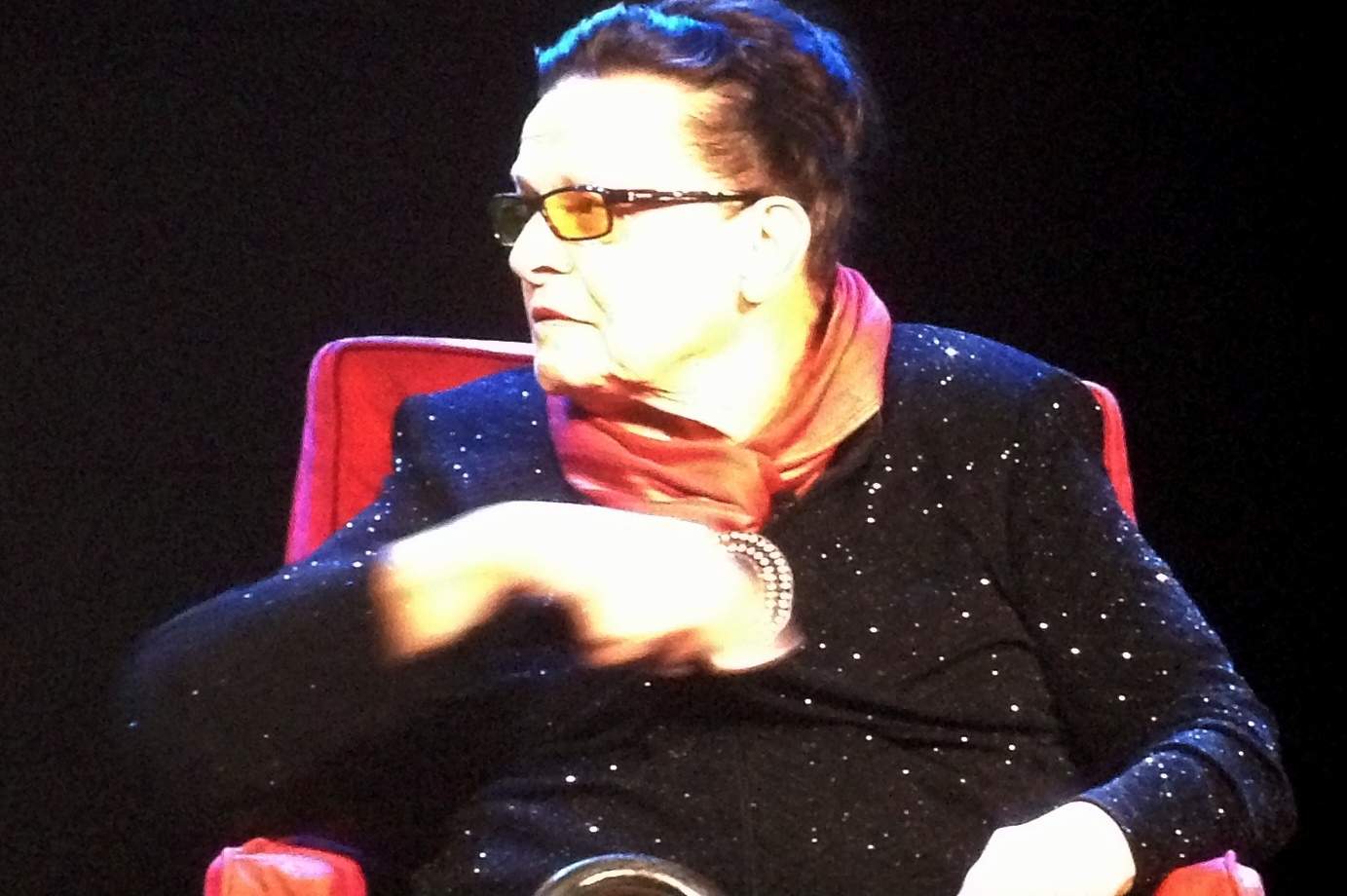
VIDEO: John Stamos Hosts Marty Sklar, Tony Baxter, and Wayne Jackson for “Legends of Walt Disney Imagineering” at the D23 Expo 2017

Join a fascinating conversation, hosted by John Stamos, with three Imagineering Legends—Marty Sklar, Tony Baxter, and 2017 Disney Legend inductee Wayne Jackson—as they recount true-life anecdotes and share personal stories about the celebrated artists, designers, and technical wizards who established the foundation and guiding principles for groundbreaking Disney experiences around the globe. This presentation was hosted on Sunday, July 16th at the D23 Expo 2017.

REVIEWS: “Between-Disney-Vacation” Recommended Reading 101

It’s February. Even though we’re within a few weeks of Daylight Savings — the unofficial gateway to spring — most of the nation still finds itself in the throes of winter for at least a few more weeks. Of course this also means, for most of us, that although we’re getting closer to our next Disney vacation every day there’s still some winter to endure. If you’re like me, life tends to be what happens between visits to the Disney parks. As a way to cope with such a reality I’ve managed to find a few practices — we’ll call this “prep” — that help me deal with the time between trips. Music, podcasts, and of course books are all tools in my Between-Disney-Trips survival kit. So it’s in this spirit that I submit my favorite or most recent “February Survival Reads:”

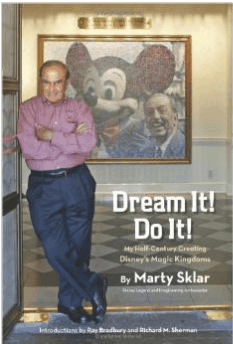
Dream ItDream It! Do It! My Half-Century Creating Disney’s Magic Kingdoms, Marty Sklar
Different from other books I’ve read on the subject of Disney backstory and mythology, Dream It! Do It! by Marty Sklar will be most enjoyed by those most familiar and intrigued by the stories perpetuated by and grounded in Disney lore. Sklar is a career Imagineer that has contributed to every major event in the development of each of the Disney parks. Additionally, he may be the only single person with both a working and personal relationship with anybody that’s anybody associated with the Disney parks story — including the man himself, Walt Disney. This includes the Sherman brothers, John Hench, Mary Blair, Card Walker, Dick Nunis, Joe Fowler, Joe Potter, Claude Coats, and Roy O. Disney. And that is by no means a complete list. If you’re looking for an insider’s perspective and little-known albeit interesting pieces of information associated with Walt Disney World, Disneyland, and even Disneyland Paris and Tokyo, this is your book. What I enjoyed most were the stories about the creation of the engineering and imaginative feat that became Walt Disney World. What I enjoyed least were the inner workings of the corporation itself.

Screen Shot 2015-02-22 at 2.19.46 PMWalt Disney: The Triumph of the American Imagination, Neal Gabler
It’s worth reading just for the behind-the-scenes story on the production of Snow White alone. But the author also takes a deep dive into the early studio years that makes the Walt Disney story that much more accessible to fans and park visitors. There’s some decent stuff on Sleeping Beauty but I found myself wanting more about the genesis and production of Cinderella. For me, this biography has probably been the most comprehensive—even through those painful war years and nature documentaries. Gabler cites pop culture writers of the day and movie reviewers where it is appropriate. Readers Beware: this is quite the commitment. But for hardcore fans, I think it’s also a rite of passage of sorts.


Screen Shot 2015-02-22 at 2.22.22 PMThe Haunted Mansion: From the Magic Kingdom to the Movies, Jason Surrell
Even though The Haunted Mansion is one of my favorite attractions, I never could put my finger on why so many Disney enthusiasts were so obsessed with it. My hope was that reading Surrell’s book would help me understand the Haunted Mansion phenomenon and it absolutely has. He begins with the genesis of the idea in the Museum of the Weird for which Yale Gracey and Rolly Crump were commissioned to begin exploring and experimenting with gags for the mansion. Surrell then walks his readers through the whole creative process. Along the way you meet X. Atencio, Marc Davis, Claude Coats, and plenty of others that had a hand in bringing the attraction to life, er, afterlife. The last third of the book addresses each “scene” in the Mansion in detail—but not so much detail as to be overwhelming. It’s an easy read and highly recommended for Disney fans at practically any interest level.

Screen Shot 2015-02-22 at 2.24.33 PMThe Animated Man: A Life of Walt Disney, Michael Barrier
Oddly enough, this has been my favorite Walt Disney biography. Given Barrier’s obvious bent toward the history of animation and Disney’s place in it, I didn’t have the highest expectations. I am generally more interested in Walt’s life than in the medium itself. But the fact is that Michael Barrier made me care. He made Walt’s life through the lens of historical animation even more interesting. I’m not sure I would make this my first biographical endeavor into the life of one of the most influential people of the Twentieth Century. But I would recommend it as the second.


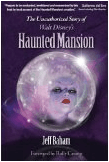
Screen Shot 2015-02-22 at 2.26.15 PMThe Unauthorized Story of Walt Disney’s Haunted Mansion, Jeff Baham
This book is everything you would expect from the founder of Doombuggies.com. Jeff is exhaustive in his research and relentless in his pursuit of the most accurate and most thorough Haunted Mansion apologetic. Different from Surrell who takes an Imagineer’s perspective, Baham writes for the person who just can’t get enough of the Haunted Mansion. A couple of reviewers didn’t like the second section of The Unauthorized Story of Walt Disney’s Haunted Mansion and the way it takes readers step-by-step through the Mansion, but that was probably my favorite part. But that is not to say that I didn’t also love all the history and background present in the first half as Coats, Crump, Davis, and Gracey dominate the narrative as they rightfully should. The bottom-line: this is just a really cool book.


Screen Shot 2015-02-22 at 2.29.40 PMWalt Disney: An American Original, Bob Thomas
Promoted as the only “authorized” biography by the Disney family, what Thomas does get right is that he doesn’t waste a lot of time on the parts of Walt’s story that might have the potential to drag. Instead, the author gives most of the big story lines equal billing: Oswald, “Steamboat Willie”, Snow White and the Seven Dwarfs, Cinderella, Disneyland, and the World’s Fair. Of the biographies that I’ve read this is perhaps the easier read. I liked most about this book the attention Thomas gives to Mary Poppins, something Gabler’s book misses in my opinion. That being said, a reading of Gabler, Thomas, and Barrier provide what appears to be an accurate view of the man you’ll come to know simply as “Walt.”


Not reviewed here are the two Walt Disney Imagineering books. These are great but aren’t your typical front-to-back reads and tend to focus exclusively on the creative aspect, which isn’t for everybody. Regardless, they are great to have. Four Decades of Magic is a series of essays, some more interesting than others, that includes some very interesting and fun background and content. (For instance, did you know that there is purportedly a ghost that haunts Pirates of the Caribbean Florida? Chad Denver Emerson’s book will tell you all about it.) I didn’t review it here because it doesn’t have the most “finished” feel to it. And I’ve intentionally avoided Project Future but only because I’m just not as interested in the corporate side of the Disney experience. There are plenty of others but I feel good about recommending all six of these books as a part of your 2015 February Survival.

INTERVIEW: Celebrating the 45th Anniversary of Disney’s Haunted Mansion with Jeff Baham

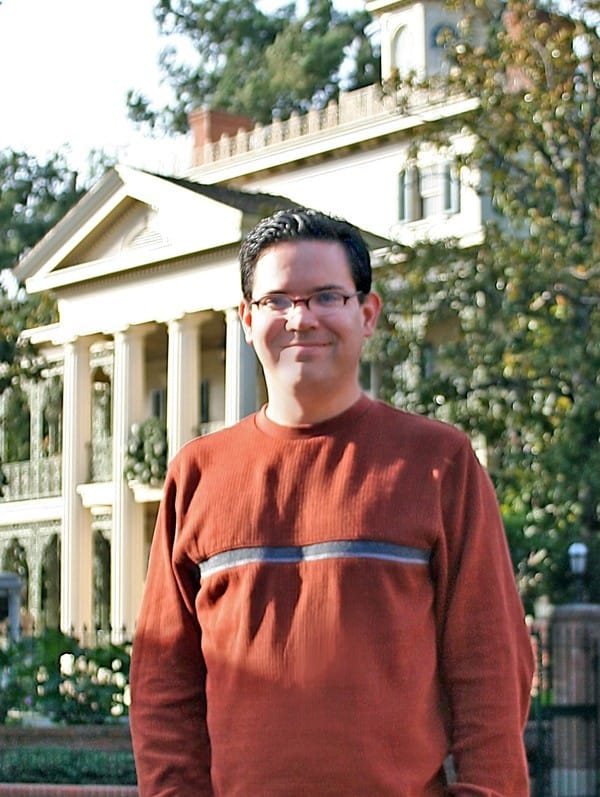
DoomBuggies.com founder Jeff Baham. Used with Permission.

DoomBuggies.com founder Jeff Baham. Used with Permission.

Even though the California and Florida editions of Disney’s Haunted Mansion were not constructed on the same day 45 years ago, it seems appropriate to acknowledge August 9, 1969 since the versions are so similarly conceived. So it is in this “spirit” that we have caught up with DoomBuggies.com founder, Mousetalgia founder and co-host, and author of the just-released The Unauthorized Story of Walt Disney’s Haunted Mansion Jeff Baham. Jeff has joined us for a look into the Mansion’s spooky history as we anticipate its 45th Anniversary.

Brian: Jeff, thanks for being with us for such a ghoulish occasion.
Jeff: Thanks. I’m always up for discussing one of my favorite topics.
Brian: Given that, I think it’s safe to assume that you have a rather nice collection of Haunted Mansion artifacts and collectibles. What is your favorite piece of Haunted Mansion history?
Jeff: My favorite piece is a silk-screened poster from Disneyland advertising “I Scream Sundaes,” featuring the famous hitchhiking ghosts. I was lucky enough to purchase this from someone who worked in the park’s print shop, where they had a copy or two of the silk-screened prints archived. It has been pictured in books before, but I’ve never seen one out on the market. I love it — very vintage, very classic Disneyland.
Brian: It’s all about who you know and being in the right place at the right time.
Jeff: And a little luck.
Brian: You reference “vintage Disneyland” and there are definitely different vibes between WDW and Disneyland. Regarding the Mansion specifically, there are some obvious differences and some not-so-obvious differences. Why the architectural variance in the Florida and California versions of the Haunted Mansion?
Jeff: I’ve heard Tony Baxter say that they didn’t want to put a southern plantation-style home in Florida since that type of architecture might not be as uncommon out on the east coast as it is here in California. But I suspect the Imagineers also wanted to play with the scale and apparent scope of the attraction. Part of the charm of Disneyland’s Haunted Mansion is that so much happens in a space that should be obviously far too small to contain it all. I can imagine some designers may have had the idea that the suspension of disbelief was too high for such a small house — but I still run into people to this day that marvel at how so much action can take place in Disneyland’s tiny southern manor. They really have no idea that there is a separate show building!
Brian: Passport2Dreams has a fairly exhaustive post about this exact topic for anyone that is interested.
Jeff: Yes. She’s very thorough.
Brian: When I first started going to the parks I really didn’t understand all the love the Mansion got. After doing little reading, however, I have formed my own opinion on this. With so many great attractions in the Disney parks, why do you think the Haunted Mansion remains far and away the most popular?
Jeff: I think there are a couple reasons for this. One is that the internet has enabled like-minded souls to find each other and many of these people like to walk briefly on the wild side without really dabbling in anything awful or gruesome. Halloween and Disney’s Haunted Mansion are two perfect expressions and outlets for this kind of personality. Another reason is that the attraction contains something more than just scenes —it contains magic. Literal stage magic. Some of the tricks Imagineer Yale Gracey came up with were adapted from techniques reaching back all the way to the late 1700s, while other tricks he used were cutting edge in the ’60s. Even today new digital techniques are being utilized in the Mansion. It’s an audio-animatronics show, it’s a magic show, and it’s a spook show. It covers a lot of bases.
Brian: That’s better than my answer.
Jeff. Ha. Well it’s what I do.
Brian:  Both the Florida and California Mansions went through some changes in the late 2000s. What changes or refurbishments would you like to see in the next 10 years?
Jeff: Well, I guess I’m a purist. I always prefer that the Imagineers either take an attraction away completely or leave it alone if it’s a classic. But I don’t get upset about it when they do change things — I just hope for the best. That said, I think one of the most effective additions to the Mansion in recent years has been the audio effects in the Walt Disney World stretching gallery. It brings the room to terrifying life in a way that Disneyland’s can’t match.
Brian: I’m more a purist as well. I walk that line between “Stop!” and “Just please don’t blow it.”
Jeff: I might like to see what the Imagineers could do with enhanced audio effects throughout the attraction — or even smells. But I’m essentially a purist.
Brian: An interview like this isn’t complete unless there’s at least one question about the Hat Box Ghost. Tell us what you know about the Hat Box Ghost and its amazing disappearing act.
Jeff: I can’t tell you everything!
Brian: Ha ha. Of course you can’t.
Jeff: But I can say this – the gag was sketched out by Marc Davis among many other equally worthy characters and ghostly creations, and Yale Gracey did his best to make it work; but the Haunted Mansion relies on stage magic, not close-up effects. Whatever they tried, they just couldn’t get the head to completely vanish when it appeared in the hat box. Because of this, only days after the attraction opened, Marc asked to have it removed. Blaine Gibson sculpted the head that was used, which was one of the ghost heads used a number of times in the attraction – for the skeletal hitchhiker and a family portrait or two hanging in the corridor of doors. The Imagineers know that the legend of the Hat Box Ghost has grown tremendously over the years to the point that I think they are truly torn over whether or not it would make sense for them to revisit the character at all. Nothing they do could ever live up to the hype in people’s imaginations. But ol’ Hattie may show up someday — maybe in a slightly different location, in a slightly different form. Who knows.
Brian: I’ve read that the timing of the illusion was a problem as well. That is, the entire gag couldn’t be pulled off in the time allocated by the speed of the doom buggy.
Jeff: I’ve read that as well. It makes sense.
Brian: Given the length of time between concept and completion and the imagineering legends that contributed to the attraction, the Haunted Mansion is practically a “museum of imagineering.” What is most interesting to you personally about the Mansion’s history?
Jeff: I think one of the most interesting aspects of the Haunted Mansion’s history is simply Walt’s tenacity in having it placed into Disneyland and his motivation behind putting it there. Every park that Walt had a hand in creating, from his original Mickey Mouse Park that was intended for a small lot in Burbank, to Disneyland, to the Riverfront Square project in St. Louis, and finally to the Magic Kingdom in Florida — each of those proposed parks had a haunted house included in the design. In fact, in the park Walt was proposing for St. Louis, the plans called for the front gates to open toward a boulevard that ended with a hill upon which was to sit a dramatic haunted house, rather than a castle like the other parks. At Disneyland, the Haunted Mansion was always in development. It was probably in the conversation before the park even opened in 1955 and assuredly since 1957 when Ken Anderson started designing the attraction in earnest. Walt clearly believed that any park that would echo his concept of American life would also necessarily include some sort of haunted house.
Brian: Ah. I’ve never looked at it that way. That’s fascinating.
Jeff: Walt’s understanding of the American psyche is fascinating.
Brian: Right. Walt Disney’s footprint on Twentieth Century Americana is staggering. Next question. Sea captains, Beauregard, the Ghost Host, Leota, the bride, the raven. There has been quite a bit written about the Haunted Mansion story and how it came together (or didn’t come together, depending on the source). What has your research led you to conclude about the origin of the current Haunted Mansion story?
Jeff: The origin stories of the Haunted Mansion are many because some of the designers responsible for its creation never really regarded it as a success. So each of their takes on the project stand alone. Generally speaking, I think you could consider Ken Anderson’s initial stabs at a storyline for the attraction, based on a sea captain and a probable marital tragedy, among the foundations with the deepest roots. Much of what Yale Gracey and Rolly Crump did when creating special effects and magical techniques were based on Ken’s sketches and ideas. Even Marc Davis, when he came to the project in the early ’60s, started by trying to visualize the ideas that Ken had developed, with brides and pirates, et cetera. Some of the minor details came about later in the game, when X. Atencio was writing the script for the Ghost Host. My conjecture is that it all boils down to the fact that Walt Disney himself was never completely satisfied with the solutions that had been developed for the attraction, up to the time of his death. Ken wrote treatments and built sample sets with intricate scenes developed to show to Walt. But he eventually was sent back to Animation to help with Sleeping Beauty so he must not have captured exactly what Walt was envisioning. Ditto the rest of the team when they came back after the World’s Fair. I think that’s why when Rolly had something way outside of the box to add to the conversation with his ideas for surreal characters and scenes for the Mansion, Walt was very open to him — even if he never really knew exactly what to do with them, eventually suggesting a sort of “Museum of the Weird.”

Halloween Overlay. Photo courtesy of Karen Daniel

Halloween Overlay. Photo courtesy of Karen Daniel

Brian: I visited Disneyland during the Halloween overlay in the last couple of years. I thought it was a nice mash-up that created quite a lot of energy. Why do you think WDW doesn’t use the holiday overlay for its version of the Mansion?
Jeff: I think that too many people make once-in-a-lifetime trips to Walt Disney World for the park to decide to radically change the Florida attraction for an extended period of time. At Halloween, they probably want a to provide guests with a haunted house to visit, not a winter wonderland. I think that’s probably the main concern — but you never know what might happen.
Brian: And I get the sense that California has more season pass guests, by percentage, than WDW. I’ve always thought that contributed to the decision.
Jeff: That could be.
Brian: How about a book recommendation, Jeff. What resources are available for those of us that want to know more about Haunted Mansion history?
Jeff: Funny you should ask. My own book on the history of the Haunted Mansion is set to be released this month from Theme Park Press. Called The Unauthorized Story of Walt Disney’s Haunted Mansion, it presents an in-depth look at the various key players in the attraction’s development, their struggles and conflicts, and how the attraction finally came to exist as it is. I utilized hours of new interviews and a thorough review of all of the Haunted Mansion-related events and panels held at the various parks over the past 15 years. Nothing else comes close to the level of detail and variety of source material. Having shamelessly plugged that project, I would say that The Haunted Mansion: From the Magic Kingdom to the Movies should be in your library as well because it has a wealth of cool artwork pulled from Disney’s archives. And here’s a pro tip: one book that any hardcore Haunted Mansion fan should have in their library is a copy of  Decorative Art of Victoria’s Era by Frances Lichten, which was published in 1950 and is still readily available as a used book for very reasonable prices on Amazon.com. This is the book that Ken Anderson borrowed from the Disney Studios’ library and used very specifically to create the look of the Haunted Mansion’s architecture. It’s quite likely that he, and other Imagineers, also utilized the book for advice regarding cast iron, home decor, and other elements that went into the development of the look of the Haunted Mansion facades. It’s a distinct part of the history of the Haunted Mansion, and a sort of Haunted Mansion collectible in its own right.
Brian: That is definitely a pro tip.
Jeff: You need to buy it if you don’t already have it.
Brian: I guess you’ve seen a lot of the new Haunted Mansion merchandise that will be available this fall. What “got to have it” items have you found? Note: I have actually asked for the 13-hour wall clock from doombuggies.com for Christmas.
Jeff: Why wait until Christmas?
Brian: My wife, Karen, said so.
Jeff: Good decision. It seems Disney is really testing the well of Haunted Mansion fandom to see how deep it really goes. The recent announcement includes over 100 new products, not to mention the art that releases this year for the 45th anniversary at Disneyland. I’ve finally moved more into the “vintage collectibles” realm of Haunted Mansion collecting, but I do like some of the new home decor that Disney has come up with.
Brian: I really like the plate.
Jeff: You or Karen?
Brian: I’d rather not say.
Jeff: Ha. I guess the item I’d most like to get my hands on is the newest Ink and Paint Department release at Disneyland Park which features a hand-created cel of the Hat Box Ghost. It’s quite beautiful, and a very limited edition.
Brian: Thanks for your time, Jeff. That’s it for us. It’s always a pleasure. Hopefully we can do it again sometime.

Be sure to check out Jeff’s web site at www.doombuggies.com and follow Jeff on Twitter @JeffBaham.  And I’m excited about the release of The Unauthorized Story of Walt Disney’s Haunted MansionIts includes a foreword by Rolly Crump and is a must for any Haunted Mansion fan. Thanks again, Jeff. And Happy Anniversary Haunted Mansion!

Video, Photos, & Review: “Working with Walt” Panel of Disney Imagineering Legends at the D23 Expo

all stage

It is one of those experiences you tell your grand kids about. The time when you were in the same room as the legends who made the magic happen. I’ve had the fortune to attend a few panels over the years that included Imagineers who worked along side Walt Disney himself, to create the magic of the Disney Parks. The final day of the 2013 D23 Expo had a full slate of Imagineering panels, and it was all kicked off by a panel titled “Working with Walt.” No further explanation was needed to get me and thousands of other fans to wake up early and line up for this one.

marty stage

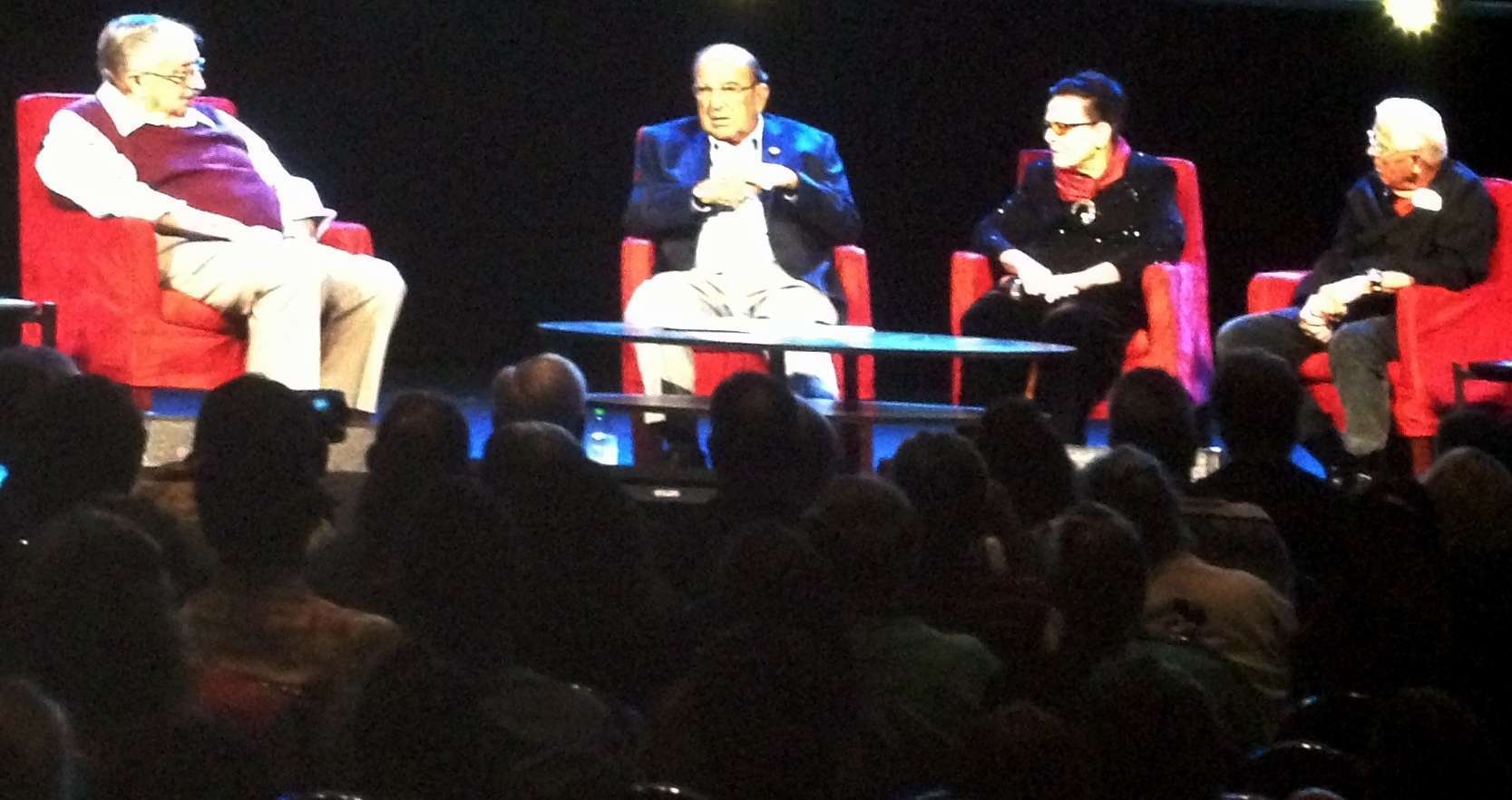
The panel was hosted by Marty Sklar and he was joined on stage by X Atencio, Alice Davis and Bob Gurr. Throughout the panel, they were asked various questions about becoming an Imagineer, their first meeting with Walt and other personal encounters with the man. Very quickly, a few things became evident. Just the process of remembering their times with WED (WDI) and Walt Disney make them light up like Spectromagic. You can tell they had such joy creating everything that brings the guests joy. There is no need to tell you what age these legends must be today, but as they sat up there on stage, their memories of Walt were as fresh as what they ate for breakfast that day. The other thing that was apparent, is they love to share these memories with all of us. So here are a few that stood out to me.

Bob Gurr (whose credits include more than 100 designs for attractions ranging from Autopia and Matterhorn Bobsleds to the Disneyland and Walt Disney World Monorails. As he’s often quipped, “If it moves on wheels at Disneyland, I probably designed it.”) told of his first encounter with Walt Disney. In October of 1964, as he was working on sketches for the new Autopia attraction, he was invited over to the back lot to take a look at the chassis of a car. As he was there, he recalled “this guy walks up. Unshaven. Looked a little on the ratty side. Had on a Roy Rogers belt with little silver bullets painted in it. And a funny little short tie with a funny little symbol on it. And he was just talking away, and then walked off. And as he walked off everybody said okay, see ya Walt. And I thought, oh my God, that’s Walt Disney. Saturday morning, unshaven… I thought that was the father of one of the night guards!”

Alice Davis (whose credits include designing and dressing animated figures for It’s a Small World and Pirates of the Caribbean) recounted her first encounter with Walt when she was called in to contribute to the 1964 World’s Fair. After the story, Marty was about to move onto the next panelist, but Alice interrupted with a touching follow up to the story. “I was born during the depression. And I didn’t have dolls like all the other little girls. I was lucky to have a roof over my head and clothes. My friends wouldn’t let me hold their dolls. So I was always sorry that I didn’t have the dolls. So when I lined up all those (Small World) dolls, and I got to do all of the costumes, I thought I’ve got more dolls than them.”

x stage2

X Atencio (whose credits include dialogue and music for Adventure Thru Inner Space, Haunted Mansion and Pirates of the Caribbean) recalled the days when Walt asked him to write the script for Pirates of the Caribbean. After the script was done, he went to Walt and suggested that a song be written for the show. He then, spontaneously sung out towards the audience “Yo, ho, yo, ho, a pirates life for me.” the audience erupted with applause. But with such pride in his work and knowing the joy he has brought millions, he had to finish the verse. “We pillage plunder, we rifle and loot. Drink up me ‘earties, yo ho. We kidnap and ravage and don’t give a hoot. Drink up me ‘earties, yo ho.”

alice stage

They all shared other general memories of Walt including the way he would lead a team of people, the fact that he always remembered a conversation and the way he cleared his throat before entering a room. That was his signal that he was coming, a trait they pointed out, that the upcoming Saving Mr. Banks movie caught onto.

The panel ended with an audience Q&A where the question was posed to Mary Sklar about EPCOT and if he ever thinks about what would have been if Walt hadn’t passed so soon. “I certainly do,” Marty replied, “Because I wrote the script for the film about EPCOT. Spending two long meetings in (Walt’s) office, just the two of us talking about what he wanted to say in that. I still have the notes. You know what, he would have made that happen. He definitely would have made that community happen. No question in my mind.”

I, and I’m sure everybody reading this, would love just a peek at those notes. And while we don’t have that, we do still have these living legends who are bursting with stories to share with all of us and we thank them so very much for letting us in.

We have a complete, uncut video of the “Working with Walt” panel to share with you today, so please enjoy:

Disney Legend and Imagineer Marty Sklar Honored

On the 54th Anniversary of Disneyland, Disney Legend and Imagineer Marty Sklar receives one of the highest honors at Disneyland- a window on Main Street, U.S.A. Disneyland Resort Ambassador Danielle DuBois interviews Sklar and shares the history behind window dedications.

54 Years of Imagination on the 54th Anniversary of Disneyland

ANAHEIM, Callif., July 17, 2009 – Marty Sklar, Executive Vice President and Walt Disney Imagineering Ambassador, spent a lifetime making magic for the Walt Disney Company. After 54 years of service, he was honored with a tribute window at Disneyland in Anaheim, Calif., on Friday, July 17. The celebration coincided with the 54th anniversary of the opening of Disneyland, the place where Sklar began his Disney career.

The tradition of dedicating a second-story window along Main Street, U.S.A., was begun by Walt Disney as a way to pay tribute to the men and women who were instrumental in the creation and operation of Disneyland. Sklar’s window, unveiled on July 17, can be seen above City Hall at Town Square in Disneyland.

Sklar began his Disney career in June 1955 as editor of “The Disneyland News,” just one month before Disneyland opened on July 17, 1955. Sklar also worked personally with Walt Disney on several major projects, including the creation of landmark Disney attractions for the 1964 World’s Fair and leading the design of Walt Disney’s final vision, Epcot.

Sklar holds great memories of all 11 Disney parks around the world, but he has a particular fondness for Disneyland.

“Disneyland will always be a special place for me because it’s the only park that Walt Disney walked in,” Sklar said. “For me, retiring on this date is significant, having been here with Walt for the opening of the original Disney park.”

Glass Acts

According to D23:

For one crisp spring morning, Main Street, U.S.A. transformed into Memory Lane as the tiny township welcomed its newest residents — Don Edgren and Rolly Crump — to the neighborhood. Before the park officially opened its gates for the day on April 29, family, friends and fans of the two Disney Legends gathered to celebrate the former Imagineers’ initiation into an exclusive club of fictional shop owners. Walt Disney Imagineering Ambassador Marty Sklar and Disneyland Resort President Ed Grier were also on hand to dedicate the store windows to these two men who played such vital and historic roles in the history of The Walt Disney Company.

Walt started the tradition of store window dedications back in 1955, the year his Magic Kingdom first opened its gates. Realizing that the shops lining Main Street, U.S.A. needed names, he decided to use the real names of employees who went above and beyond the call of duty to help him achieve his dream. Walt’s special way of saying “thanks” caught on, and since then, more than six dozen people have become the proprietors of fictional businesses that reflect their unique contribution to the park.

Don, who worked on the structural design and detail of Disneyland from late 1954 until its opening and coordinated the park’s expansion as a professional engineer with Wheeler & Gray, officially joined WED (Walter Elias Disney) Enterprises (now known as Walt Disney Imagineering) in 1961. It was there that he established what Marty calls a “yes, Walt — can do” mentality shared among all Imagineers.

It was this positive attitude that helped yield classic attractions such as Pirates of the Caribbean and inspired the fictional firm of “Yesmen Engineering Associates” and its catchy slogan, “We know no ‘no'” for the pioneer’s personalized window. “They were constantly challenged by Walt and the creative teams that followed, including me, to do things that sometimes defied engineering logic,” Marty said at the event. “Believe me, we would not be here today if it wasn’t for ‘yes men’ like Don Edgren.”

In 1952, Rolly got his start at the Company as an in-betweener and later became an assistant animator on films such as Peter Pan, Lady and the Tramp and Sleeping Beauty. In 1959, the skilled artist joined show design at WED and eventually became one of Walt’s key designers. Dubbed a “true original, even among Imagineers,” some of Rolly’s signature projects include the Tower of Four Winds for the 1964 New York World’s Fair and groundbreaking attractions like Haunted Mansion, it’s a small world and Enchanted Tiki Room.

With a love for the weird and the magical, it’s only fitting that Rolly has become the proprietor of “Fargo’s Palm Parlor,” a business where “the designs are to die for” and the “predictions will haunt you.” “Rolly had a special relationship with Walt, who appreciated his risk-taking with ideas,” Marty said. “His very personal, sometimes outrageous, art and design style continues to flow and the many collectors of his art, including me, continue to be inspired by his talent and his sense of humor. It’s a great privilege for me to help honor Roland Fargo Crump.”

After a unique musical tribute by Main Street, U.S.A.’s very own Dapper Dans, Mickey Mouse and Chris Dudley, “the mayor of Main Street,” unveiled the newly inscribed windows. Don’s daughter Kathy Partee took the stage on behalf of her father, who passed away in 2006, to say a few heartfelt words. “I know Dad is watching with a great deal of gratitude and pride,” she shared.

Rolly was honored to share the special moment with his good friend Don and took a few moments to tell the audience stories about working with Walt, who sometimes had trouble remembering his name. “I started off as Roland, then I was ‘Owen’ for awhile, and then I became ‘Orland,’ but of course, I would answer to anything he called me,” he laughed. “But the crowning glory was when he called me ‘what’s his name.’ So, he finally ended up giving me the nickname ‘Rolly,’ which I really appreciate.”

A Magic Kingdom of All the World’s Children

A local newspaper reporter got it right when she wrote that, after we updated Pirates of the Caribbean last year, “many fans grudgingly acknowledged that… the additions may make the ride more appealing to young park goers.” Now, based purely on rumors that are mostly inaccurate, we are being criticized for touching another one of Walt Disney’s “classics.”

We all agree that “It’s A Small World” is a Disney classic. But the greatest “change agent” who ever walked down Main Street at Disneyland was Walt himself. In fact, the park had not been open 24 hours when Walt began to “plus” Disneyland, and he never stopped. Having started my Disney career at Disneyland one month before the park opened in 1955, I can cite countless examples.

Like all my colleagues at Walt Disney Imagineering, I was pressed into action to help make “It’s A Small World” happen at the 1964-65 New York World’s Fair. We were all working to complete and open Ford’s “Magic Skyway” and General Electric’s “Carousel of Progress” (I worked on both) as well as “Great Moments with Mr. Lincoln” for the State of Illinois. But 11 months before the World’s Fair opening, Walt agreed to do “a salute to the children of the world” for UNICEF, and all the Imagineers somehow made it happen.

Mary Blair’s illustrations were, of course, the spark. But this was one of those great Disney “team efforts,” and many Disney legends joined her: Marc Davis; Blaine Gibson; Rolly Crump, Harriet Burns and numerous others. And, of course, Bob and Dick Sherman added that song we can’t get out of our heads. I interfaced with all of them to write and produce a 24-page souvenir book that was sold at the Fair, because Walt wanted to showcase and thank the team for an extraordinary accomplishment.

Now the rumors are swirling that we are “ruining Walt’s creation.” I’ve heard that we are planning to remove the rainforest, add Mickey and Minnie Mouse, create an “Up with America” tribute, to effectively “marginalize” the Mary Blair style and Walt’s classic (all not true).

In fact, just the opposite is true. We want the message of brotherhood and good will among all children around the world to resonate with more people than ever before, especially today’s young people. Our objective is to have everyone who experiences “It’s a Small World” understand (in the words the Shermans’ wrote 44 years ago) that “there is just one moon, and one golden sun, and a smile means friendship to everyone.”

To make “It’s A Small World” even more relevant to our guests, Tony Baxter (who created the concepts for Big Thunder Mountain Railroad, Splash Mountain and other Disneyland classics) and I arrived at the same place eight years ago. To accomplish our objective, we decided to seamlessly integrate Disney characters into appropriate thematic scenes in the attraction, and do it completely in the distinctive “Mary Blair style.” We spent many long months exploring ways to accomplish this.

We are not turning this classic attraction into a marketing pitch for Disney plush toys (rumors to the contrary). Between Tony, our chief designer Kim Irvine, and me, we represent 128 years creating Disney park entertainment and fun for literally billions of guests around the world. We are not “young marketing whizzes” trying to make a name for ourselves. We were fortunate to have trained, and worked with, all of Walt’s original Imagineers.

In the Shermans’ song, it’s the oceans that are wide, and the mountains that divide. Our goal was, and always will be, to bring people together, and keep this classic “the happiest cruise that ever sailed around the world” (words I personally wrote for that souvenir guide nearly half a century ago).

Or, as Walt Disney phrased it in his introduction to that guide, “a magic kingdom of all the world’s children.”

Martin A. Sklar
Executive Vice President
Walt Disney Imagineering
Imagineering Ambassador

Marty Sklar’s Letter to Imagineers Announcing His Retirement After 53 Years

Marty Sklar, former head of Walt Disney Imagineering, a man who worked very closely with Walt Disney, and the only Walt Disney Company employee to attend the openings of all 11 Disney theme parks worldwide, has announced that he will finally be retiring from the company. The good people over at Orlando Attractions Magazine have obtained the letter Sklar emailed to various people in the company:

I’ve always thought that the two most important dates in Disney’s parks and resorts occurred in July and October.  It was on July 17, 1955 that Walt realized his “dream come true” with the dedication of Disneyland.  October 1, 1971 and October 1, 1982 marked the official opening days for the Walt Disney World Magic Kingdom and for Epcot (then “Epcot Center”).

There’s an extra relevance for me:  I was a working Disney cast member for all three of these openings…and for the eight that have followed.  From Tokyo to Paris, Orlando to Anaheim, and finally (so far!) Hong Kong, I’ve sweated the final details of construction, installation and sho w “buy-offs” leading to the openings of all eleven Disney parks around the world.  It is with considerable pride that I can say, “I’m the only Disney cast member who has participated in all eleven of those openings.”

I’m anxious to join my fellow Imagineers at the next grand opening, too.  But for me, the thrill of watching those gates open and the first guests eagerly racing to the attractions that are already their favorites, will be different next time.  Because I’ll be cheering you all on from the sidelines, as a retired Imagineer.

I have decided to turn in my name tag on one of those prime dates: July 17.  In 2009, that date will mark Disneyland’s 54th birthday, and my 53rd year as a Disney cast member. (I returned to UCLA after Disneyland’s first summer to finish my senior year, then returned to Disneyland’s public relations department in September 1956.)

Naturally, I’ve been thinking back over those 53 years, and what memories they are, starting with that summer day in 1955.  I can still see Walt reading the dedication plaque at Disneyland’s opening.  Little did I dream that day, as a 21=2 0year old, that I would spend parts of ten years writing personal material for that amazing man, one of the best known and loved in the entire world.

Of course, July 17, 1955 was just the first of those beautiful blank pages we would fill.  It was my luck to be “the kid” among the pros…first in public relations at Disneyland, then at WED Enterprises, Walt’s own company – the home of the original Imagineers.

It was here at Imagineering, beginning in 1961, that my real education truly began.  I owe much to UCLA (today I’m even a member of the Alumni Board of Directors), but my greatest “teachers” were right here in Glendale: John Hench, Dick Irvine, Herb Ryman, Claude Coats, Marc Davis, Blaine Gibson, Fred Joerger, Harriet Burns, Bill Martin, Rollie Crump, Roger Broggie, Bill Evans, Harper Goff, Bill Cottrell, Bob Jolley, Wathel Rogers, Yale Gracey.  They were – they are – the true Legends, and though I was truly “the kid” among them, they accepted me and made me part of their team.

I had the privilege (as my own career grew from Staff Writer to Vice President of Concepts and Planning, and then to President and Vice-Chai rman and Principal Creative Executive of Imagineering) of working with so many amazing talents, past and present.  The Legends defined Imagineer and Imagineering, and you have carried on in the tradition they established: the standard of excellence.  Walt created Imagineering, but Imagineers made it sing and dance.  What Imagineers design and build has few precedents, but many followers.

Today your ability to marry new stories and characters with the wonders of new technologies is exciting to watch.  I have long marveled at the capacity Imagineers have for letting new genies out of their bottles, granting wishes large and small for millions of guests around the world every year.

When I became the creative leader of Imagineering in 1974, one of the first calls I received was from the CEO of Disney, E. Cardon Walker.  Walt Disney World had just celebrated its third birthday.  “Now,” Card said, “what are we going to do about Walt’s idea for Epcot?”

The next 30 years or so filled so many blank pages they are almost like one of those “flip books”, where everything’s a blur.  We created nine more Disney parks, including the five in international locations. Imagineering lived up to its roots and truly became the premiere design, engineering and construction organization in the world.  The traditions of passion for our product, great storytelling and inspirational risk-taking – the traditions begun by Walt and those original Imagineers – not only continued, they grew and spread across the oceans.

For the last three years, as your Imagineering Ambassador. I’ve had a great time speechmaking and writing about creativity and leadership.  I think I exceeded Jay’s expectations when he asked me to take on this role.  We have created “Imagineering Week at the Studio”, represented all of you at special events and talked to thousands on college campuses, at IAAPA and TEA, at conventions across the country and Disney programs and events around the world.  And I’ve had fun (that’s our business!) writing for many Disney outlets, especially my philosophy and history communications through Sklargazing on the WDI website.

Now it’s time to turn the page.  So many of you have asked that I have finally actually begun writing that book about the people, the places and the passions I have experienced as an Imagineer.

As I said three years ago when my “ambassadorship” began, I know you will keep on dreaming big dreams, and creating the newest and best in the world.  I’ll still be looking over your shoulders, cheerleading, and filling new blank pages.  It’s the most important Imagineering tradition.

Marty Sklar

Marty will certainly be missed from the company, but everyone here at the WDWNT Network wishes him a happy and healthy retirement!