PHOTOS, VIDEO: Mary Blair and Herbert Ryman Art Exhibits at the Epcot International Festival of the Arts

The Epcot International Festival of the Arts is home to two art exhibits that celebrate two of the most famous and influential Disney artists of all-time, Mary Blair and Herbert Ryman.

The festival certainly has a lot of offerings which I would consider to be pandering to Disney fans, and art exhibits featuring these two artists certainly fit that bill. Now, don’t get me wrong, I am overjoyed to see the work of Blair and Ryman on display, but it almost feels like a desperate attempt to draw in more annual passholders at the inaugural Festival of the Arts, especially after seeing just how small the two exhibits are.

For as small as they are, I appreciate the effort, but I hope (should the festival return in 2018) that these types of exhibits will be expanded into a larger space next year. For now, they are relegated to rather small areas of the Odyssey Festival Showplace, on the left and right sides of the seminar area.

The exhibits are open Friday-Monday now through February 20th, 2017 as part of the Epcot International Festival of the Arts.

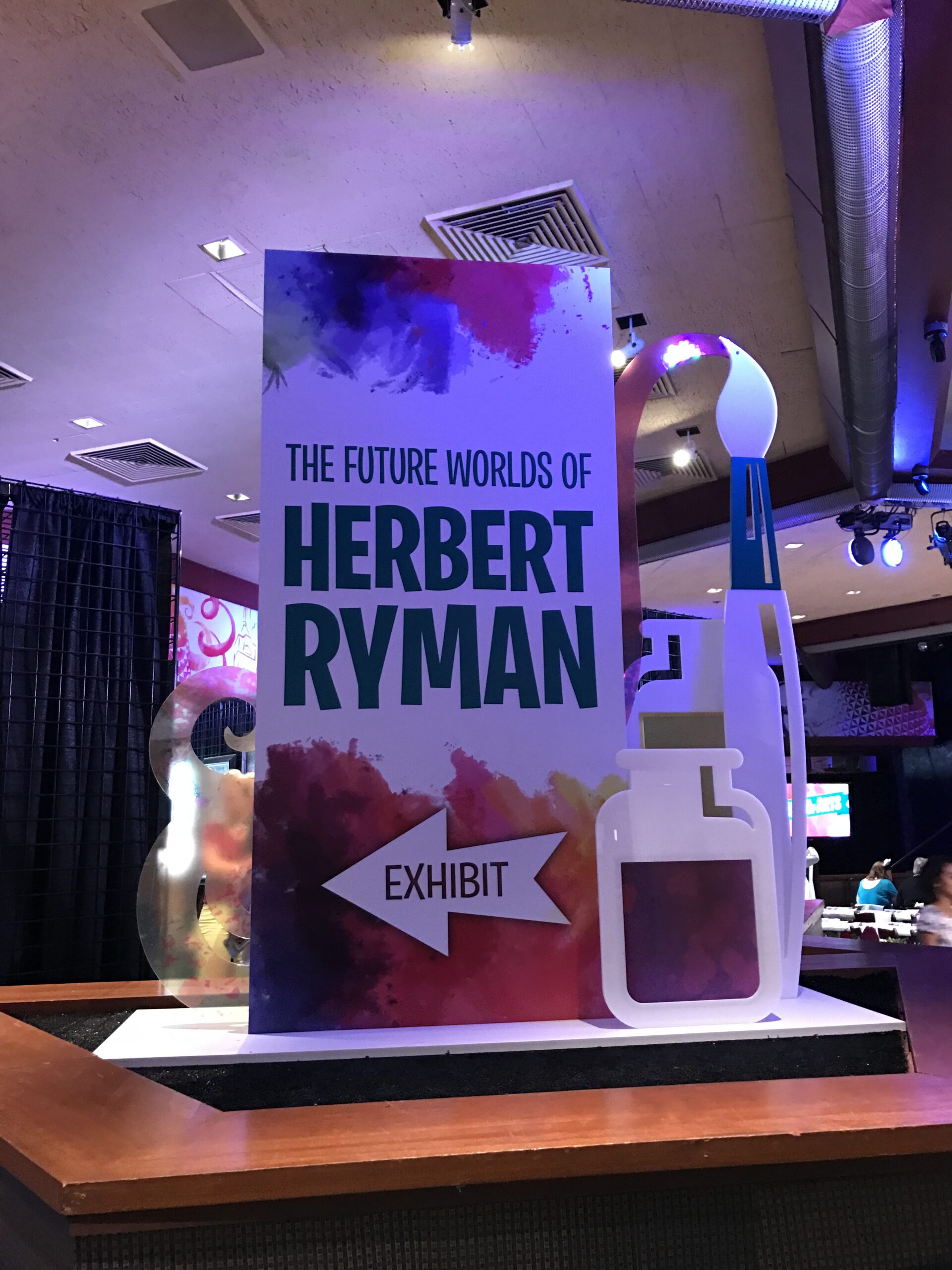
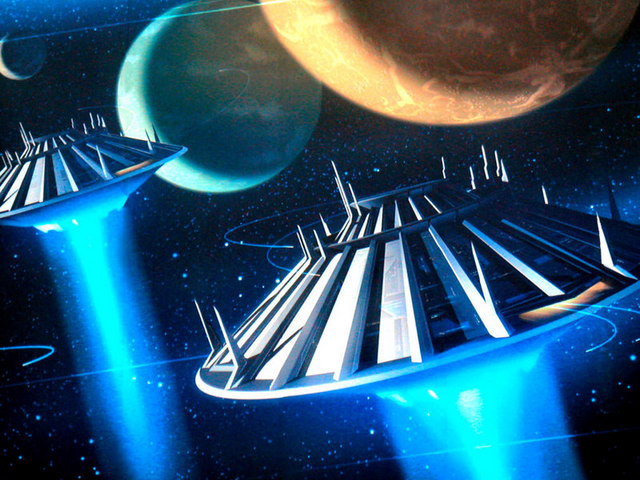
The Future Worlds of Herbert Ryman

 width=

The Future Worlds of Herbert Ryman – Epcot International Festival of the Arts

 width=

The Future Worlds of Herbert Ryman – Epcot International Festival of the Arts

 width=

The Future Worlds of Herbert Ryman – Epcot International Festival of the Arts

 width=

The Future Worlds of Herbert Ryman – Epcot International Festival of the Arts

 width=

The Future Worlds of Herbert Ryman – Epcot International Festival of the Arts

 width=

The Future Worlds of Herbert Ryman – Epcot International Festival of the Arts

 width=

The Future Worlds of Herbert Ryman – Epcot International Festival of the Arts

 width=

The Future Worlds of Herbert Ryman – Epcot International Festival of the Arts

South of the Border with Mary Blair

 width=

South of the Border with Mary Blair – Epcot International Festival of the Arts

 width=

South of the Border with Mary Blair – Epcot International Festival of the Arts

 width=

South of the Border with Mary Blair – Epcot International Festival of the Arts

 width=

South of the Border with Mary Blair – Epcot International Festival of the Arts

 width=

South of the Border with Mary Blair – Epcot International Festival of the Arts

 width=

South of the Border with Mary Blair – Epcot International Festival of the Arts

 width=

South of the Border with Mary Blair – Epcot International Festival of the Arts

 width=

South of the Border with Mary Blair – Epcot International Festival of the Arts

 width=

South of the Border with Mary Blair – Epcot International Festival of the Arts

REVIEWS: “Between-Disney-Vacation” Recommended Reading 101

It’s February. Even though we’re within a few weeks of Daylight Savings — the unofficial gateway to spring — most of the nation still finds itself in the throes of winter for at least a few more weeks. Of course this also means, for most of us, that although we’re getting closer to our next Disney vacation every day there’s still some winter to endure. If you’re like me, life tends to be what happens between visits to the Disney parks. As a way to cope with such a reality I’ve managed to find a few practices — we’ll call this “prep” — that help me deal with the time between trips. Music, podcasts, and of course books are all tools in my Between-Disney-Trips survival kit. So it’s in this spirit that I submit my favorite or most recent “February Survival Reads:”

Dream ItDream It! Do It! My Half-Century Creating Disney’s Magic Kingdoms, Marty Sklar
Different from other books I’ve read on the subject of Disney backstory and mythology, Dream It! Do It! by Marty Sklar will be most enjoyed by those most familiar and intrigued by the stories perpetuated by and grounded in Disney lore. Sklar is a career Imagineer that has contributed to every major event in the development of each of the Disney parks. Additionally, he may be the only single person with both a working and personal relationship with anybody that’s anybody associated with the Disney parks story — including the man himself, Walt Disney. This includes the Sherman brothers, John Hench, Mary Blair, Card Walker, Dick Nunis, Joe Fowler, Joe Potter, Claude Coats, and Roy O. Disney. And that is by no means a complete list. If you’re looking for an insider’s perspective and little-known albeit interesting pieces of information associated with Walt Disney World, Disneyland, and even Disneyland Paris and Tokyo, this is your book. What I enjoyed most were the stories about the creation of the engineering and imaginative feat that became Walt Disney World. What I enjoyed least were the inner workings of the corporation itself.

Screen Shot 2015-02-22 at 2.19.46 PMWalt Disney: The Triumph of the American Imagination, Neal Gabler
It’s worth reading just for the behind-the-scenes story on the production of Snow White alone. But the author also takes a deep dive into the early studio years that makes the Walt Disney story that much more accessible to fans and park visitors. There’s some decent stuff on Sleeping Beauty but I found myself wanting more about the genesis and production of Cinderella. For me, this biography has probably been the most comprehensive—even through those painful war years and nature documentaries. Gabler cites pop culture writers of the day and movie reviewers where it is appropriate. Readers Beware: this is quite the commitment. But for hardcore fans, I think it’s also a rite of passage of sorts.


Screen Shot 2015-02-22 at 2.22.22 PMThe Haunted Mansion: From the Magic Kingdom to the Movies, Jason Surrell
Even though The Haunted Mansion is one of my favorite attractions, I never could put my finger on why so many Disney enthusiasts were so obsessed with it. My hope was that reading Surrell’s book would help me understand the Haunted Mansion phenomenon and it absolutely has. He begins with the genesis of the idea in the Museum of the Weird for which Yale Gracey and Rolly Crump were commissioned to begin exploring and experimenting with gags for the mansion. Surrell then walks his readers through the whole creative process. Along the way you meet X. Atencio, Marc Davis, Claude Coats, and plenty of others that had a hand in bringing the attraction to life, er, afterlife. The last third of the book addresses each “scene” in the Mansion in detail—but not so much detail as to be overwhelming. It’s an easy read and highly recommended for Disney fans at practically any interest level.

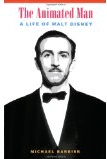
Screen Shot 2015-02-22 at 2.24.33 PMThe Animated Man: A Life of Walt Disney, Michael Barrier
Oddly enough, this has been my favorite Walt Disney biography. Given Barrier’s obvious bent toward the history of animation and Disney’s place in it, I didn’t have the highest expectations. I am generally more interested in Walt’s life than in the medium itself. But the fact is that Michael Barrier made me care. He made Walt’s life through the lens of historical animation even more interesting. I’m not sure I would make this my first biographical endeavor into the life of one of the most influential people of the Twentieth Century. But I would recommend it as the second.


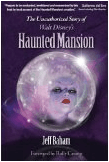
Screen Shot 2015-02-22 at 2.26.15 PMThe Unauthorized Story of Walt Disney’s Haunted Mansion, Jeff Baham
This book is everything you would expect from the founder of Doombuggies.com. Jeff is exhaustive in his research and relentless in his pursuit of the most accurate and most thorough Haunted Mansion apologetic. Different from Surrell who takes an Imagineer’s perspective, Baham writes for the person who just can’t get enough of the Haunted Mansion. A couple of reviewers didn’t like the second section of The Unauthorized Story of Walt Disney’s Haunted Mansion and the way it takes readers step-by-step through the Mansion, but that was probably my favorite part. But that is not to say that I didn’t also love all the history and background present in the first half as Coats, Crump, Davis, and Gracey dominate the narrative as they rightfully should. The bottom-line: this is just a really cool book.


Screen Shot 2015-02-22 at 2.29.40 PMWalt Disney: An American Original, Bob Thomas
Promoted as the only “authorized” biography by the Disney family, what Thomas does get right is that he doesn’t waste a lot of time on the parts of Walt’s story that might have the potential to drag. Instead, the author gives most of the big story lines equal billing: Oswald, “Steamboat Willie”, Snow White and the Seven Dwarfs, Cinderella, Disneyland, and the World’s Fair. Of the biographies that I’ve read this is perhaps the easier read. I liked most about this book the attention Thomas gives to Mary Poppins, something Gabler’s book misses in my opinion. That being said, a reading of Gabler, Thomas, and Barrier provide what appears to be an accurate view of the man you’ll come to know simply as “Walt.”


Not reviewed here are the two Walt Disney Imagineering books. These are great but aren’t your typical front-to-back reads and tend to focus exclusively on the creative aspect, which isn’t for everybody. Regardless, they are great to have. Four Decades of Magic is a series of essays, some more interesting than others, that includes some very interesting and fun background and content. (For instance, did you know that there is purportedly a ghost that haunts Pirates of the Caribbean Florida? Chad Denver Emerson’s book will tell you all about it.) I didn’t review it here because it doesn’t have the most “finished” feel to it. And I’ve intentionally avoided Project Future but only because I’m just not as interested in the corporate side of the Disney experience. There are plenty of others but I feel good about recommending all six of these books as a part of your 2015 February Survival.

The New York World’s Fair at 50: “Anything But a Small World’s Fair”

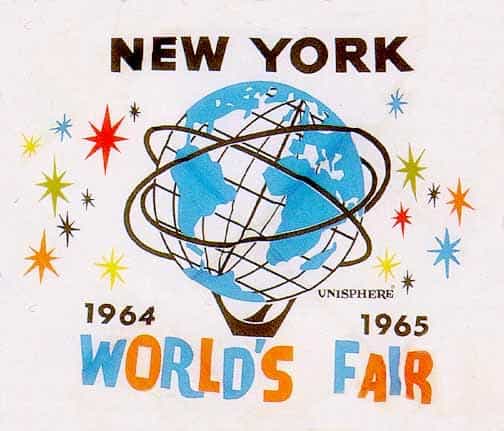
At WDWNT: The Magazine, we are always looking to deliver great content to our readers.  In many instances, we writers enjoy collaborating on a specific topic or theme. One very popular theme among Disney enthusiasts is the 1964 World’s Fair.  The genesis for many Disney parks’ attractions were conceptualized and realized at this World’s Fair.  This will be the first in what we at WDWNT: The Magazine hope will be an informative, enlightening, and entertaining look at how this single event would catapult decades of success at the world’s most visited theme parks.
Worlds fair

Well before the 1964 World’s Fair, the idea for “it’s a small world” played in the mind of Walt Disney. Disney’s vision saw children from around the world singing in harmony about peace. In 1960, Disney presented the idea of offering his services to the American corporations that would participate in the 1964 New York World’s Fair.  He knew that American corporations were looking for something new and innovative to present. With the success of Disneyland, Walt Disney was the perfect person to deliver on such a grand stage. Corporations hiring WED Enterprises (named for Walter Elias Disney and the precursor for Walt Disney Imagineering) to create and develop their pavilions would give Disney the financial security to create and develop his own theme park technology.  Sponsors like Ford, the state of Illinois, and General Electric would hire WED to design their pavilions and test new technologies such as audio animatronics and an omnimover. Walt Disney’s idea was to build and test several concepts and ride systems.  These ride systems would then be moved and reassembled in Disneyland after the fair closed in 1966.

Joan Crawford–Hollywood legend, longtime friend of Walt Disney, and widow of former Pepsi President Alfred Steele–believed Disney was the right person to design a pavilion and an attraction that would be suitable for Pepsi.  Pepsi executives went to California in 1963 to meet with Disneyland executives.  The Disneyland executives informed Pepsi that they would not be able to construct a pavilion in less than a year because of the challenges they had with the innovative designs of the other pavilions for the fair. When Walt Disney learned of this meeting, he declared that only he made the decisions on what could and could not be done.  He told Pepsi that he would complete the project for the fair.

In the UNICEF pavilion, sponsored by Pepsi, “it’s a small world” was to be presented as a gift to the children of the world. It featured the kinetic sculpture Tower of the Four Winds.  The sculpture was a 120-foot perpetually spinning mobile created by Rolly Crump. Marc Davis, who had his hand in several Disneyland attractions prior to this, created scenes and characters.  His design stood out but Walt Disney was not satisfied so he brought in Art Director and Disney legend Mary Blair.  Blair was charged with the attraction’s design.  Known for her whimsy in animated features like “Cinderella”, “Alice in Wonderland”, and “Peter Pan”, Blair would bring a signature color style that Walt Disney was looking for.  Marc Davis’ wife Alice designed the dolls’ costumes.  Blaine Gibson sculpted the dolls to bring them to life.  Although Pepsi executives did not like to first concepts presented to them, it was Joan Crawford that ordered that Pepsi would proceed with the Disney concepts.

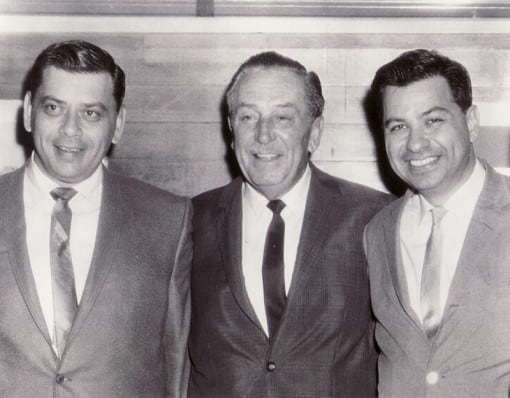
Children of the World” was the working title of the attraction.  Disney himself decided the attraction would be a boat ride, which he called “that happiest cruise that ever sailed.” He never called it “it’s a small world.” Disney also wanted all of the children to sing their national anthems. He wanted the attraction to be a pleasant experience for children of all ages “showcasing a wonderland where all the world’s children live and play.” During a press event at the Waldorf Hotel in the summer of 1963, Robert Moses (the man in charge of the World’s Fair) predicted “It’s a Small World” would be one of the most popular attractions at the fair. After the design was completed, a mock-up of the attraction was put together at the Disney studios in California. Disney showed the scale model to Robert and Richard Sherman, the Disney staff songwriters.  He told the Sherman brothers he needed one song that could be easily translated into many languages and played as a round.  The brothers wrote, “it’s a small world (after all)” in the wake of the Cuban Missile Crisis, with a message of peace and brotherhood. They originally wrote the song as a slow ballad. Disney requested something more cheerful, so the Shermans sped up the tempo and sang in counterpoint. Walt loved the number so much,  he decided to rename the attraction “it’s a small world.” It is argued that “it’s a small world” is the most performed and translated song on the planet. By the request of UNICEF, it is the only Disney song never to be copyrighted and continues to be a gift to the children of the world.
Sherman-bros

The dolls were all sculpted with the same identical shape. The dolls were known as “rubber heads” based on the  notation on Marc Davis’ drawings.  Paper mache and styrofoam were used to create props and scenes for the attraction.  These “temporary” props are still in existence in the Disneyland version to this day. It is estimated that a single animatronic doll opens and closes its mouth 1 million times in a month.
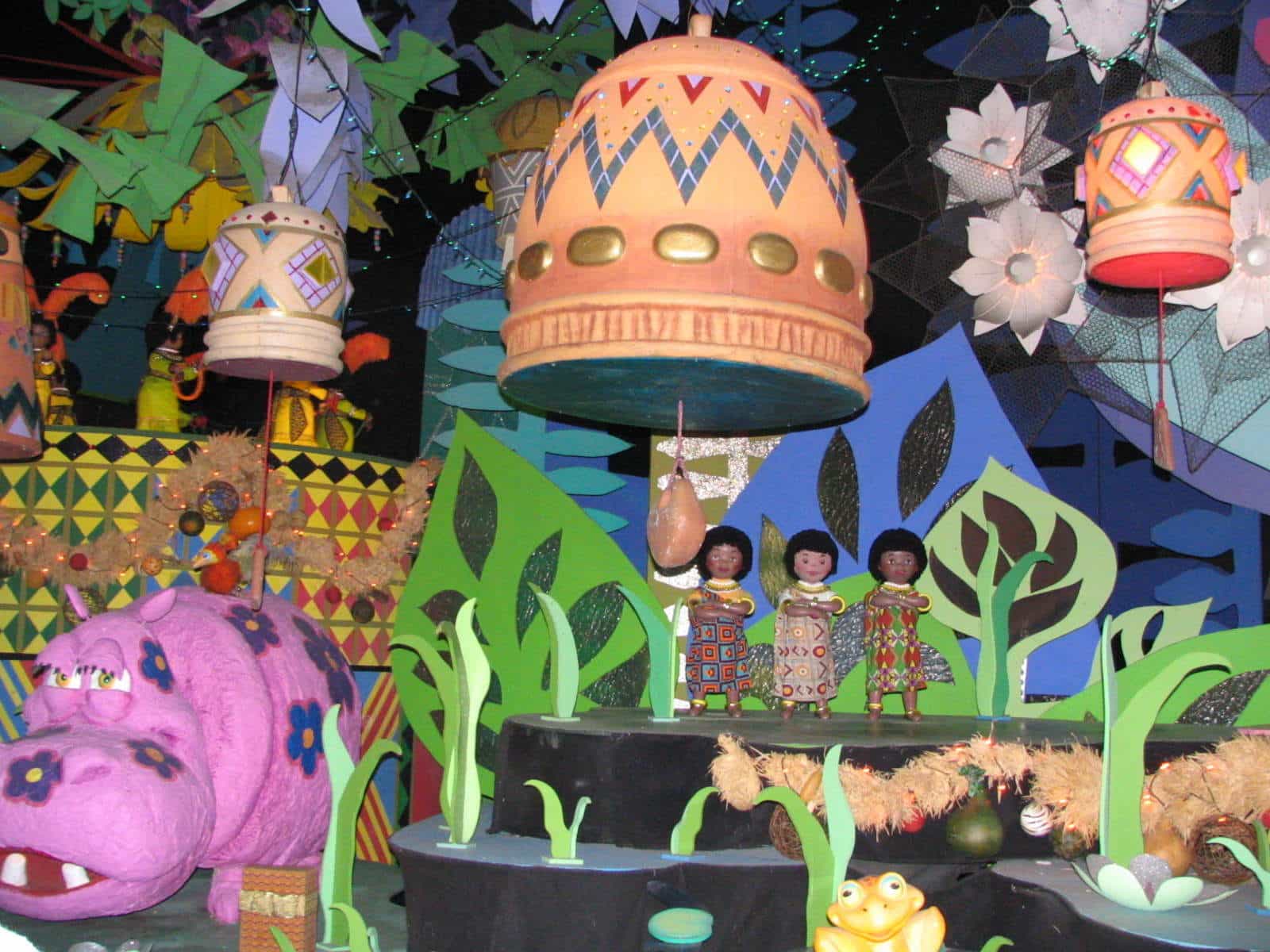
it's a small world_disneyland

The attraction was a smashing success from opening day, April 22, 1964.  Walt Disney and WED Enterprises accomplished the impossible task of opening the attraction for the beginning of the fair.  Ten million $.60 and $.95 tickets for children and adults were sold over two half-year seasons, with all proceeds donated to UNICEF.  The capacity for the attraction was so large that when other pavilions had lines out the door, “it’s a small world” always had space available.  The “people eater” function would become a mainstay with Disney parks’ attractions for the next several generations. For example, “Pirates of the Caribbean” at Disneyland was originally sketched as a subterranean walk-through attraction, but those plans were immediately changed after the fair and concrete was broken so that similar boats could sail through the attraction. The 1964 World’s Fair was the first time that costumed Disney characters appeared outside of Disneyland. The characters proved to be so popular that they became permanent fixtures for the duration of the fair.  Another pavilion’s sponsor, Kodak, encouraged guest to take advantage of photo opportunities with the characters.

WF_Characters

It was estimated that an astonishing 91% of all guests to the 1964 World’s Fair saw one of the Disney shows. Knowing what an impact Walt Disney and WED Enterprises had on the 1964 World’s Fair, we at WDWNT: The Magazine wanted to honor this “golden age” of Disney, especially as we approach the “golden” anniversary of this spectacular success.

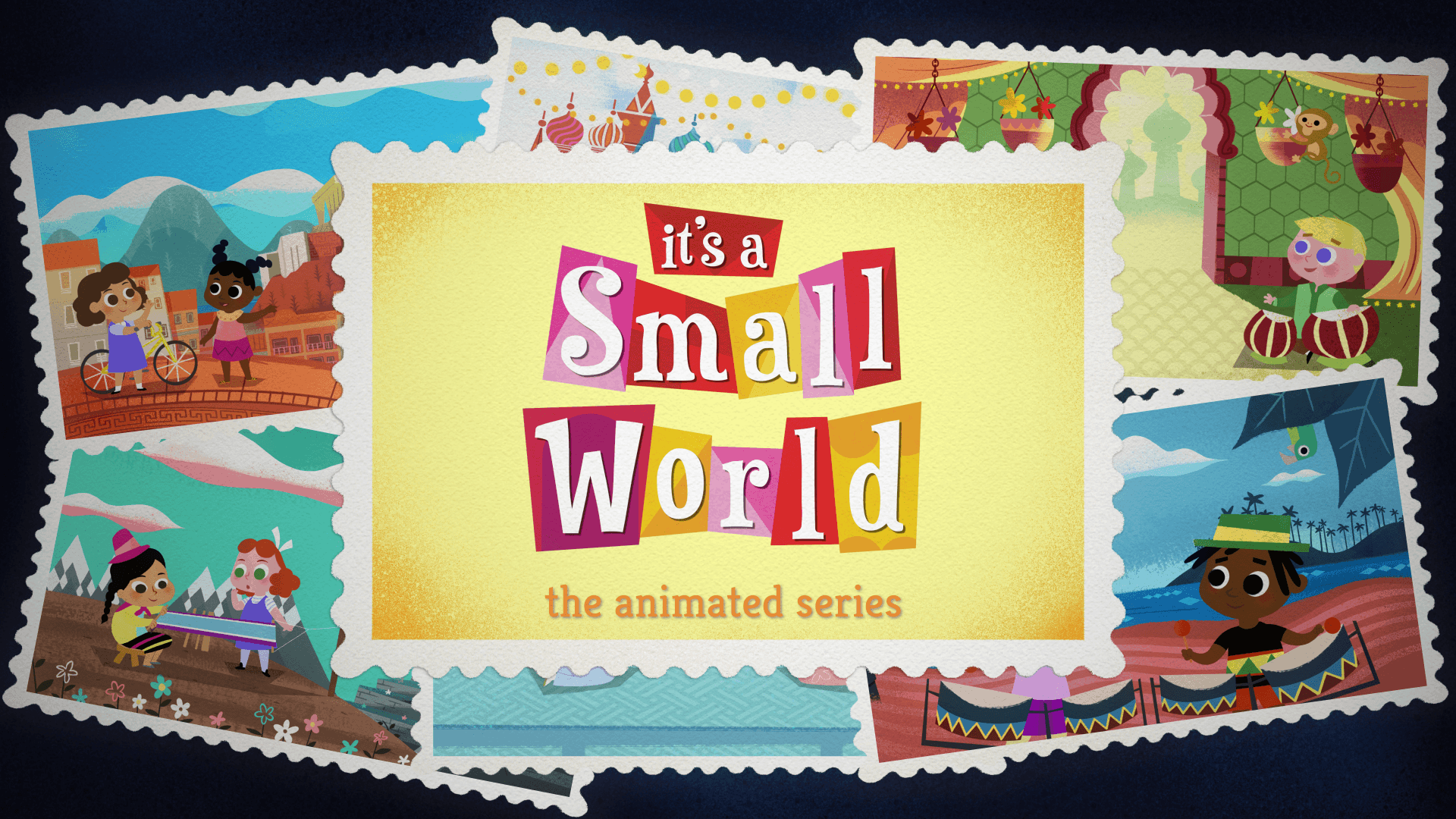
VIDEO: “It’s A Small World: The Animated Series” Debuts On Disney.com

Disney Interactive’s it’s a small world: the animated series debuted today across multiple portals including Disney.com, Disney’s Youtube channel and throughout Disney’s connected TV apps.

Small World

The new original online series, sponsored exclusively by Rosetta Stone, exploits the interactive medium to bring the classic Disney experience to life online for a new generation of fans. The eight episode series will introduce families to new words and customs from around the world.

Featuring original music from Richard Sherman, the legendary songwriter behind the attraction’s theme song, it’s a small world: the animated series will take viewers on a journey with a group of children from different countries as they explore new lands across the globe in a digital narrative brought to life through animation that was inspired by Mary Blair’s original design for the wildly popular theme park attraction.

Check out the first episode below:


Mural Wars!

The next article dealing with the New Tomorrowland of 1998 is going to be about the mural on the American Space Experience/Rocket Rods queue building. Let’s get to it:


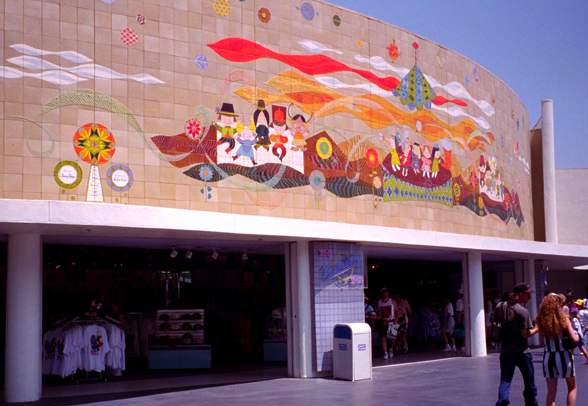
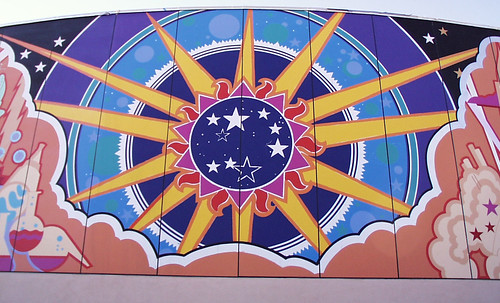
Here’s the original mural that called this building home, one of the lovely works of Mary Blair


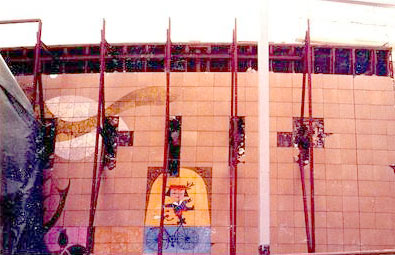
A look at the removal of the Mary Blair mural


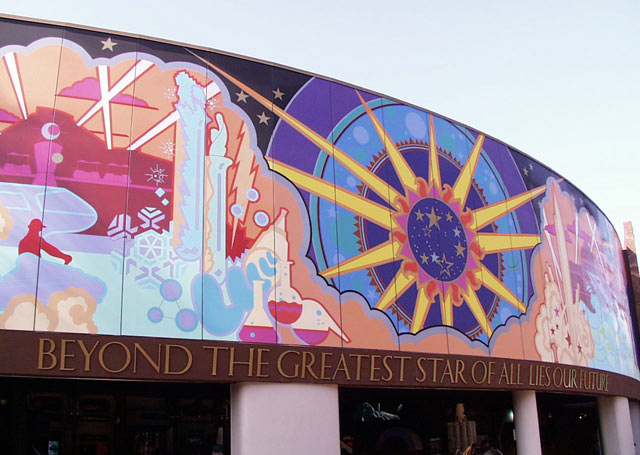
And this is the 1998 mural, which surprisingly or not is my favorite!


The inscription bellow the mural reads: “BEYOND THE GREATEST STAR OF ALL LIES OUR FUTURE”


In preparation for Buzz Lightyear’s Astro Blasters in 2005, the mural was once again changed

I advise everyone to check out Yesterland‘s articles on both the 1998 Tomorrowland Mural, & the Mary Blair Murals. We won’t have an article on the New Tomorrowland tomorrow, but we will have this week’s podcast with tons of audio from the re-do. We’ll be back on Memorial Day with a look at Honey, I Shrunk the Audience!