Spotlight On: Custom Vinylmation Artist Rust This World

It’s been a while since we last checked in with artist Rust this World. He has some great stuff for us this week that focus on Kingdom Hearts. And if your not careful, inspiring custom artists out there just might learn something as well.

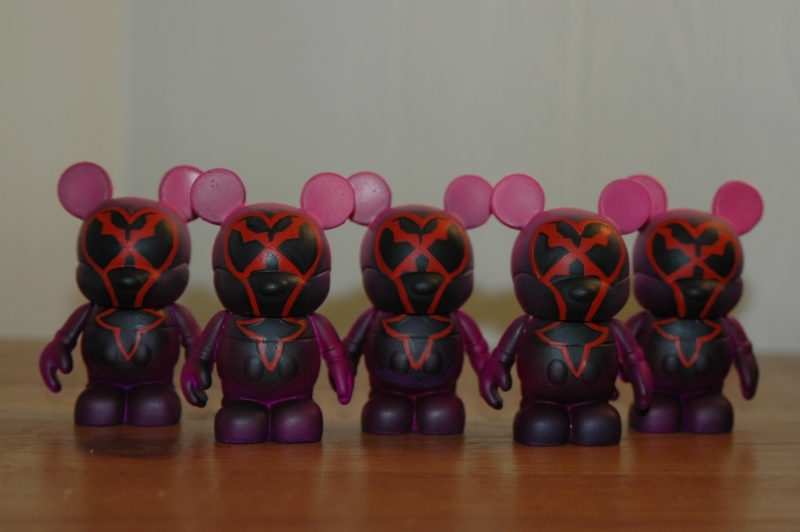
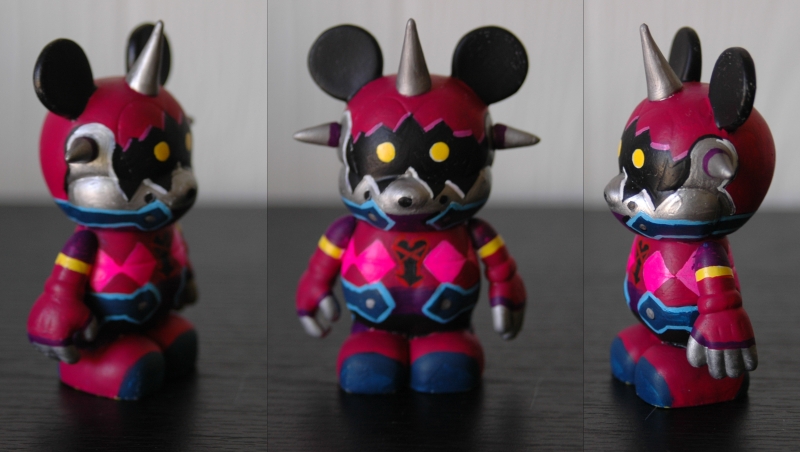
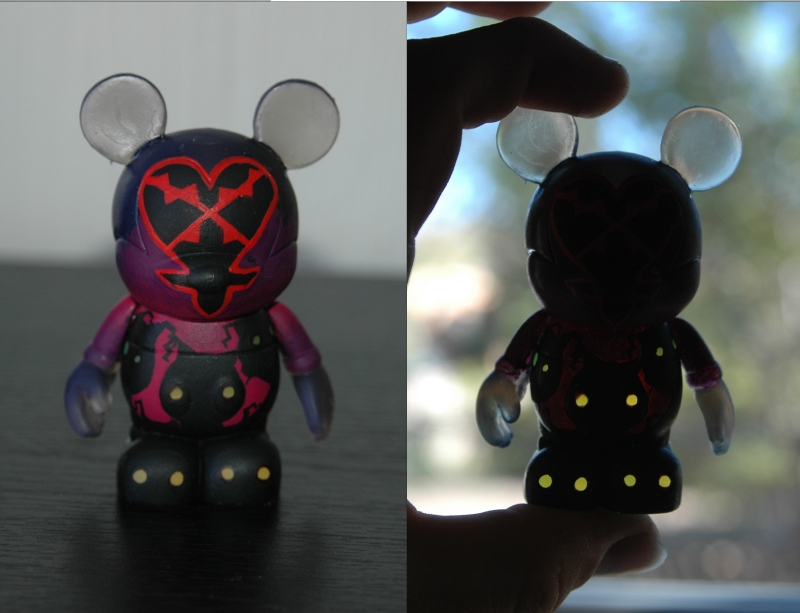
Destination Vinylmation: Last time we spotlighted your work, we took a look at your Kingdom Hearts collection of figures. Well that collection has grown. In fact you sent Destination Vinylmation a 3″ KH custom as a gift. We appreciate the gift which is part of a set of 5 Heartless symbol Vinylmation. They are a nice simple tribute to a great game. Were there any challenges in getting the look you wanted out of these?
Rust This World: So many people were asking me about my Kingdom Hearts stuff that I decided to make a limited edition series of 5. I’ve never done multiples of the same design before and it’s definitely hard trying to get each one to match the others. I sat there for hours, tweaking each one in tiny increments until I was satisfied. A little more red here, a little more black there. These were also the first 3″ figures that I used my airbrush prominently on, making the pink/purple background gradient. I usually reserve that for 9″ figures. I still have a couple for sale if anyone is interested.

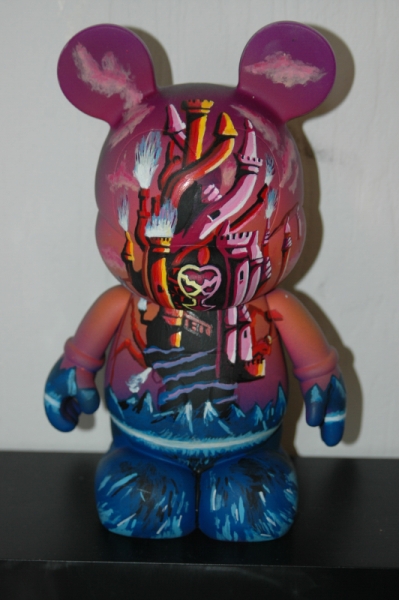
DV: You also have shared with us pictures of a 9″ Hollow Bastian custom. This also references an important part of the KH games. What is it about Hollow Bastian that made you create this custom?
Rust: It’s not only my favorite level, but it’s also a totally unique world to the games. I love the aesthetic of the twisted castle and the frozen lake around it and thought it would look great on a 9″ Vinylmation. Not many people do landscapes on the vinyls, and it was definitely my first. I wanted a background of sorts to put my other Kingdom Hearts vinyls in front of. Every single time I create a new custom, I try to make the design completely different than anything else I’ve seen.

DV: You did a great job of fitting it proportionally onto the vinyl canvas. I have recently begun the early stages of a custom vinyl, and that is one of the hardest parts for me. Any tips on laying out your design before you actually attack the canvas with paint?
Rust: Attack is a great word. Show that canvas who’s boss. Before I ever paint, I always do a sketch on the vinyl itself with pencil as a guideline of where to paint. Of course before I do that, I print out a blank vinylmation template and sketch it out on paper first.

If you’re having trouble even coming up with a design, think of your favorite vinyl. Why is it your favorite? Take the list of reasons and apply them to your own design. If you’re doing a character, think about the character’s proportions and how they would best fit on Mickey’s body without becoming unrecognizable and distorted. Sometimes, with weirder characters, it involves really being creative. The Jafar chaser from Villains 1 is a great example of a creative character design. The artist thought that a skinny character like Jafar would look awful if stretched over Mickey’s pudgy body, but saw that Jafar’s turban is one giant sphere anyway and was able to relate that to Mickey’s head. Don’t be afraid of the negative space around the character, characters don’t have to stretch to fill Mickey’s body. Villains 1 Kaa and Villains 2 Yzma are other great examples. The ears of Mickey are great ways to also be creative and add a little something to the design, whether they’re an integral part of what the vinyl is representing like the Park 7 Star Jets, or a fun reference to the character like Muppets 2 Lew Zealand. Anything is better than just plain white or black. Having a creative design will make your vinyl stand out.

One awesome website I want to share is if you’re having trouble coming up with a color scheme, go here http://colorschemedesigner.com, it’s like a color theory class in 5 minutes.

DV: Find out more about artist Rust this World at http://www.rustthisworld.com or you can email him at evolvedbutter@aol.com

Spotlight On: Custom Vinylmation Artist Rust This World

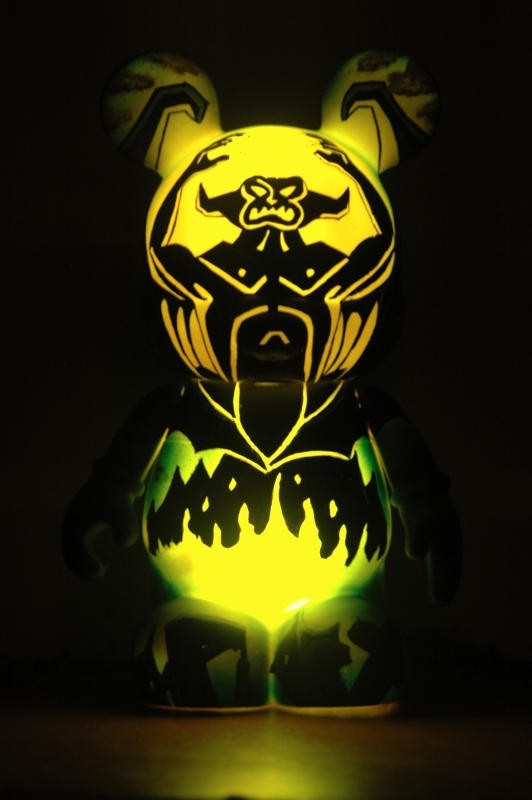
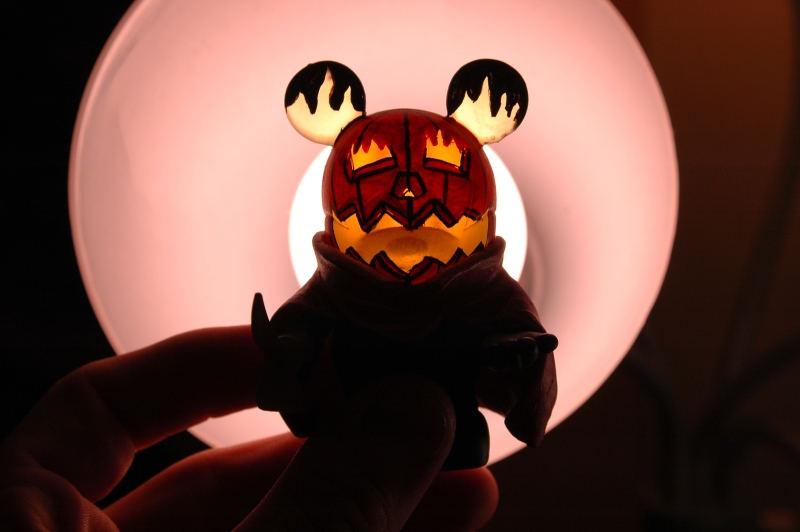
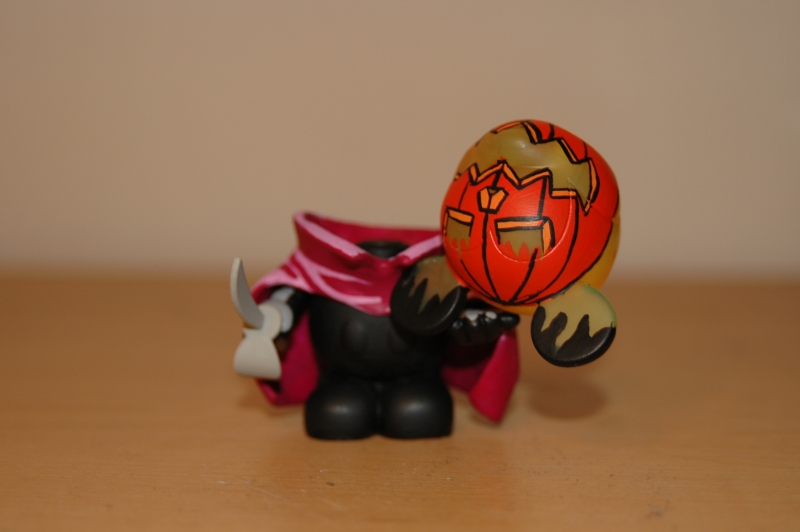
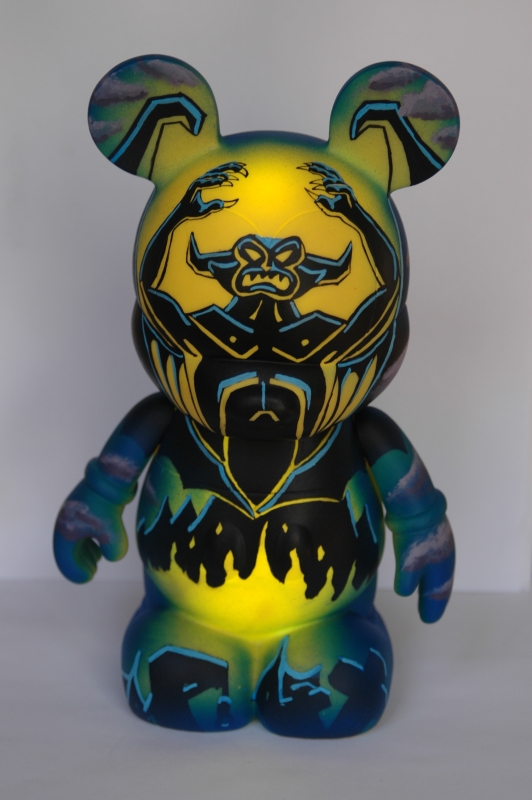
Rust This World dropped some Disney villains on us for this spotlight. A 9″ Chernabog and a 3″ Headless Horseman were the subjects of his latest customs. Let’s take a look.

Destination Vinylmation: What inspired each piece? 
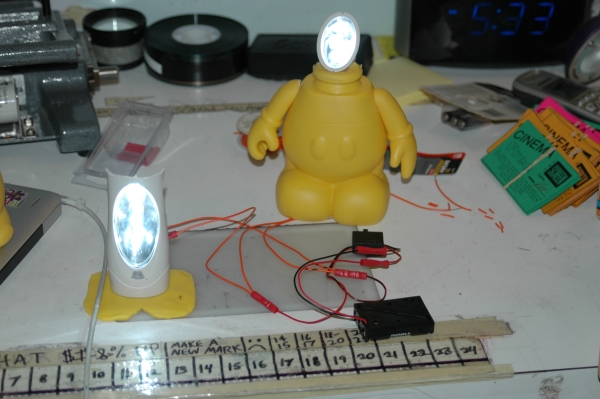
Rust This World: I decided to make the light up Chernabog because a lot of people on custom Vinylmation message boards were asking how to make a 9″ figure light up. I have some background in small electronics, so I figured I could make it work and show people how to do it. Most of my collection is villains-related, so of course I had to paint the figure to make it villain-related. I had a great design for Chernabog that I had laying around, so I figured why not make it light up as well? Now I have the coolest night light in the world.

The Headless Horseman came about when I saw how lame the official Animation 2 figure of it was. As soon as it was revealed, I immediately started working on my own. I kept the same basic concept of the official figure, but added more paint details, a fully sculpted cape, a sword, and made the head into the pumpkin, so that it still maintained the Mickey-ness.

DV: Talk about some of the details of each figure.
Rust: The Headless Horseman’s head is painted on a clear yellow figure so that it lights up when lit from behind. I sculpted the cape entirely from scratch too, which was not easy.

Chernabog is special because he’s literally a light up demon. It’s the first time I’ve ever included any electronic elements into a figure, but I think it turned out well enough.

DV: Can you take us into the process of making the figure light up?
Rust: The Chernabog figure was definitely something new for me. I know Evilos has put lights in figures before, but this was my first try. I used to do robotics, so at least knowing exactly how everything needed to be wired and set up was easy, but it’s still kind of awkward stuffing all the wires and lights and batteries inside of a Mickey figure. The lights themselves are LED Arrays taken from a flashlight, the switch is for an rc car, and the batteries are just three AAAs. Not including the base figure, there’s probably under $20 in parts to make it light up, so it’s not all that expensive to do something cool like that.

DV: If people would also like one of these really cool night lights… how can they find you?
Rust: My website is http://www.rustthisworld.com and my facebook is http://www.facebook.com/rustthisworld . I’ll probably be doing some sort of figure raffle to my facebook friends in the next few weeks so make sure you like the page.

Play Imaginative Custom Mickeys

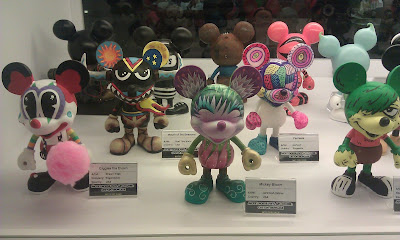
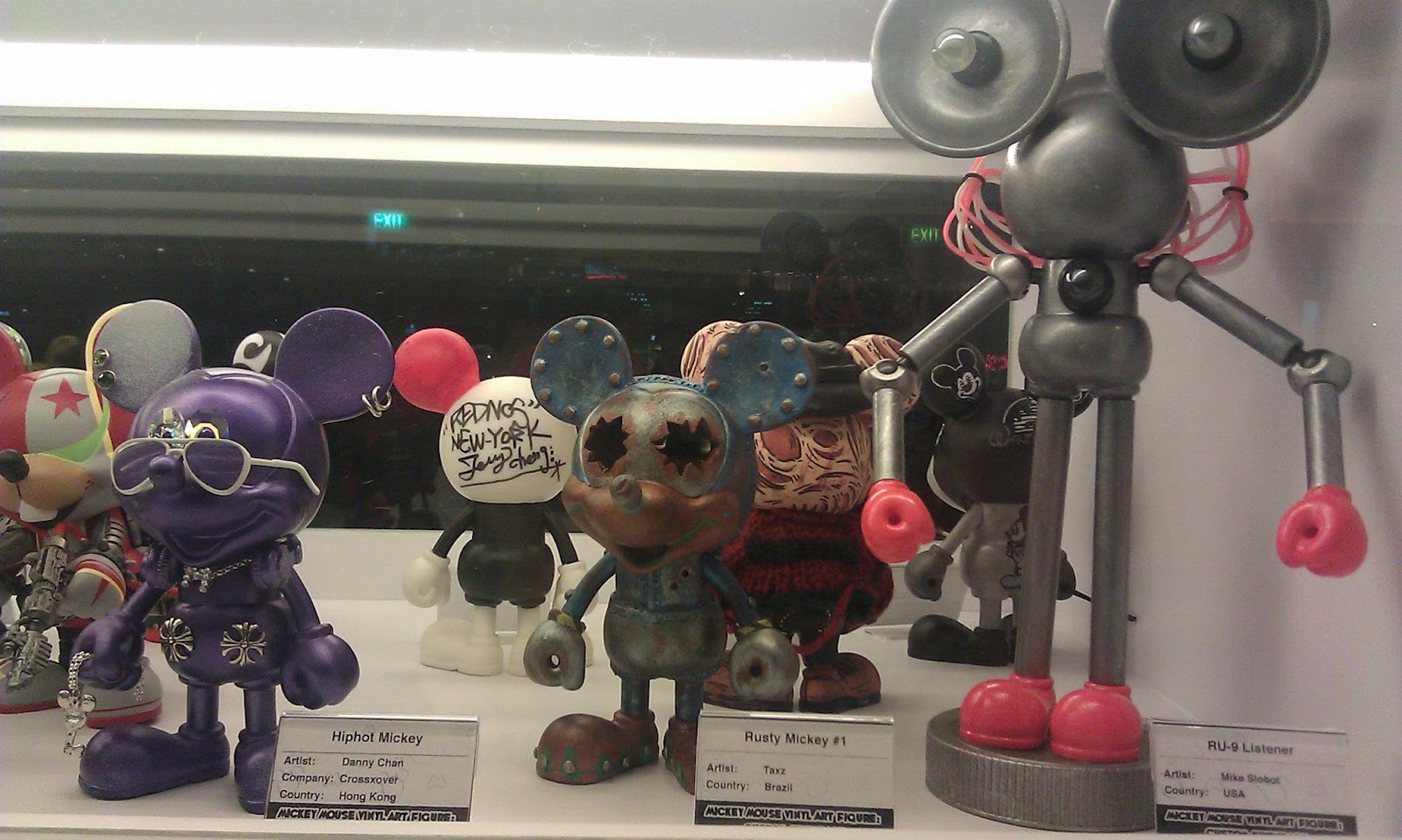
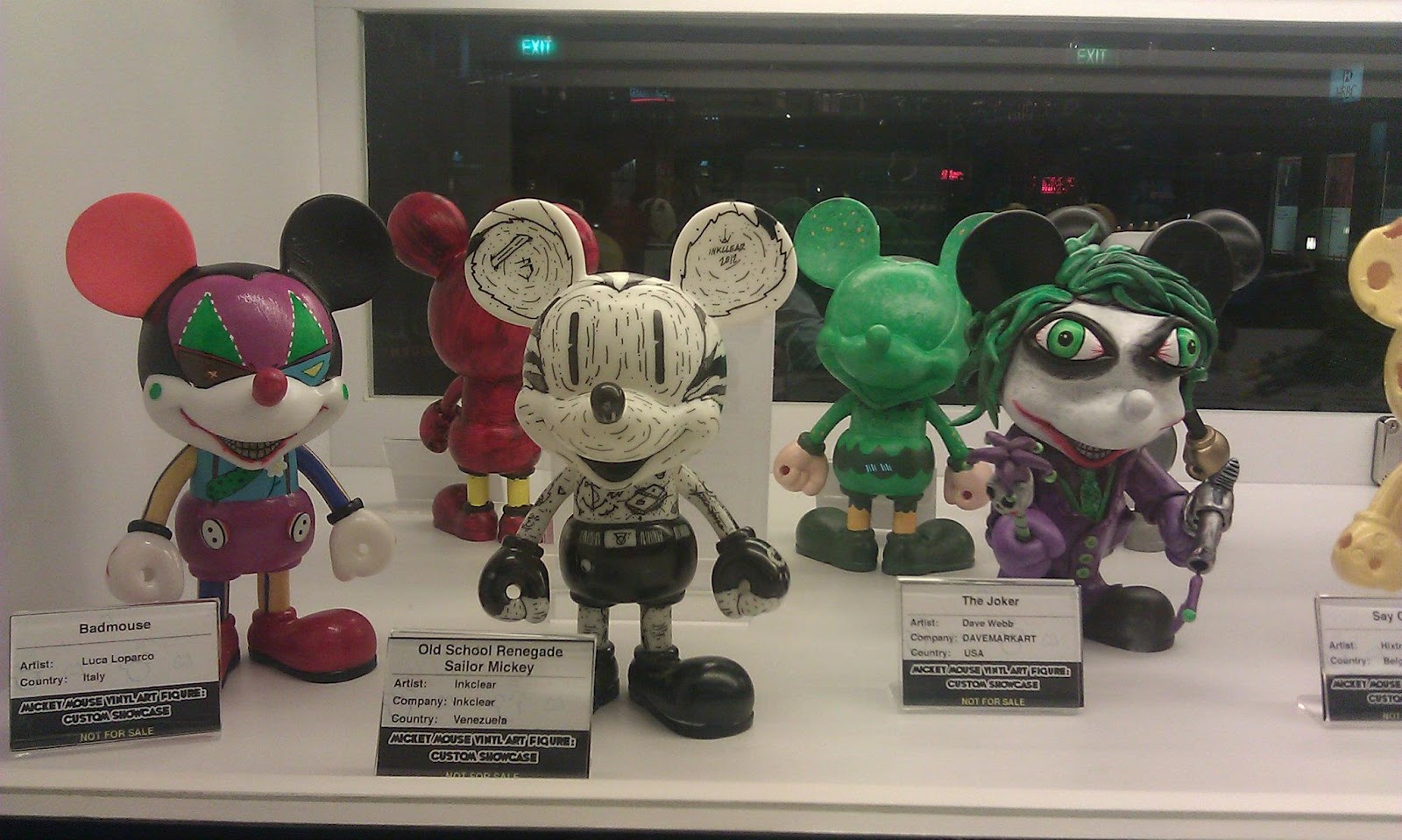
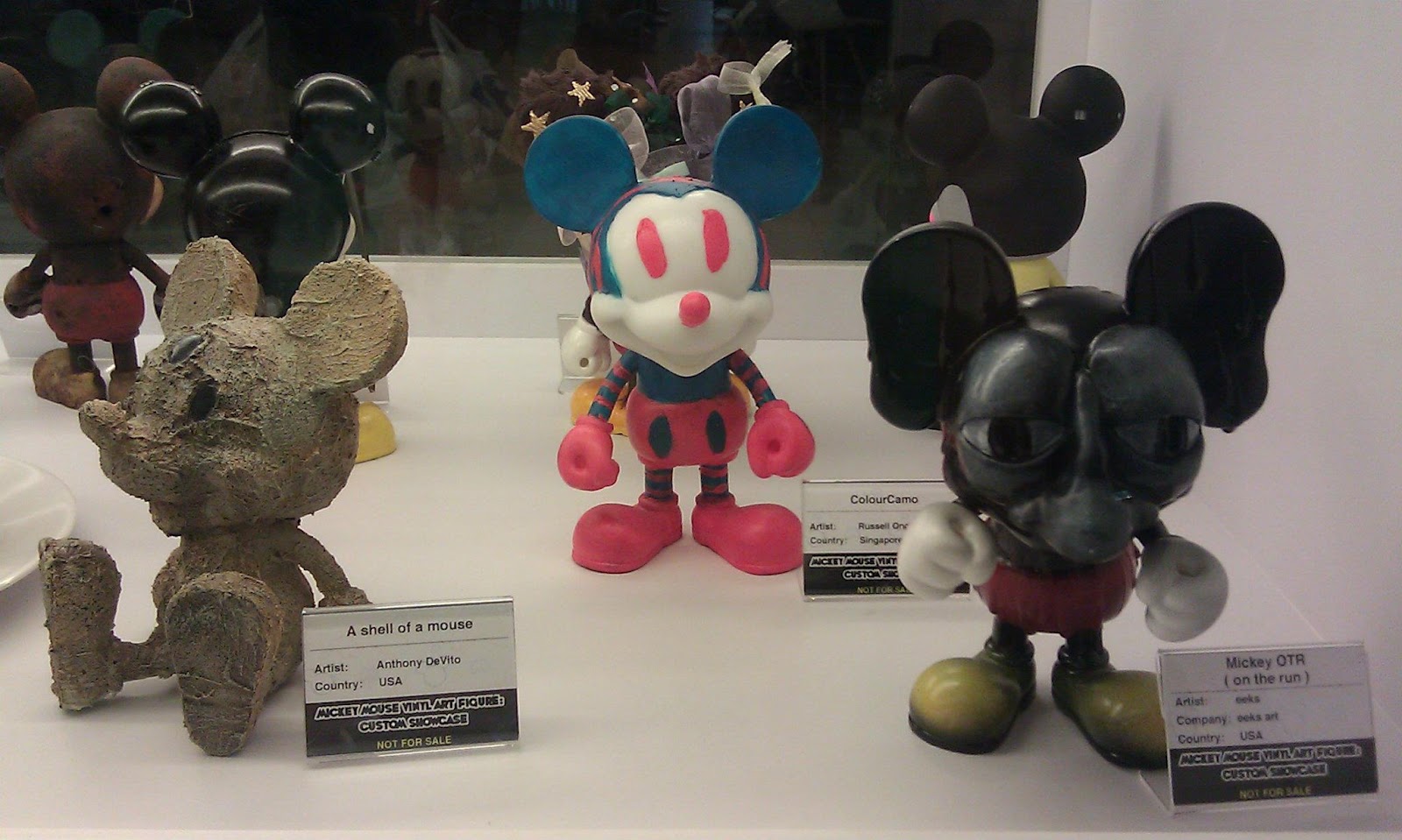
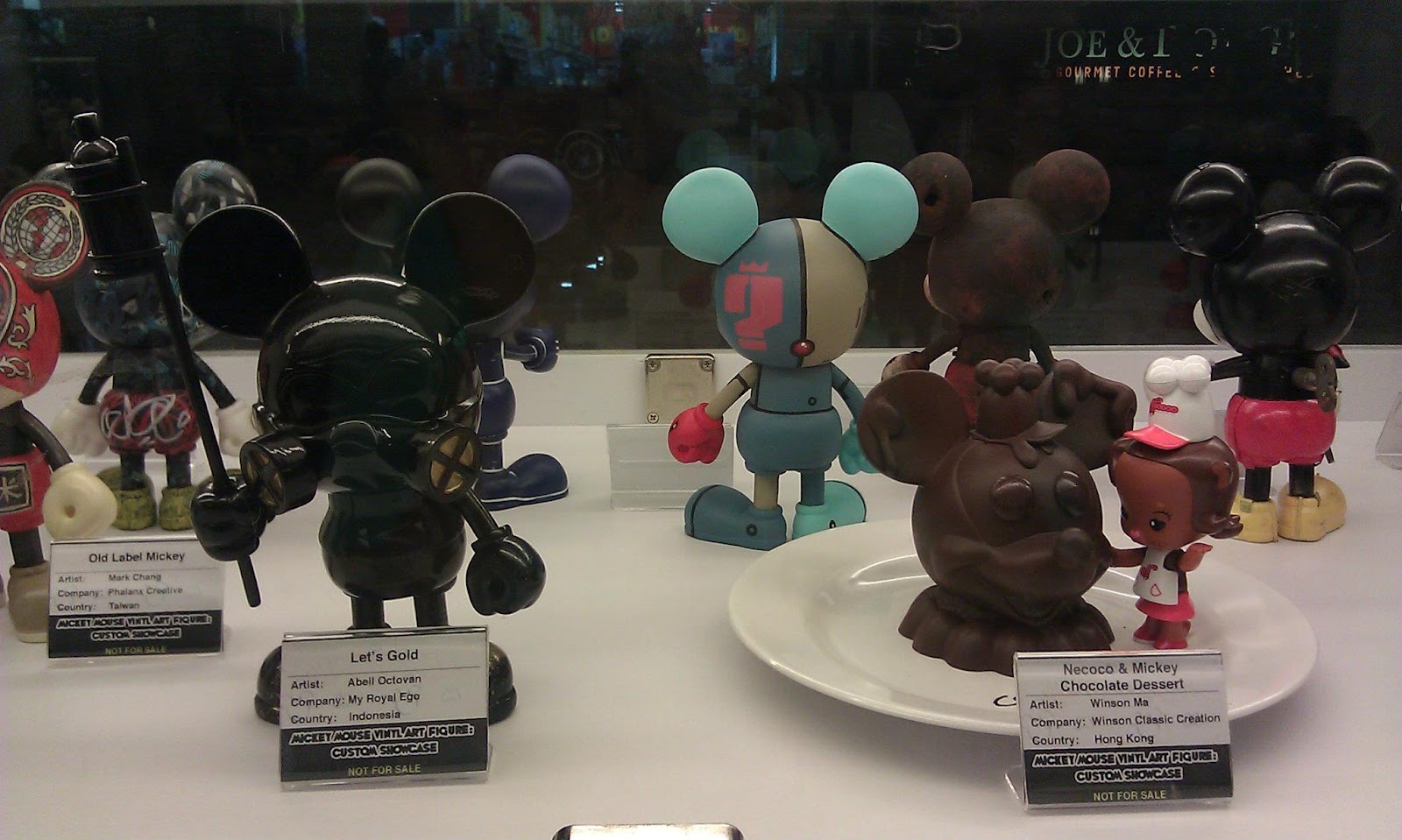
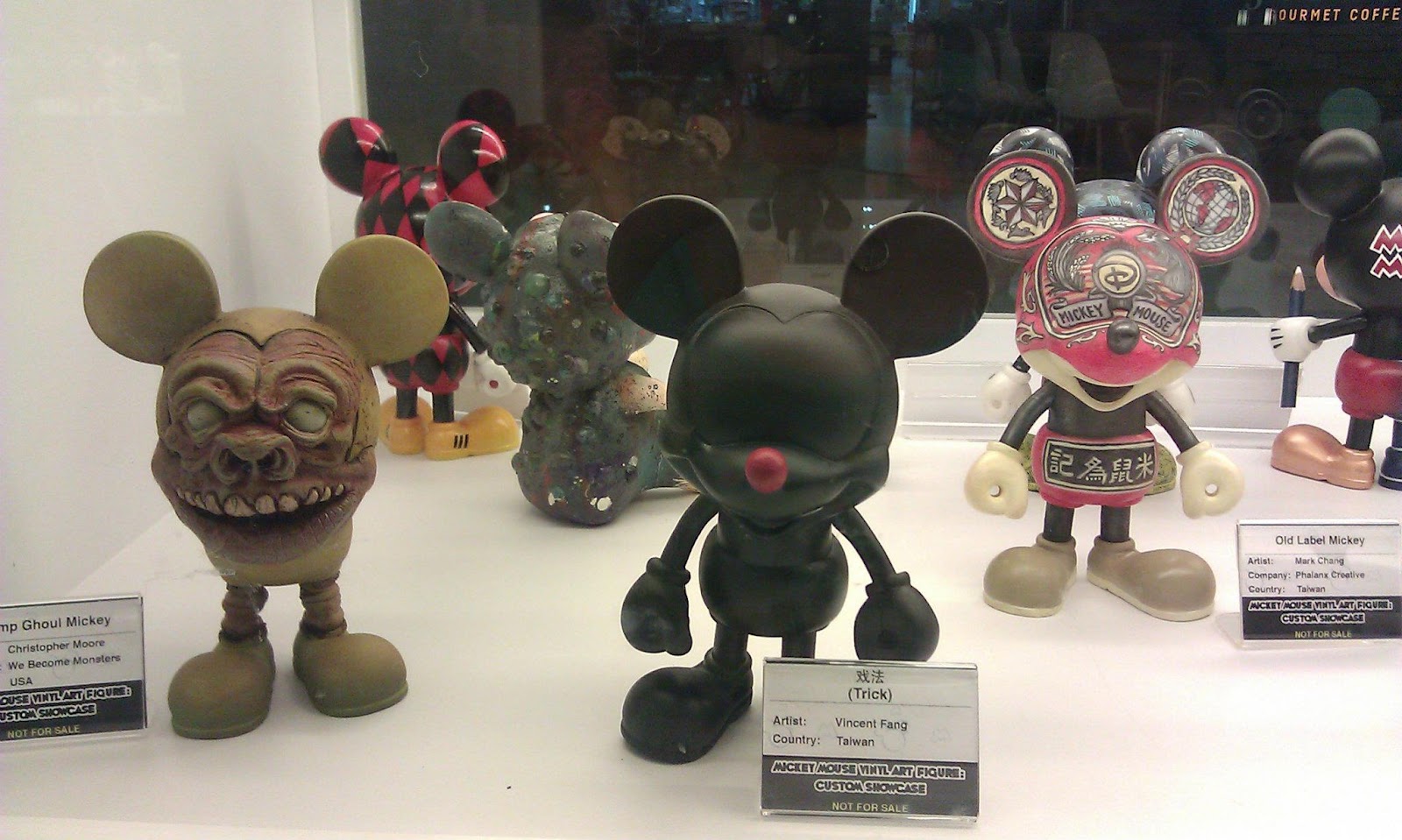
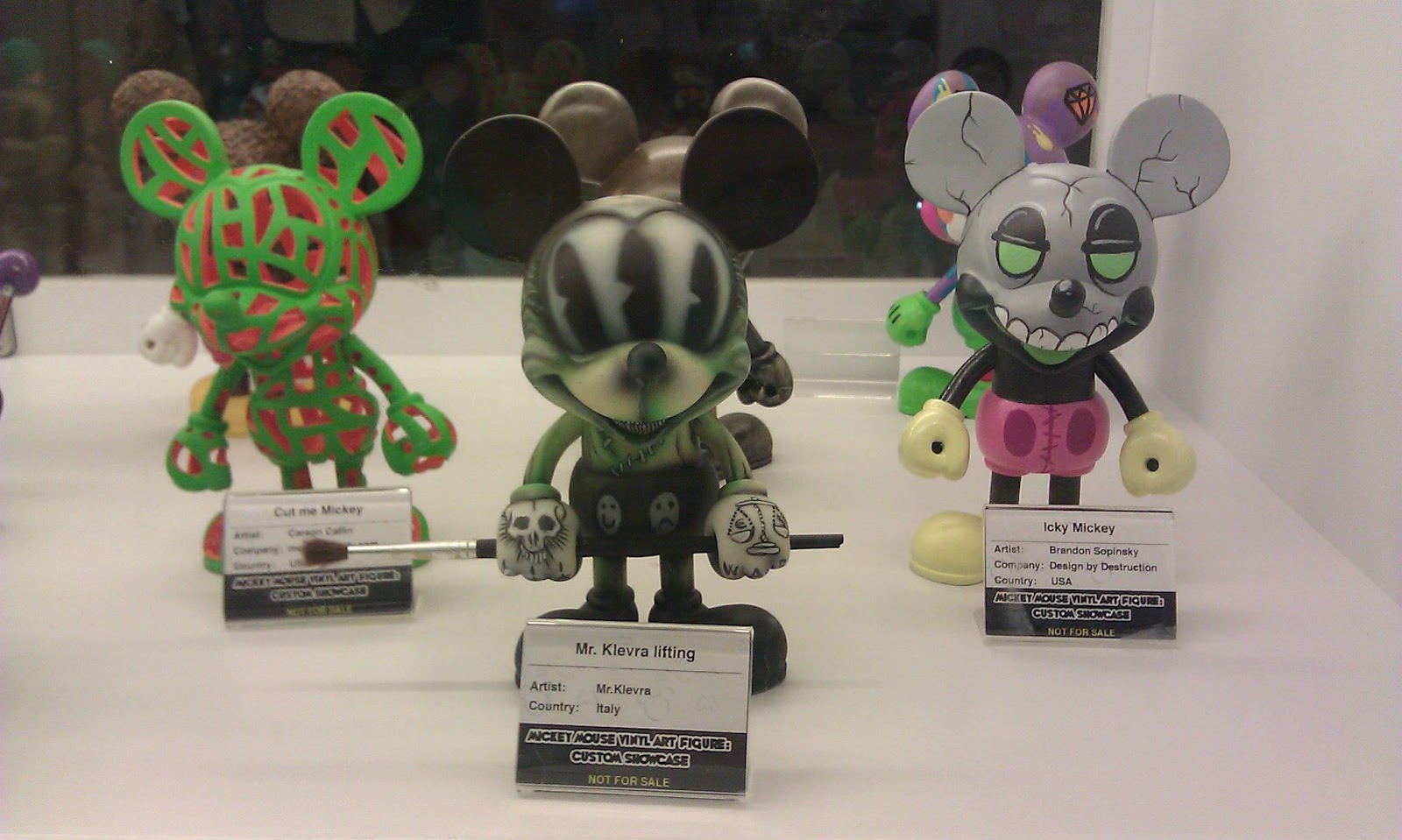
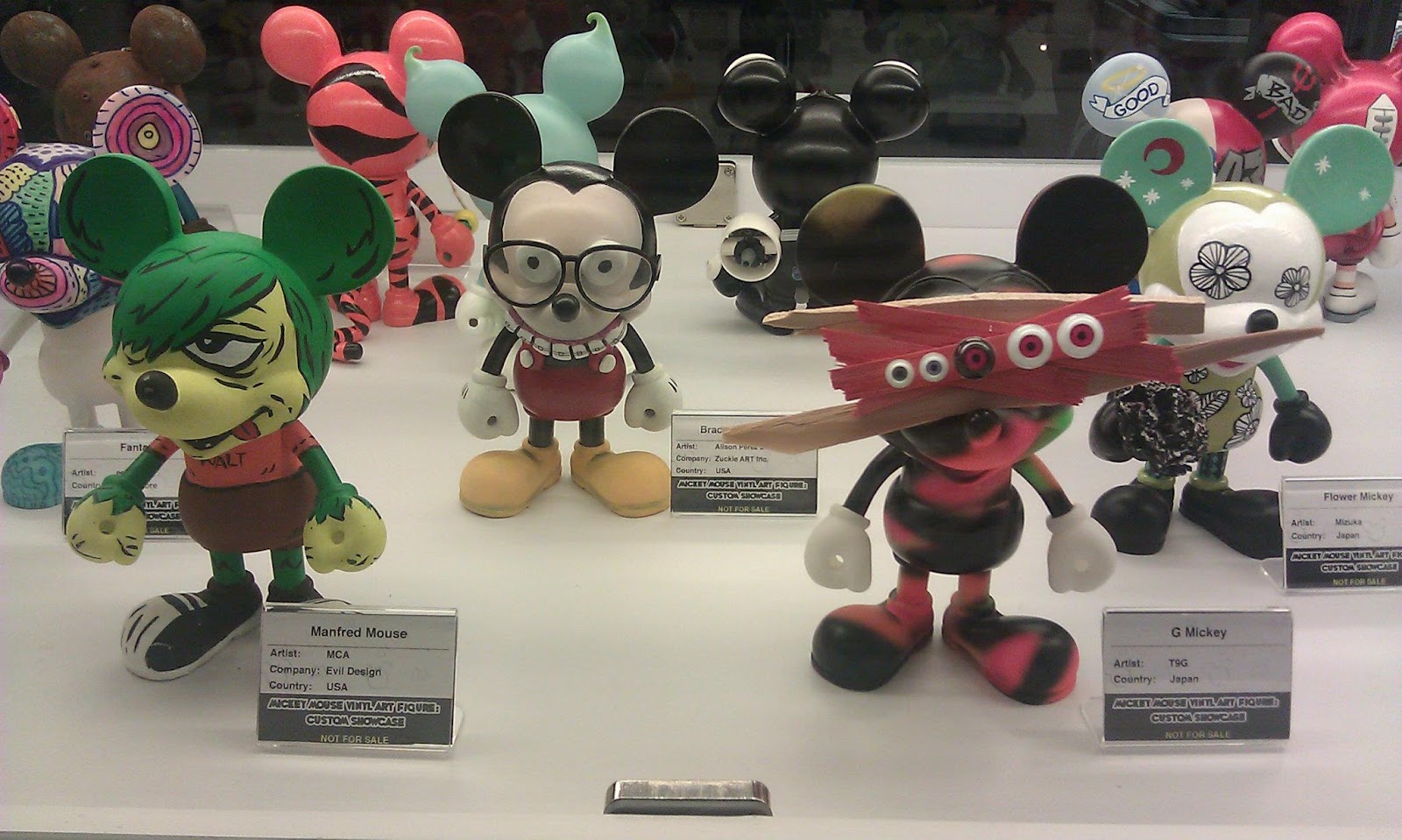
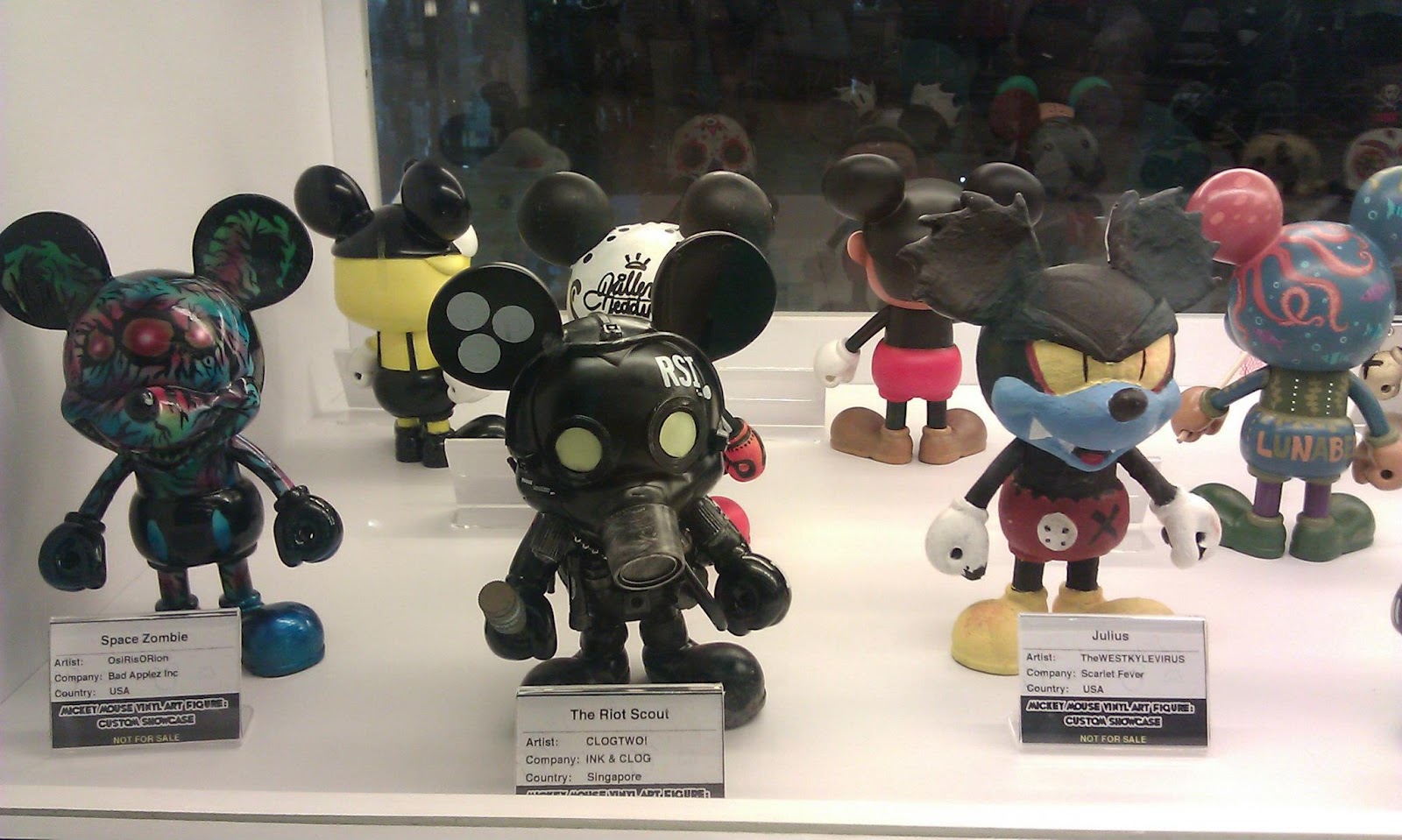
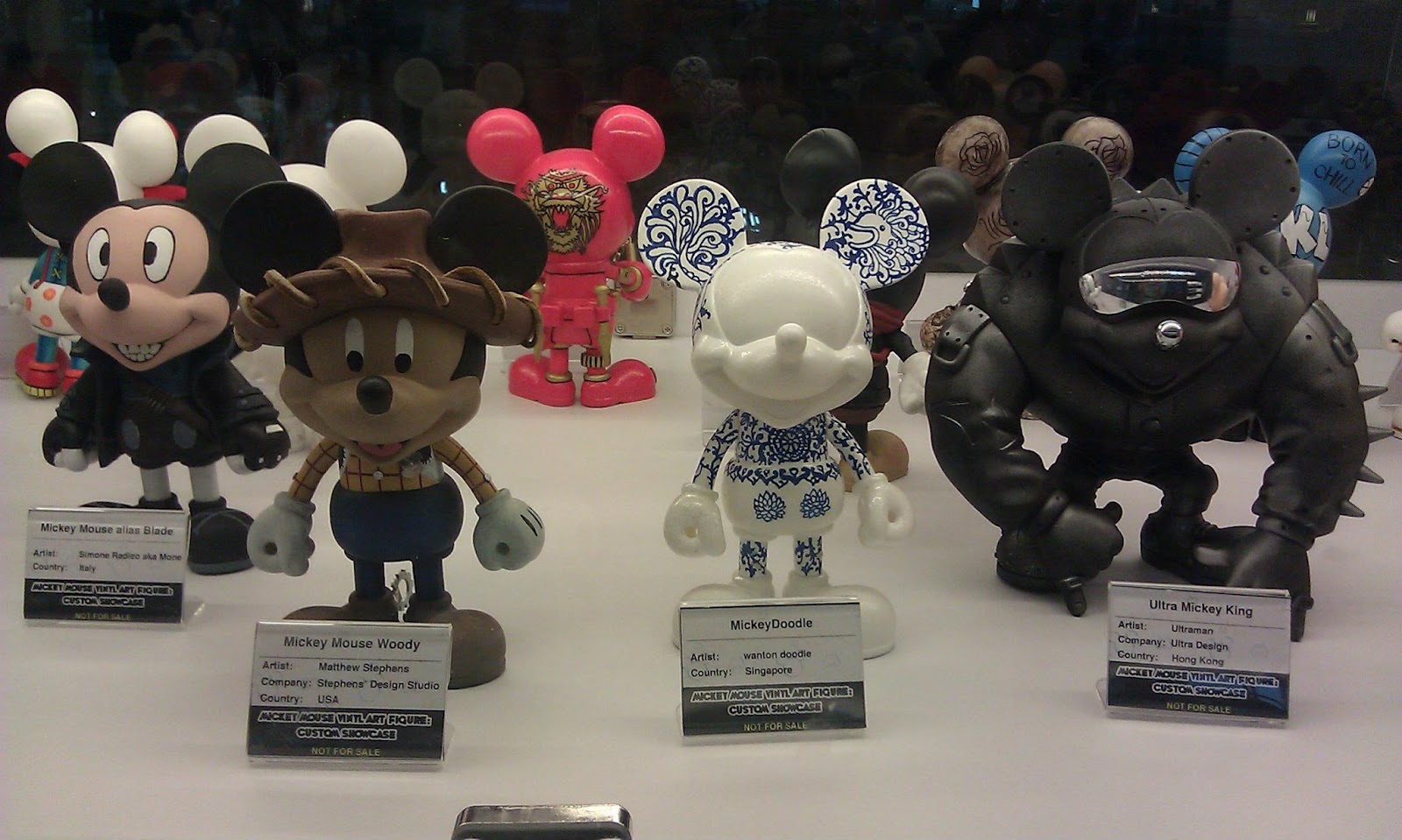
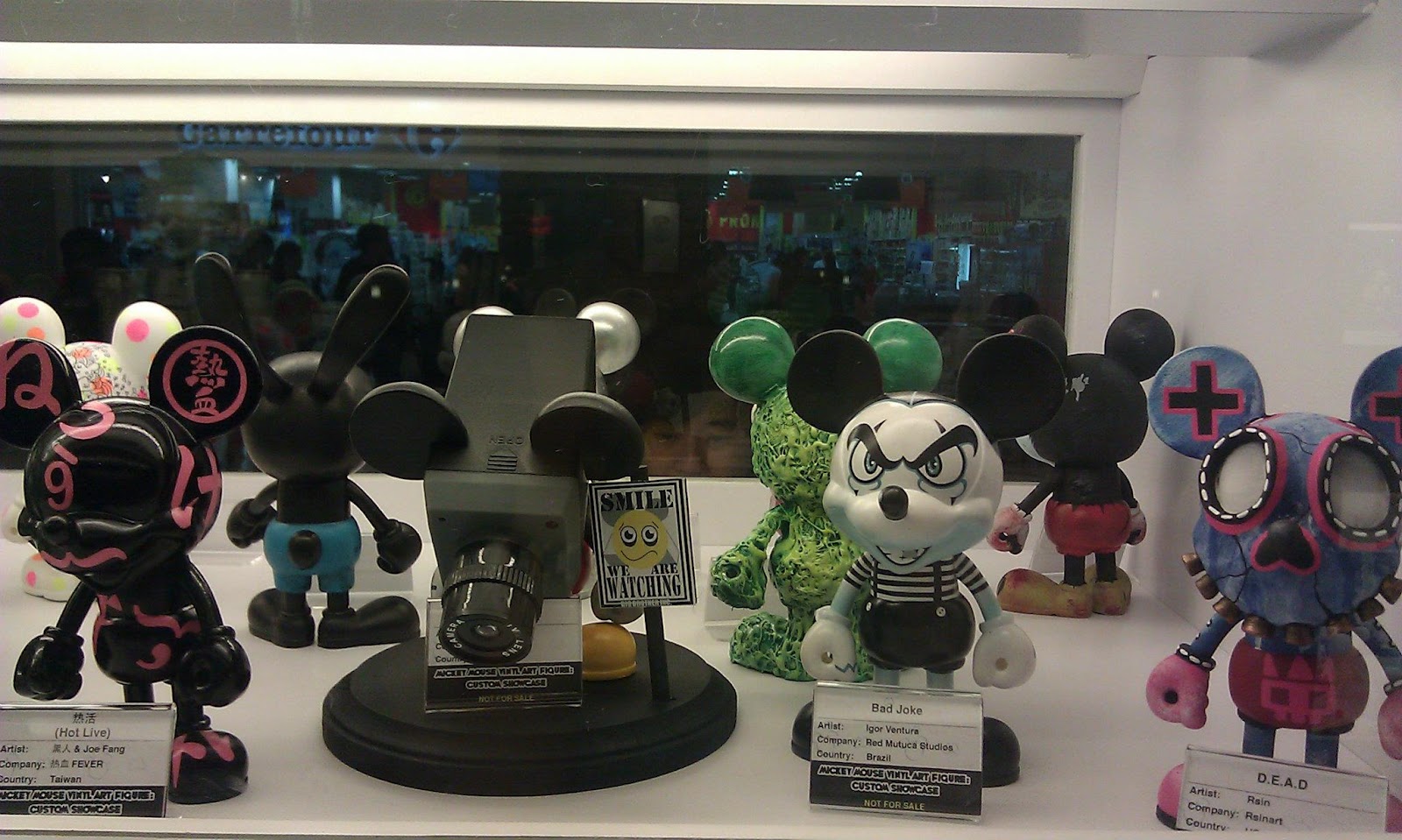
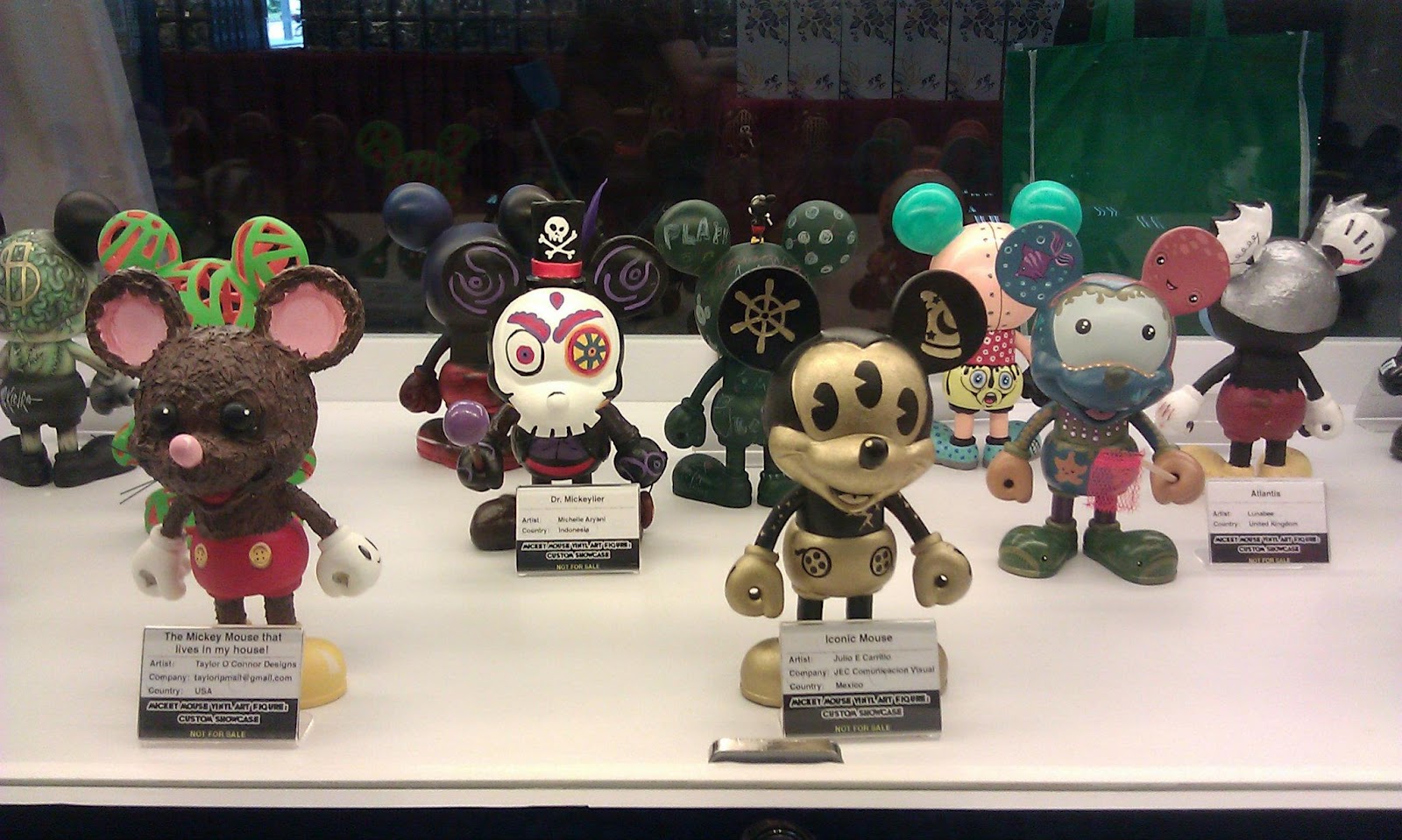
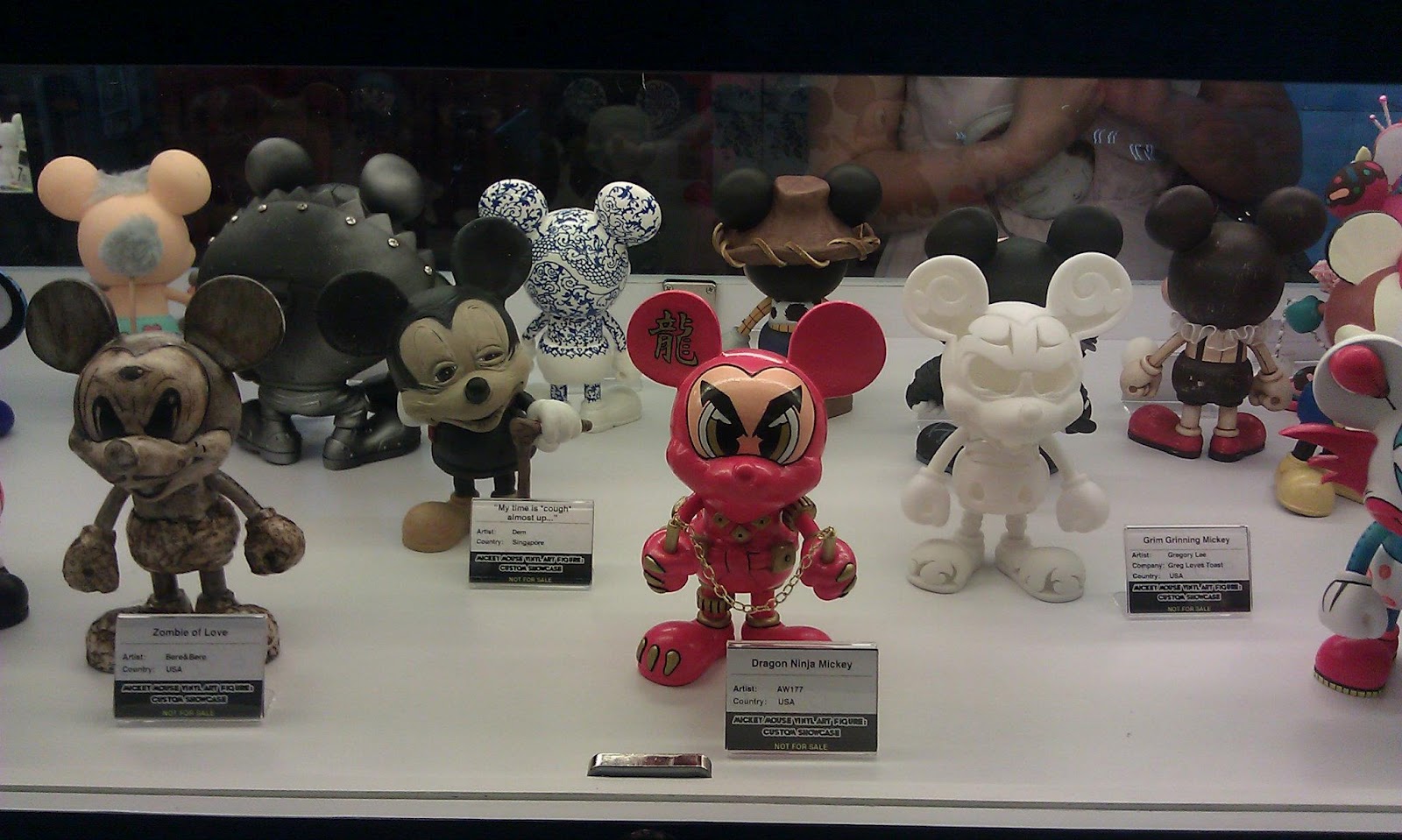
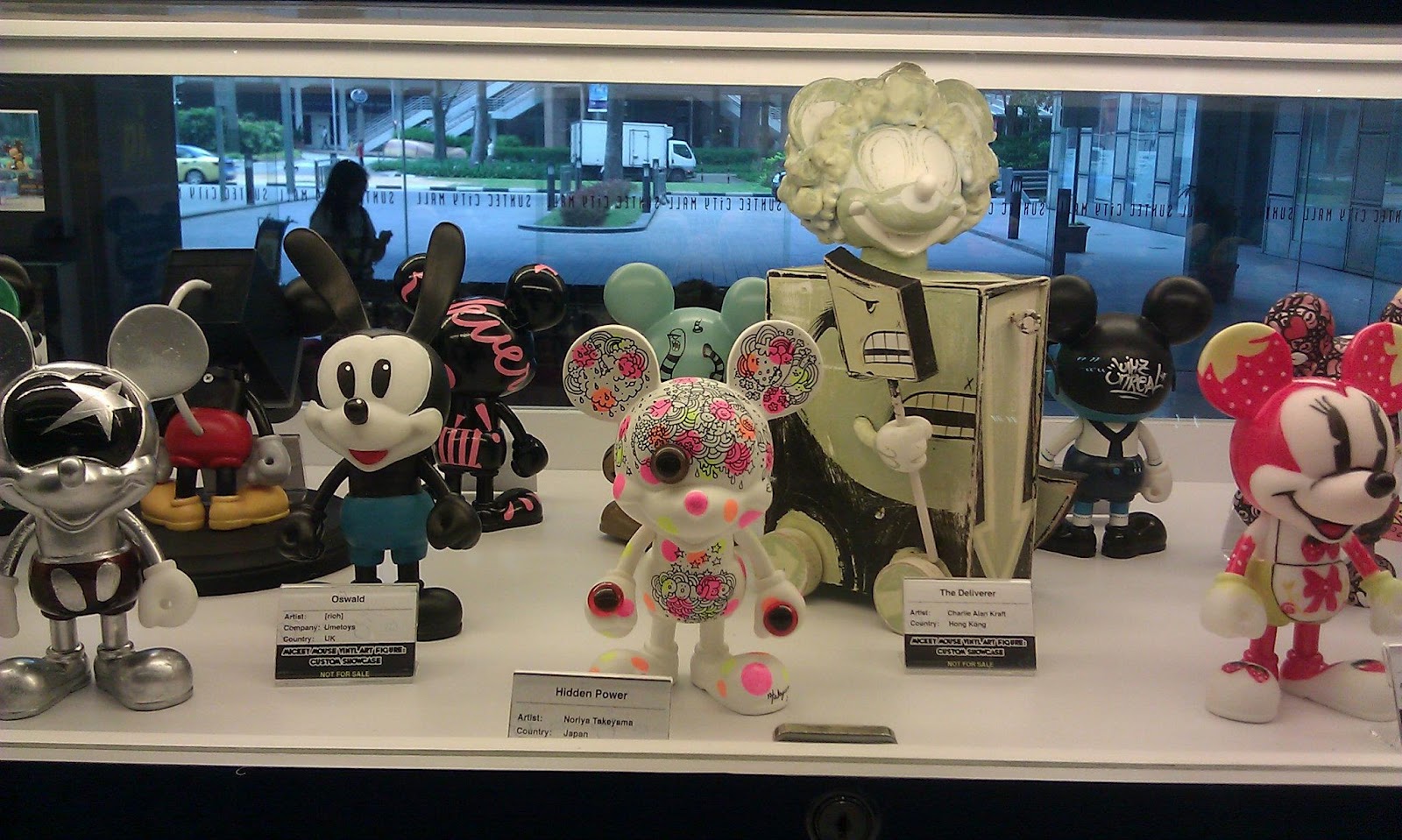
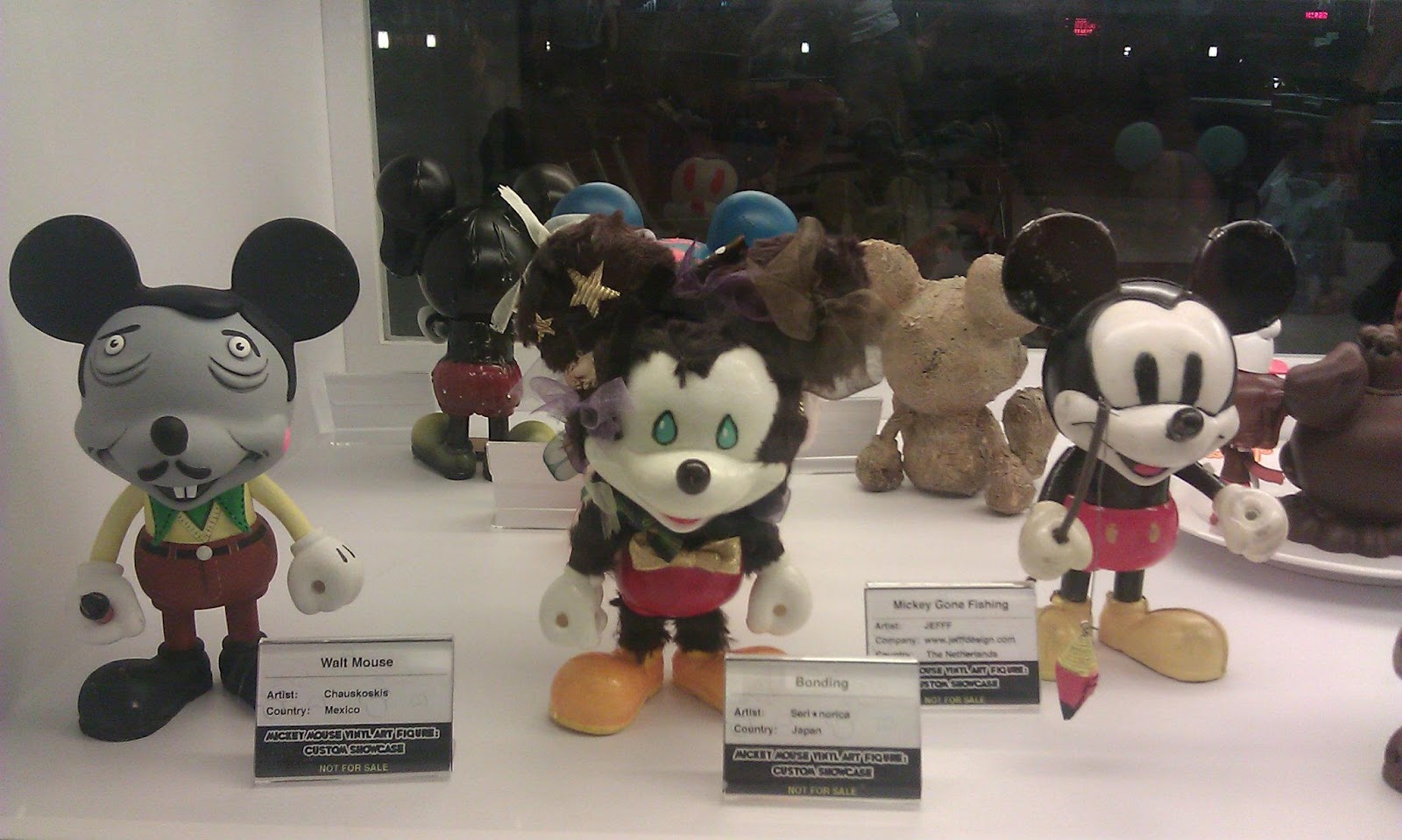
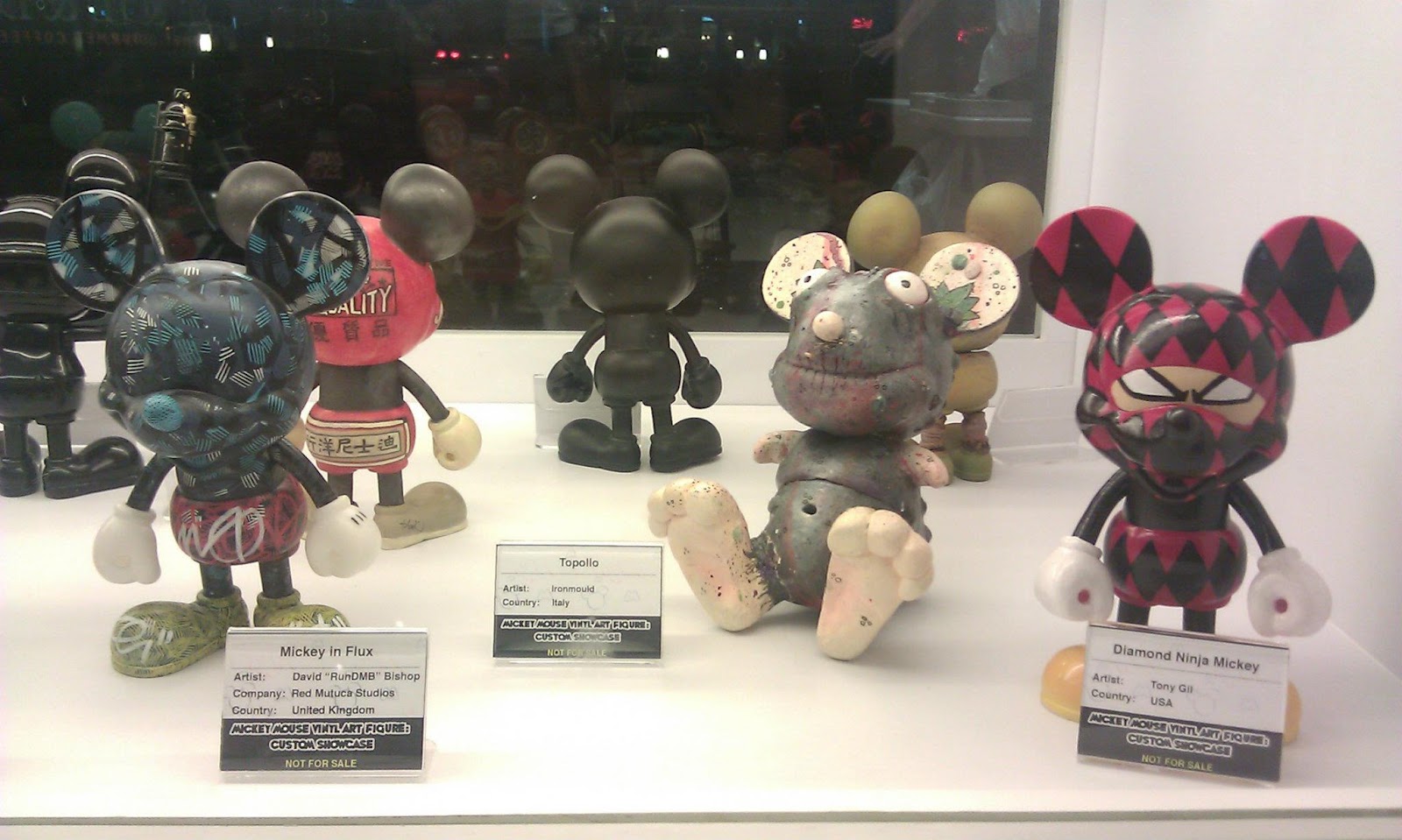
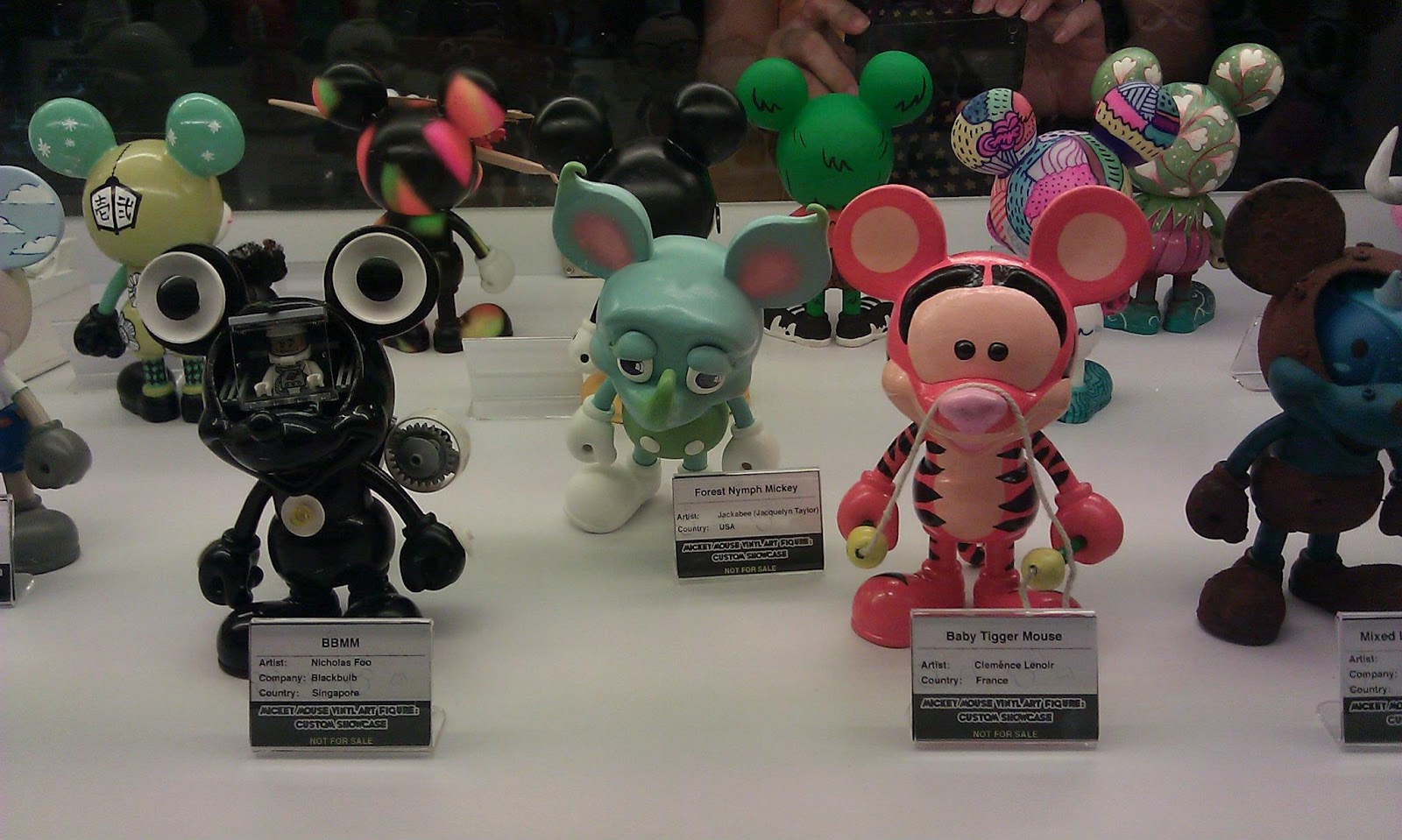
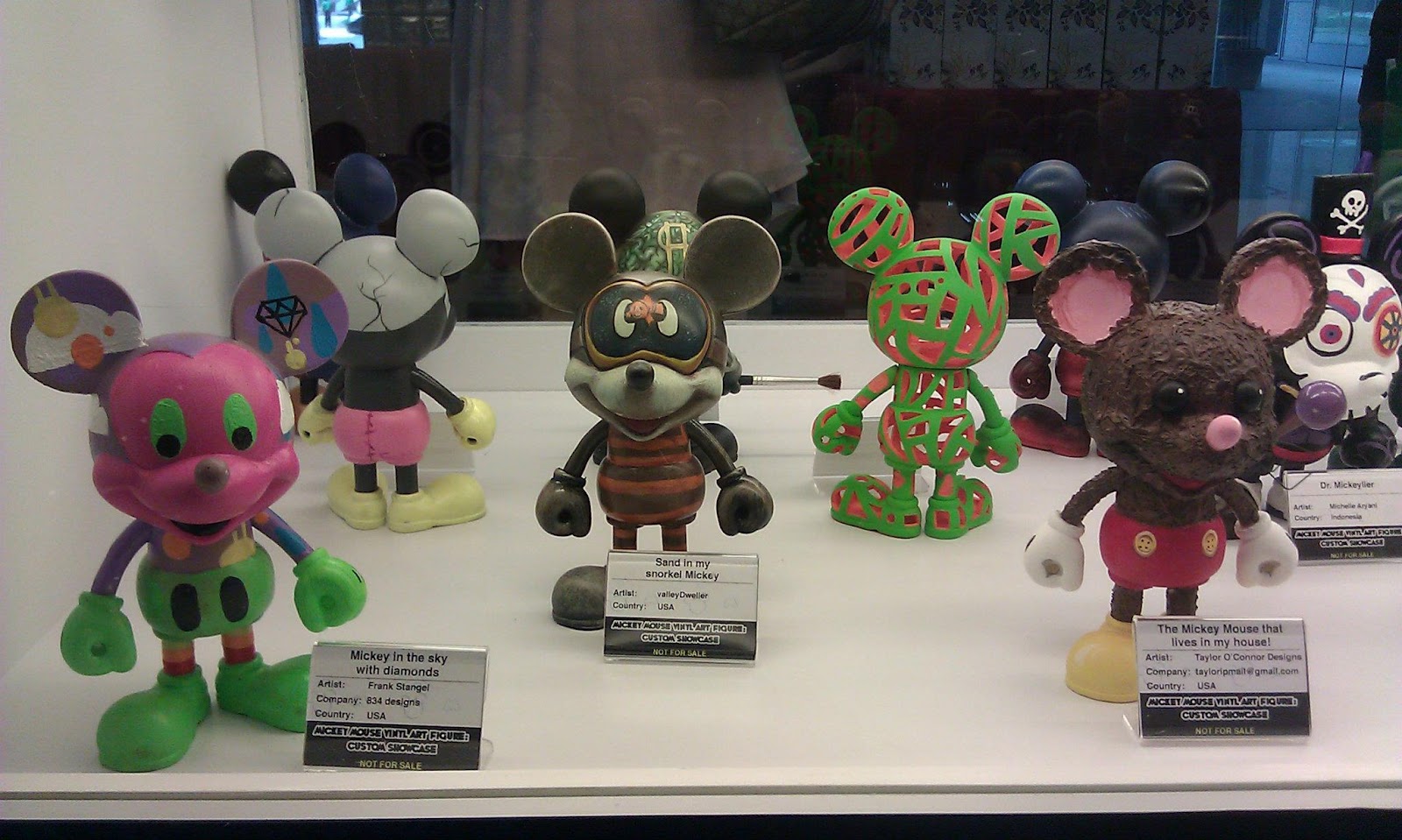
Rust this World has brought us many custom designs, but this time, it is not about Vinylmation. A few months back, we told you about a new line of vinyl Mickey’s by Play Imaginative. To promote this new product, they had artists create customs using the blank figure. Rust this World was one of over 50 artists that contributed a custom. The figures then went on tour. The photos we are posting here are from a show at the Suntec City Mall in Singapore. None of the figures are for sale, but the designs are incredible to look at. All photos are the property of Play Imaginative.

The colorful Mickey with the teeth is Rust this World’s contribution.

Custom Class with Rust This World: Lesson 1 – A Beginner’s Guide

Attention Students. Custom Class will now begin. I’m your teacher Rust This World. I have been customizing toys for over five years, and have in that time narrowed down my methods to what works best for me. I started with action figures, moved onto urban vinyl, and finally to Vinylmation a little over a year ago. Hopefully in my series of lessons that will be posted here on Destination Vinylmation, I will not only teach you about techniques that will help you in making a custom figure, but also some information about the materials and why specifically what I do works. Science and art combined.

This is my first lesson, hopefully of many. I have plans for lessons on airbrushing, sculpting, and making a light up figure, and would definitely do an entire column of user questions if there are enough. If anyone has any questions or requests for specific projects for me to demonstrate, message me on twitter @RustThisWorld or on Facebook facebook.com/rustthisworld.

In this lesson, I will be showing you the proper ways of painting a Vinylmation figure. These are the fundamentals of making the simplest custom Vinylmation by doing nothing more than painting it.

One quick disclaimer before I begin: If you’re a custom artist and your methods are different than mine, I am by no means saying that you’re wrong. These are the methods and products that work for me based on my experience.

We’ll start today’s lesson by discussing…

Paint Type

The most commonly used paint to use on figures is acrylic paint. There are various kind of acrylic paint, but the ones I use most often of those that used for models or hobbies.

Acrylic paint is made up of 4 things: The pigment, which is the raw color, water, which dilutes the paint and makes it possible to brush on and stay wet, the binder, which keeps the pigment and water mixed, and usually some sort of filler that’s a cheap way to fill the bottle without using as much binder or pigment. Some paints are harder to paint with because of their make up, such as white and red paints always being thicker because they use a lot of pigment, and yellows being thinner because they use less.

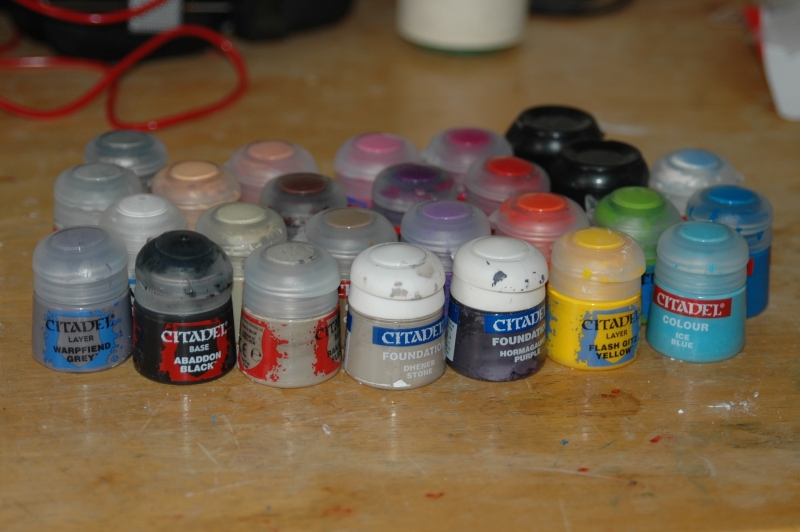
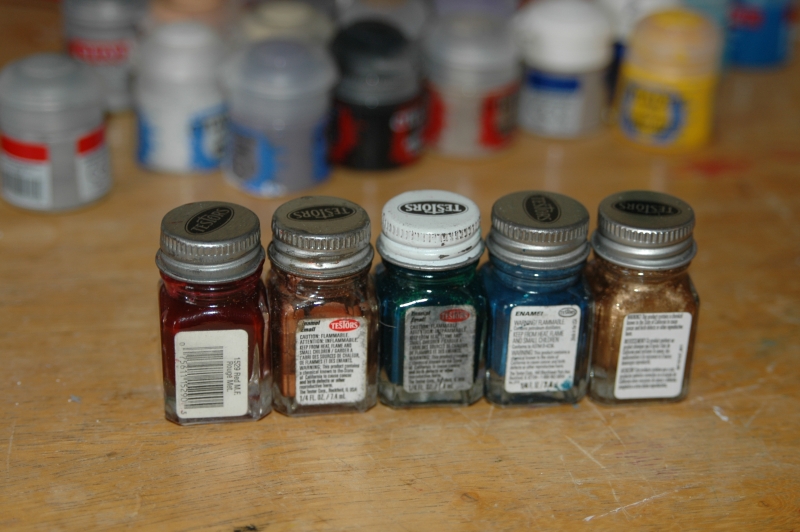
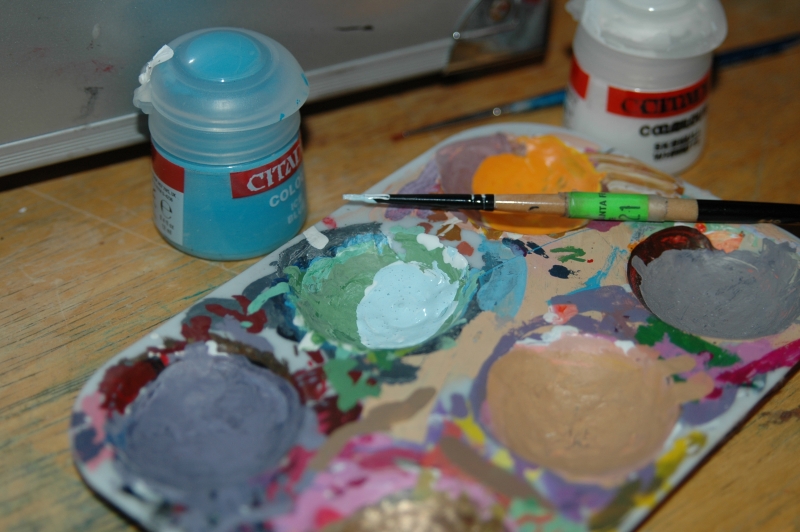
Here’s my collection of paints.

After years of doing this, I almost exclusively use Citadel Paints, which are made by Games Workshop (the company that does Warhammer). They’re more expensive than other more mainstream acrylic hobby paints, but the quality is unmatched.

Reasons I love Citadel Paints:

1. Long shelf life. Yes, paint doesn’t last forever. As the paint ages, the water dries out, causing the rest of the paint to become thick and sludgy, or even unusable.
2. Huge variety of colors. I’m not crazy about mixing my own colors, and will only do it on small occasions. The amount of colors that Citadel has is huge. I believe there are over 100.
3. Color Quality. Bright vibrant beautiful colors in every shade.
4. Consistency. The consistency of the paint is key to getting clean and smooth brush strokes. If your paint is too thick or too runny, you’ll end up with a mess. Citadel paint don’t need to be thinned or watered down, they’re always the perfect consistency.
5. They dry fast. When you’re painting a figure, you don’t want to wait for long periods of time for the paint to dry.
6. They naturally have a matte finish. Glossy finishes make things look cheap and plastic-y and only work if the subject matter is slimy or wet, like the Cutesters Turtle or Alice Oyster.
7. They dry perfectly. Often with cheaper paints, they will dry sticky or tacky on softer plastics. Citadel always completely dries.

There are other types of Acrylic paints such as Testors or Apple Barrel, but from my experience, they’re not as good. You can get Testors paints for extremely cheap at most hobby stores like Hobby Lobby or Michaels, but their shelf life and colors are not very good in my opinion. Their white and yellow colors are really bad, too. I have a few bottles of testers, they’re all metallic colors.

Brushes

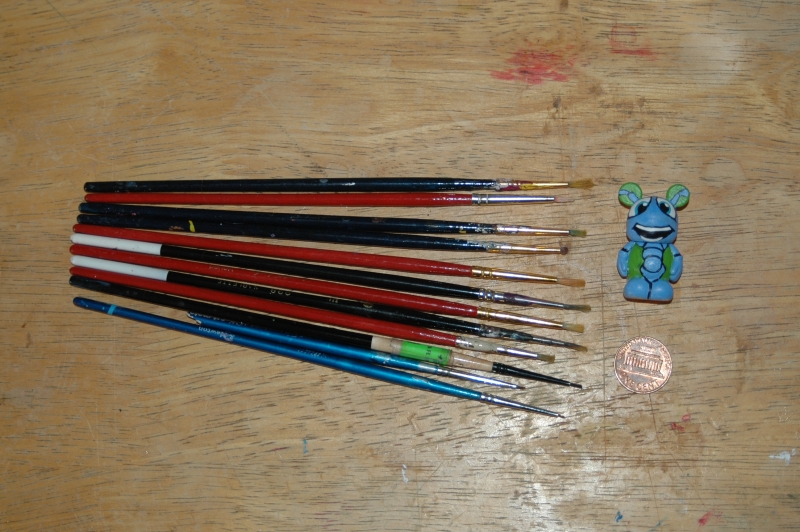
Other than paint, the other thing you need are brushes. Here’s my collection of brushes that I currently use.

Most of my brushes are Watercolor brushes. I use watercolor brushes mainly because they have very smooth bristles, which will leave you with less brush strokes in your paint. I also only really use tiny brushes. The smallest one I use is a 0/4 or 0000 size brush, which is used for super tiny detail and line painting. Blick’s site has a great scale brush size comparison chart so you know what size brush to get: www.dickblick.com/info/brushpdf/brushsizing.pdf

Basing Your Figure

Even if you’re using a Create-Your-Own figure, you need to base it for a few reasons. The first is that CYOs are often just pulled from the molds at the factories and put in the boxes, which means that they’re covered in mold release of some other form of lubrication. The lube is oil based, and any water based acrylic paint you paint on it with, will smear and bubble and separate. In fact, if you’re using a CYO at all, you should wash it with soap and water before doing anything.The other reason is that a thin, smooth, white base coat will make all paint that goes on top adhere much smoother. You can totally paint over non-CYO figures as well. I’m not using a CYO because I’m unabashedly in love with the new mold, and they don’t make new mold CYOs. So this turtle is getting sacrificed to the custom gods today.
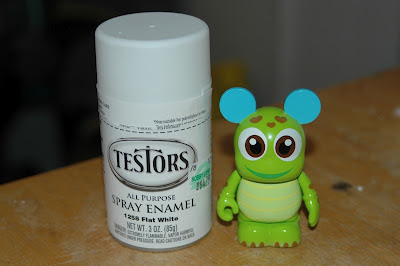
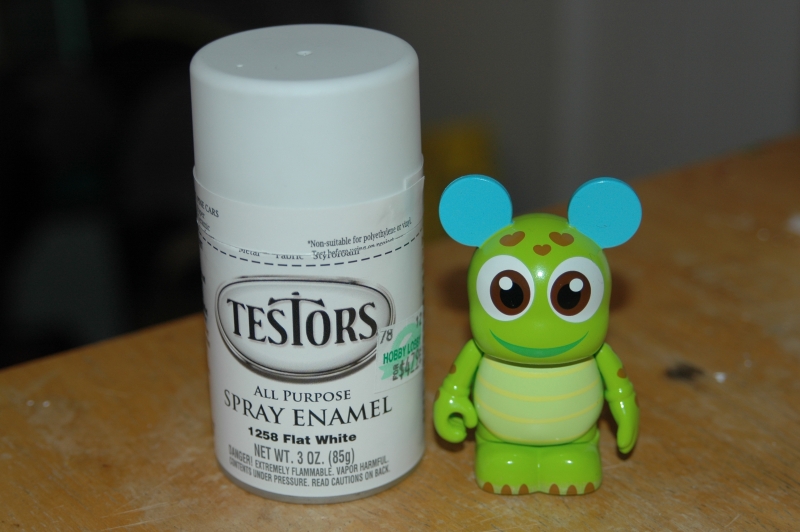
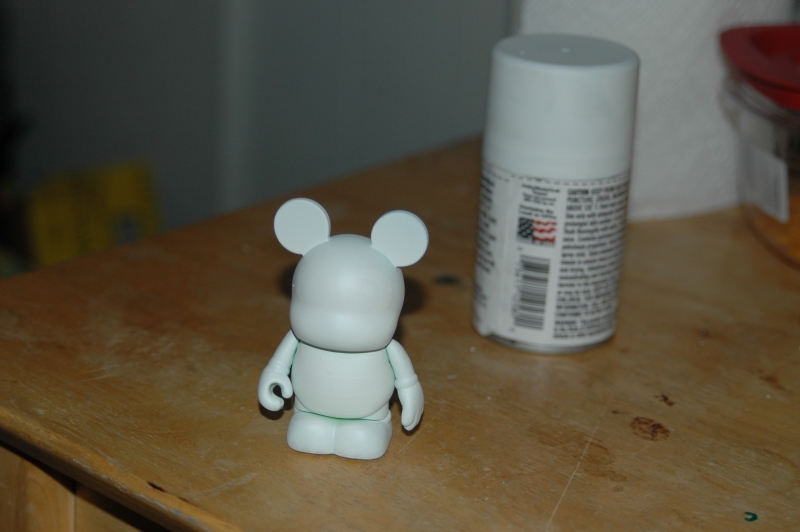
Here’s what I use. It’s a white spray on enamel primer, and aside from what I said about Testors earlier, their spray paint is decent. I use white because every color will look bright when painting on top of it. Using a black primer will make any color painted on top look darker. Citadel makes a primer too, but it costs about as much as a down payment on a car and isn’t different enough . These spray primers are meant for models and spray in thin layers. I would not recommend buying industrial grade spray paint from a hardware store, as it will probably spray on much thicker and you may lose detail in the sculpt.

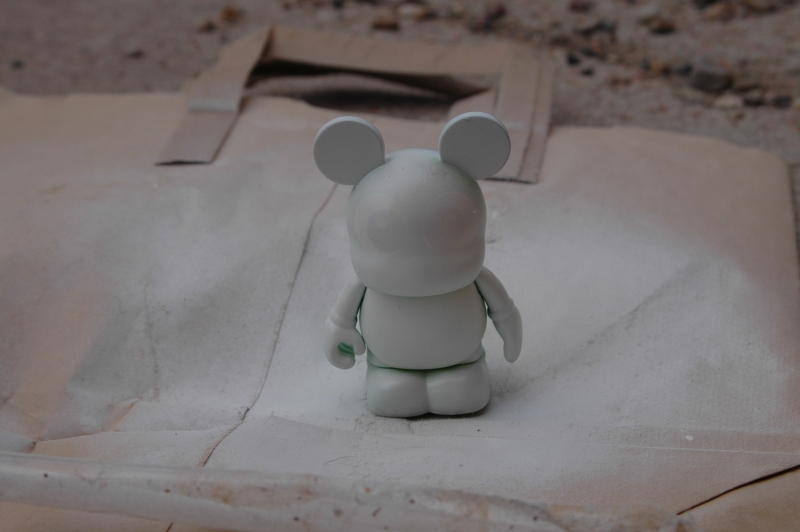
Don’t go overboard on spray this the primer. If you spray too much in one spot, the paint will get thick and drip down the figure. Spray in small bursts from 9-12″ inches away until it’s covered. Here’s what my figure looks like after one pass.

If you think there a spot that needs more paint, wait and until the figure is dry and go back and spray more. I can still see the eyes and some details in the above picture, so I waited about 10 minutes and sprayed some more. I can get about 15-20 3″ figures based out of one of those cans.

Sketching

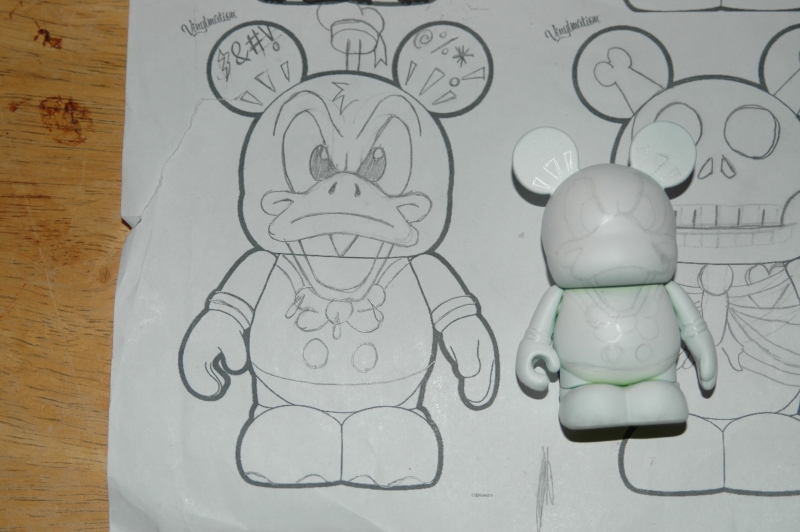
I always draw my design onto one of the templates from the official Vinylmation blog, so I know how it will look and make any changes before I start painting.

One I’ve based the figure, I take a pencil and sketch my design onto the figure. This isn’t necessary, but it’s very helpful for know exactly how your design will be applied to the figure and will make sure that you paint it correctly the first time.

Painting

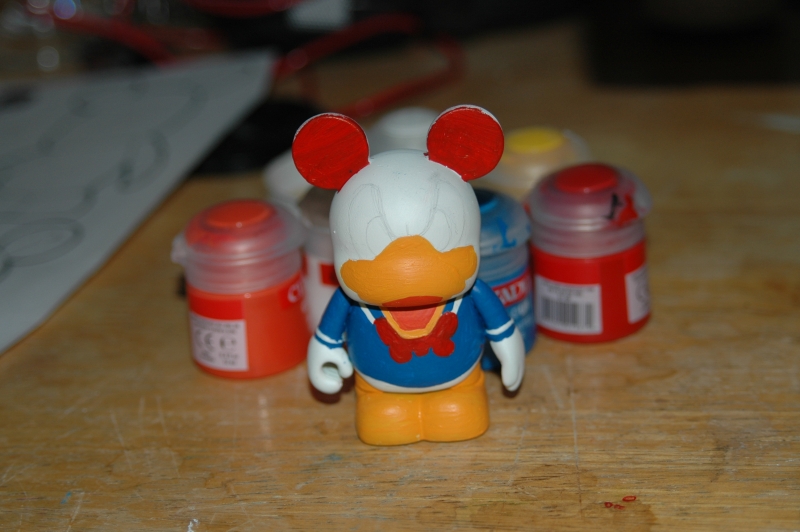
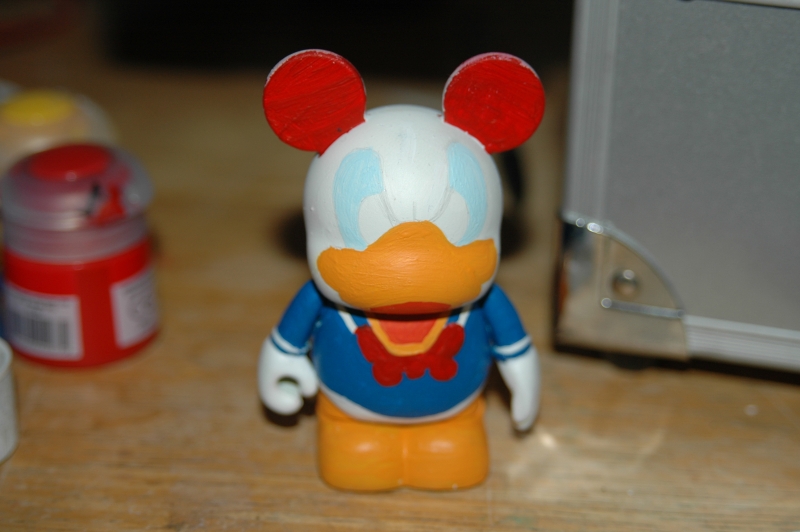
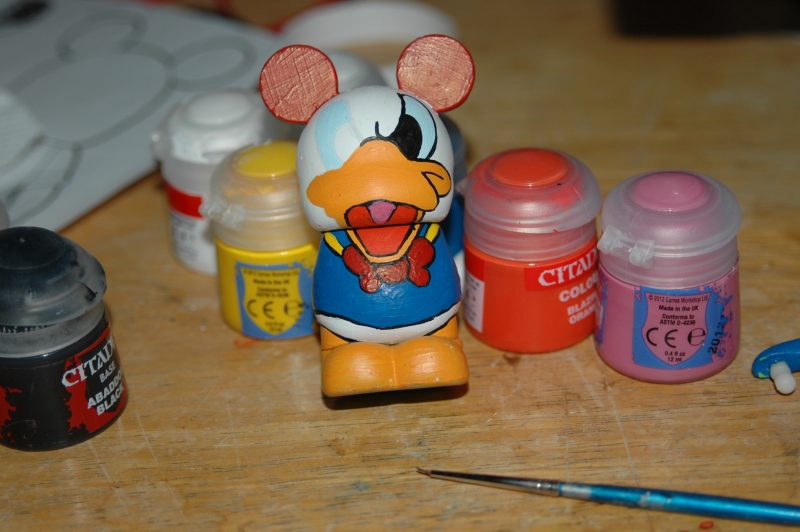
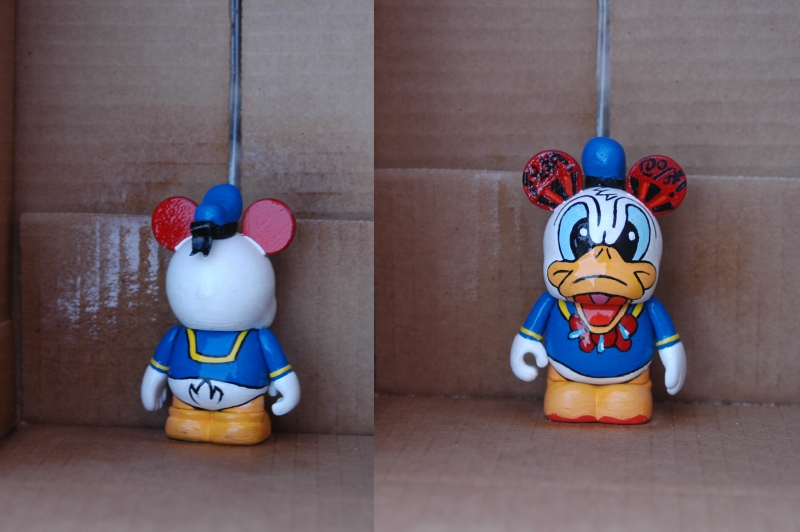
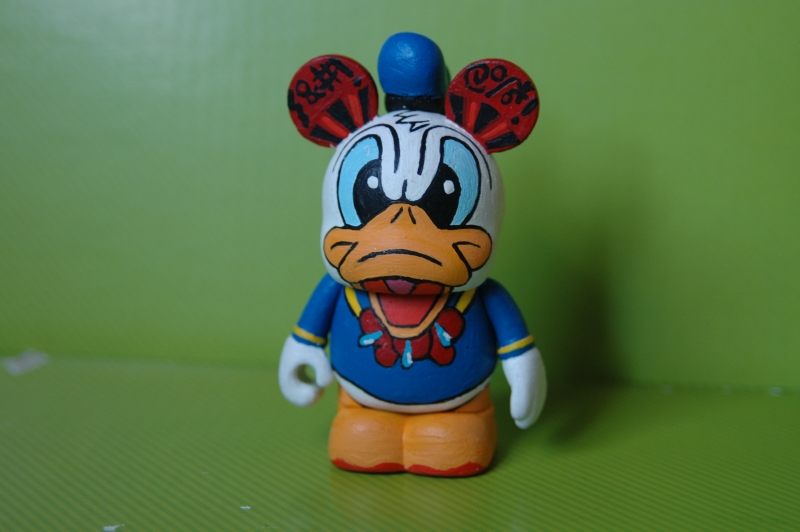
I start with the bottom base colors in big blocks. So Donald’s orange beak, his blue shirt, his bow tie, etc. All of the small details I’ll be painting on top of the base colors.

Depending on their consistency, some colors will need multiple coats of paint to look good. Let each layer dry before a brushing on a new layer. Don’t smear a ton of paint on at once, or it will dry clumpy.

When painting, get a small amount of paint on the brush and softly wipe it in even strokes. If you get too much paint on the brush, it will leave clumps and uneven spot. While the paint is still wet, you can continue brushing it in different directions to achieve a smooth even coat.

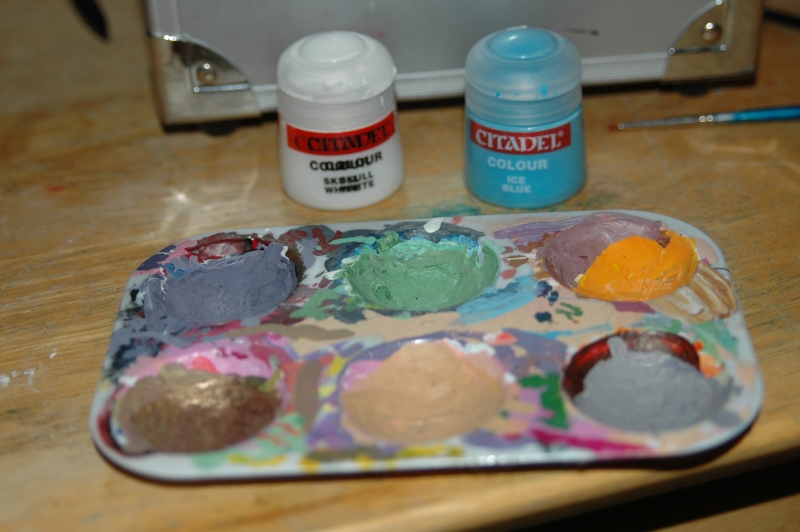
Even though I have like 30 different colors of paint, sometimes I need a color that I don’t have. Donald’s eyes have a light blue hue to them, but the light blue color I have is a little too dark. I have a small palette that cost like a dollar that I can mix paint in. For those of you who have mixed paint or studied color theory before, here’s the basic rule:

Adding white to a color will “tint” the color and lighten it.
Adding black to a color with “shade” the color and darken it.
Adding grey to a color will “tone” the color and desaturated it.

So to get a lighter blue color, I mix white with a tiny bit of light blue.

I then go in with my smallest brush and add lines and detail to the figure. It’s easier to add the lines after the initial color so that the larger strokes of filling in a large area won’t accidentally overlap on your lines. This part is extremely difficult even though I’ve been doing it for years. The secret is a steady hand and a lot of patience. I’m not perfect at it and I messed up in a few places, but I’ll show you how to fix that relatively easy.

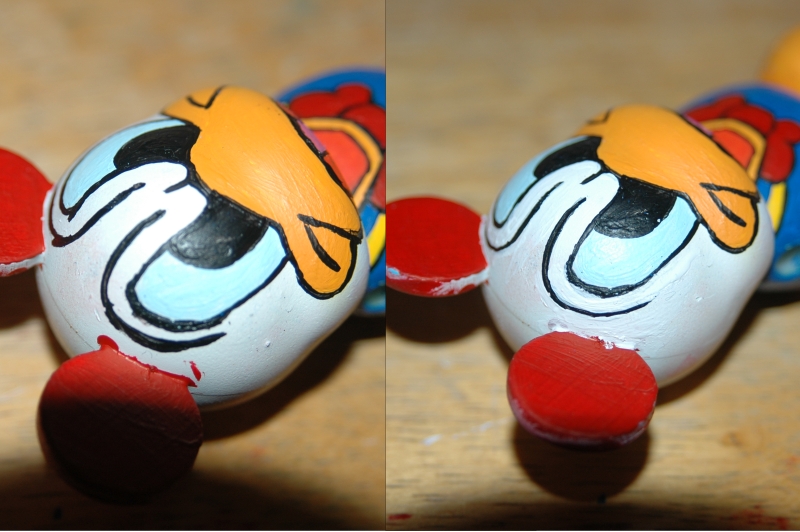
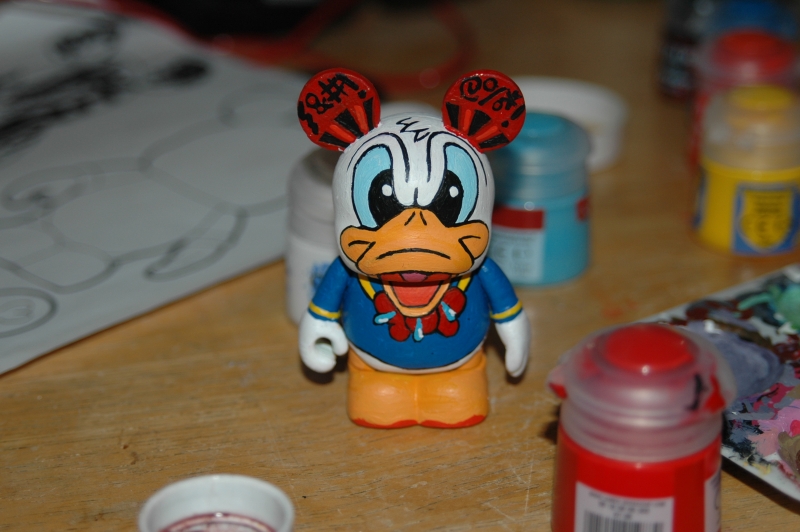
I’m sure there are some people out there who are awesome at painting perfectly straight lines the first time around, but here’s what I do if I accidentally paint a line too thick. I felt that the black line for Donald’s eyebrow is too broad, so I took some white paint and painted it on either side of the brow to thin the black line.

I also did this in several places all over the figure, like the bill and the bow tie.

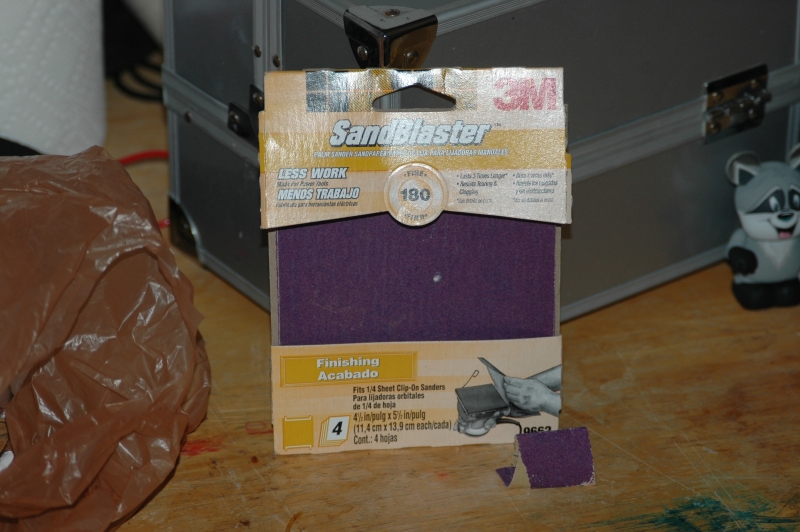
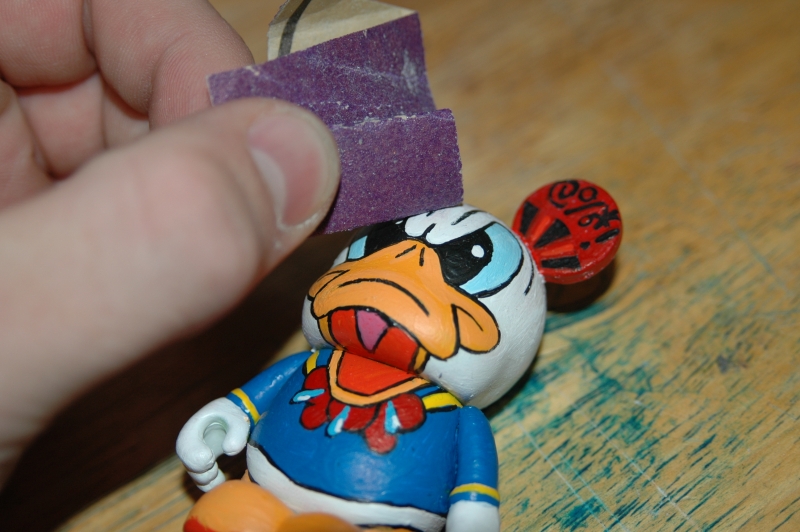
One thing you can do if you feel that your paint is too thick or there are clumps or brush strokes in places is use sandpaper to sand the paint down. I use very very fine sandpaper (size 180). I tear off a small piece and sand down any visible brush strokes. Sometimes, the sandpaper with ruin the paint where you are rubbing it, but you can always go back and apply a new layer of paint where you sanded, being more careful not to show brush strokes the second time.

After this, I’m pretty satisfied with the paint, but there’s one more step to preserve it.

Sealing the figure

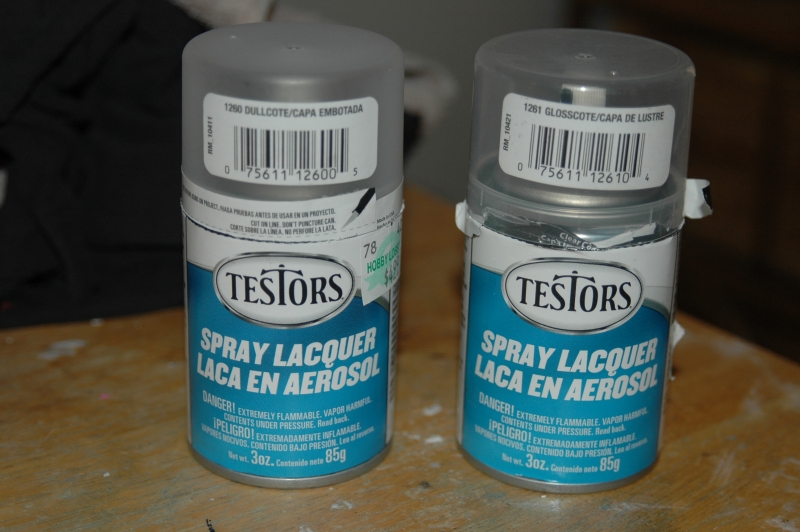
If you want your figure to have longevity, have a nice uniform look, and not get scuffed, you’ll want to seal your figure. Sealer is a clear coat of paint that protects everything paint underneath it. Here’s the sealer I use.

The Dullcoat gives the figure a matte finish and the gloss coat gives the figure a glossy finish.The cans look almost exactly the same, but the dull coat has a cloudy top and the gloss coat has a clear top. That and they say Dull or Gloss on the little sticker label on the cap.

Spray sealer is pretty toxic, so you don’t want to spray it indoors and you definitely don’t want to deeply inhale it. I usually wear a dust mask when I use this. If spraying isn’t your thing, you can also buy sealers and varnishes in bottles and brush it on. If you’re spraying outside (like you should be) it should take about 10 minutes to dry. I spray on each side.

Cleaning Your Brush

So you just bought a really nice watercolor brush, but now it’s covered in paint, what do you do?

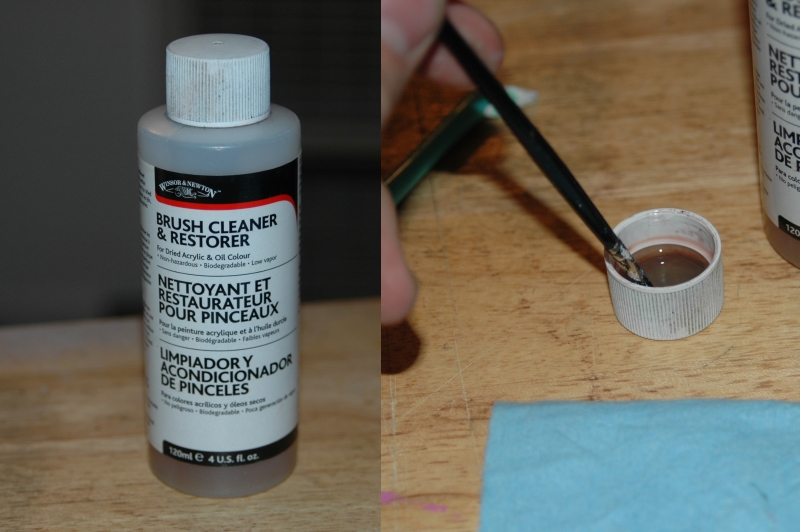
This is a bottle of Winsor and Newton Brush Cleaner and Restorer. It’s an alcohol based solvent than not only strips the paint from your brush, but also restores the bristles so that they don’t dry out or break.

So as not to contaminate the rest of bottle, I turn the cap upside down and pour a little bit of the cleaner into the cap. I then swish my brush around, brush it on the top and bottom, and then wipe it off on a paper towel. This usually cleans fresh paint right off. If you’ve let the paint on your brush dry for several hours, you’ll have to soak the brush in the cleaner for 10-20 minutes for the paint to loosen and dissolve.

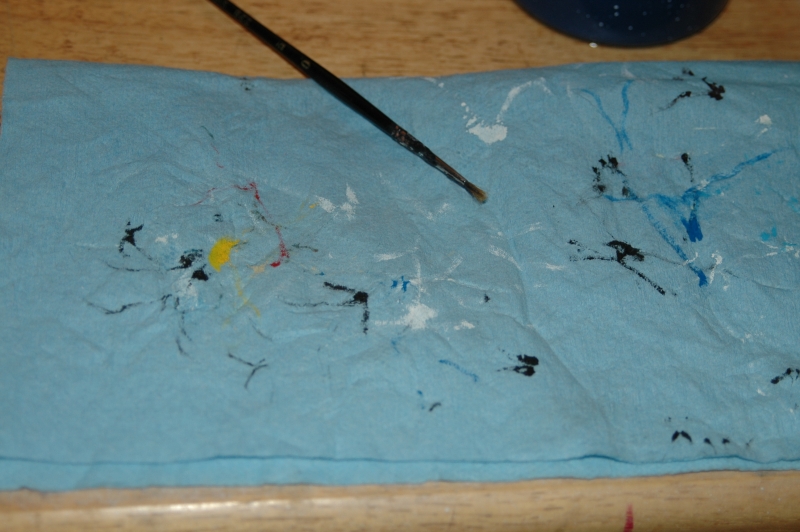
As a bonus, at the end, your paper towel will double as an abstract painting.

Conclusion

Proper materials is 50% of making a good figure. The other 50% is up to the creativity and skills of the custom artist. I’ve been painting figures for years and I went to art school, but even I’m not perfect. Practice and patience is the key to making a good-looking figure that will earn you tons of Internet respect. No one’s first figure is going to be stellar. Hopefully this tutorial will save you a lot of the trial and error that I went through and get you off on the right foot with the right general idea of how to customize.

Spotlight On: Custom Vinylmation Artist Rust This World

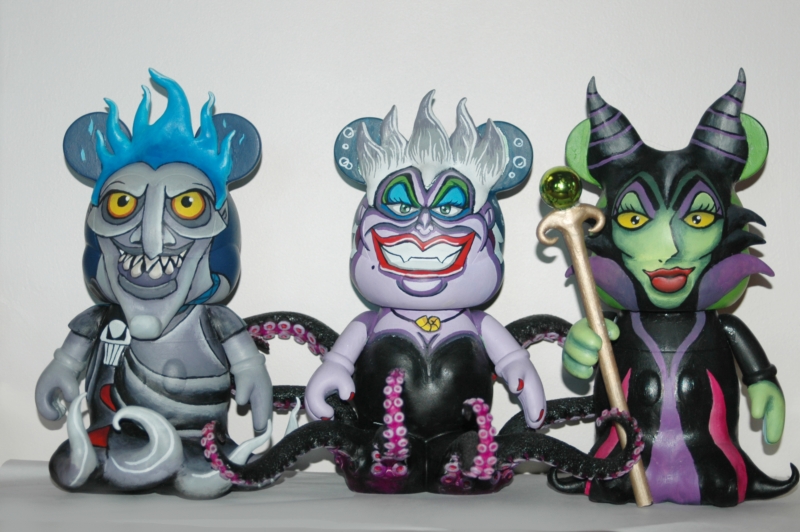
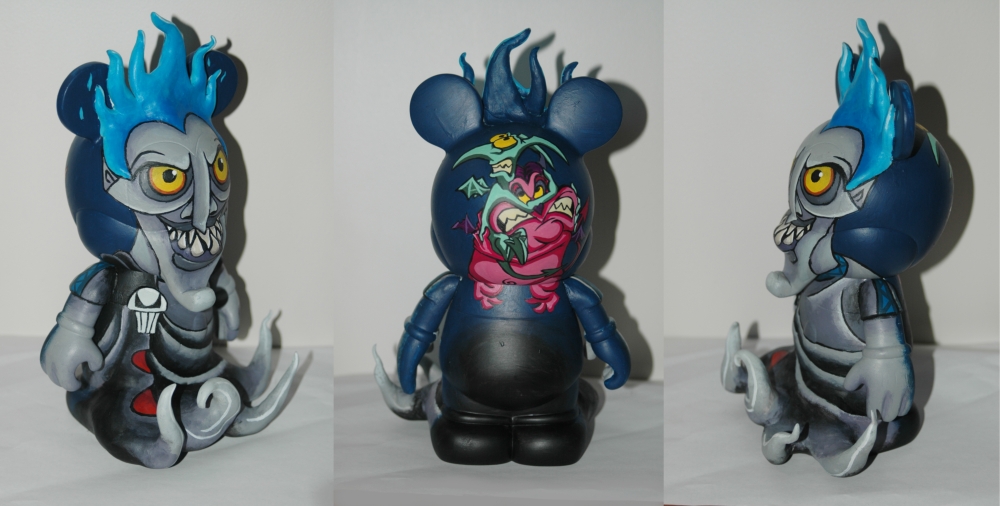
Destination Vinylmation: So far you have created a 9 inch Hades, Ursula and Maleficent for what you are calling your “Epic Villains” series. Is it possible to pick a favorite out of this trio?
Rust This World: I like different things about each one, but it’s hard to top Ursula’s giant tentacles. I tried to do something special with the sculpting for each figure in this series so that they really transform the Mickey shape.
DV: Which one was the hardest design to execute?
RTW: They have all been challenging. The sculpting of Hades’ feet was pretty tricky, as were Ursula’s tentacles. There’s a really high level of detail in the painting as well. These figures are just all around more complex than anything else I’ve done.

DV: I like the cohesive look. Did you have this in mind the whole time or did it spring from the Ursula design?
RTW: I made Ursula back in August when I found the tentacles in a store. She became probably the most popular design I’ve ever done. When it was announced that the big annual trade event in WDW would be villains-themed in 2013, I decided to make an entire set using a similar style. The whole style is based around big, detailed, and heavily sculpted figures.

DV: What event did you create these figures for?
RTW: I’m planning on attending the Reflections of Evil event next summer and want to have a big villains-themed showing.

DV: Do you have more planned for this series? 
RTW: Since I have until September, I’ll definitely try and get several more made.

RustThisWorld.com
Facebook is http://www.facebook.com/rustthisworld
and Twitter is @rustthisworld

Spotlight On: Custom Artist Rust This World

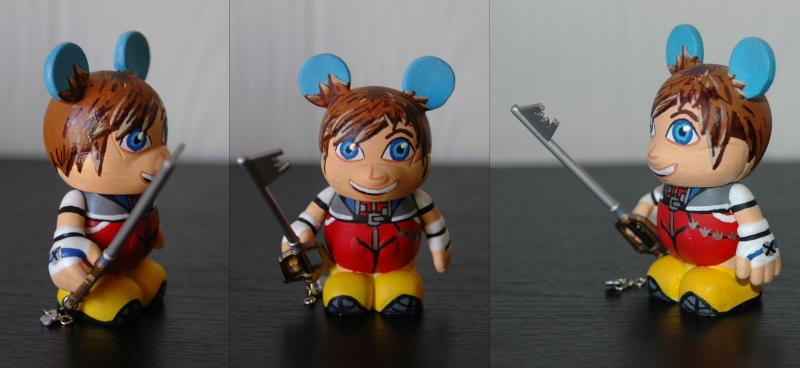
By now, you know the way to my heart is show me some video game related custom Vinylmation. Today, we feature artist Rust This World from Santa Fe, New Mexico.

Destination Vinylmation: You created a series of figures based on the popular Kingdom Hearts video game franchise. How many figures are in this series?
Rust This World: There are 5 figures so far, but eventually (meaning if I don’t get sidetracked on another project) I’m hoping to have 12 plus a couple 9″.

DV: What characters did you decide to include?
RTW: When I first started collecting Vinylmation, I was most drawn to the Villains series as I love the darker side of Disney. I wanted to include a couple different Heartless designs to include with my other villains. It just spread from there.

DV: Which one was the most difficult to design and why?
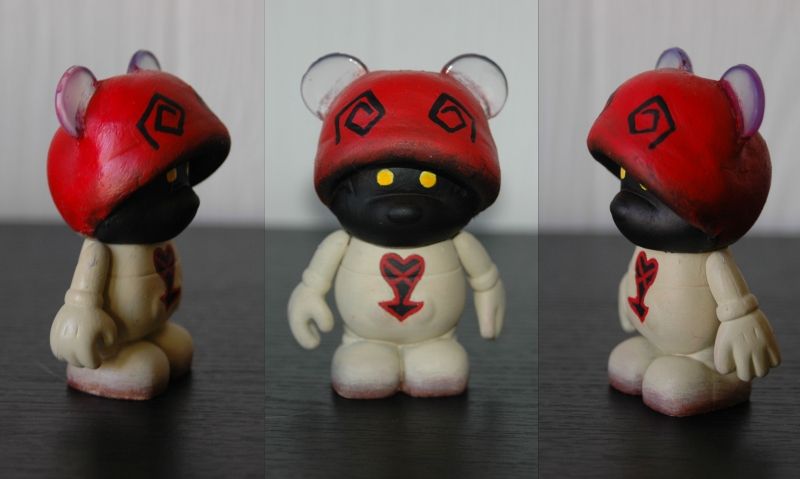
RTW: Either the 3 magic Heartless or the shadow Heartless. Both stray away from the traditional “figure stretched onto mickey’s form” that a lot of vinyls (including some of my own) follow. I’m often disappointed with how most official Disney artists aren’t creative with translating characters onto the canvas, so I at least wanted a couple of mine to look different. The shadow heartless was also fun because I made it on a clear yellow body so that when it’s held up to the light, the Shadows’ eye light up.

DV: That one does look great. Are there any more characters from Kingdom Hearts in the works?
RTW: I’m working on two 9″ vinyls right now that are about 1/2 way done based on two of the worlds from Kingdom Hearts: Hallow Bastion and The World That Never Was.

DV: What is your favorite Kingdom Hearts game in the franchise?
RTW: The first one, I loved the combat and platforming gameplay and the plot hadn’t become ridiculously complicated at that point. Plus there was something so cool about getting to run around and interact in the awesome Disney worlds that I’d only seen in movies.

DV: What do you like most about the Kingdom Hearts games?
RTW: It’s a great gameplay engine crossed with childhood nostalgia for Disney films.

DV: What have you learned from creating your customs that you can pass onto other custom artists?
RTW: There are a couple tips that apply to any custom. 1. Always wash the vinyl and then paint a base coat, both insure that the detail paint with be applied cleaner and more evenly. 2. Invest in a tiny brush, size 000 or 0000, it helps achieve clean lines and tiny detail. 3. Seal your vinyl with a sealer or varnish to insure a clean even look and to prevent paint rub.

DV: Is your work available for purchase?
RTW: All of the vinyls I’ve made are in my own personal display, but I’m more than willing to recreate them or accept commissions if people like my designs.

DV: Where can people go to see more of your work and contact you?
RTW: My website, which is more of an online portfolio, is rustthisworld.com it has all of my vinylmation as well as custom action figures and Kidrobot vinyls, plus a bunch of unrelated stuff like my Battlebots and other projects. My email is evolvedbutter@aol.com or pm me on the Vinylnation boards, username: Rust This World.

DV: Great job on this KH series! Thank you for sharing your work with our audience.