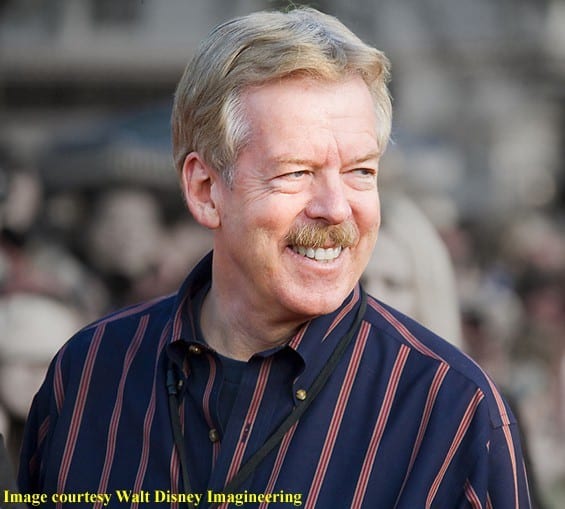
VIDEO: John Stamos Hosts Marty Sklar, Tony Baxter, and Wayne Jackson for “Legends of Walt Disney Imagineering” at the D23 Expo 2017

Join a fascinating conversation, hosted by John Stamos, with three Imagineering Legends—Marty Sklar, Tony Baxter, and 2017 Disney Legend inductee Wayne Jackson—as they recount true-life anecdotes and share personal stories about the celebrated artists, designers, and technical wizards who established the foundation and guiding principles for groundbreaking Disney experiences around the globe. This presentation was hosted on Sunday, July 16th at the D23 Expo 2017.

INTERVIEW: Celebrating the 45th Anniversary of Disney’s Haunted Mansion with Jeff Baham

DoomBuggies.com founder Jeff Baham. Used with Permission.

DoomBuggies.com founder Jeff Baham. Used with Permission.

Even though the California and Florida editions of Disney’s Haunted Mansion were not constructed on the same day 45 years ago, it seems appropriate to acknowledge August 9, 1969 since the versions are so similarly conceived. So it is in this “spirit” that we have caught up with DoomBuggies.com founder, Mousetalgia founder and co-host, and author of the just-released The Unauthorized Story of Walt Disney’s Haunted Mansion Jeff Baham. Jeff has joined us for a look into the Mansion’s spooky history as we anticipate its 45th Anniversary.

Brian: Jeff, thanks for being with us for such a ghoulish occasion.
Jeff: Thanks. I’m always up for discussing one of my favorite topics.
Brian: Given that, I think it’s safe to assume that you have a rather nice collection of Haunted Mansion artifacts and collectibles. What is your favorite piece of Haunted Mansion history?
Jeff: My favorite piece is a silk-screened poster from Disneyland advertising “I Scream Sundaes,” featuring the famous hitchhiking ghosts. I was lucky enough to purchase this from someone who worked in the park’s print shop, where they had a copy or two of the silk-screened prints archived. It has been pictured in books before, but I’ve never seen one out on the market. I love it — very vintage, very classic Disneyland.
Brian: It’s all about who you know and being in the right place at the right time.
Jeff: And a little luck.
Brian: You reference “vintage Disneyland” and there are definitely different vibes between WDW and Disneyland. Regarding the Mansion specifically, there are some obvious differences and some not-so-obvious differences. Why the architectural variance in the Florida and California versions of the Haunted Mansion?
Jeff: I’ve heard Tony Baxter say that they didn’t want to put a southern plantation-style home in Florida since that type of architecture might not be as uncommon out on the east coast as it is here in California. But I suspect the Imagineers also wanted to play with the scale and apparent scope of the attraction. Part of the charm of Disneyland’s Haunted Mansion is that so much happens in a space that should be obviously far too small to contain it all. I can imagine some designers may have had the idea that the suspension of disbelief was too high for such a small house — but I still run into people to this day that marvel at how so much action can take place in Disneyland’s tiny southern manor. They really have no idea that there is a separate show building!
Brian: Passport2Dreams has a fairly exhaustive post about this exact topic for anyone that is interested.
Jeff: Yes. She’s very thorough.
Brian: When I first started going to the parks I really didn’t understand all the love the Mansion got. After doing little reading, however, I have formed my own opinion on this. With so many great attractions in the Disney parks, why do you think the Haunted Mansion remains far and away the most popular?
Jeff: I think there are a couple reasons for this. One is that the internet has enabled like-minded souls to find each other and many of these people like to walk briefly on the wild side without really dabbling in anything awful or gruesome. Halloween and Disney’s Haunted Mansion are two perfect expressions and outlets for this kind of personality. Another reason is that the attraction contains something more than just scenes —it contains magic. Literal stage magic. Some of the tricks Imagineer Yale Gracey came up with were adapted from techniques reaching back all the way to the late 1700s, while other tricks he used were cutting edge in the ’60s. Even today new digital techniques are being utilized in the Mansion. It’s an audio-animatronics show, it’s a magic show, and it’s a spook show. It covers a lot of bases.
Brian: That’s better than my answer.
Jeff. Ha. Well it’s what I do.
Brian:  Both the Florida and California Mansions went through some changes in the late 2000s. What changes or refurbishments would you like to see in the next 10 years?
Jeff: Well, I guess I’m a purist. I always prefer that the Imagineers either take an attraction away completely or leave it alone if it’s a classic. But I don’t get upset about it when they do change things — I just hope for the best. That said, I think one of the most effective additions to the Mansion in recent years has been the audio effects in the Walt Disney World stretching gallery. It brings the room to terrifying life in a way that Disneyland’s can’t match.
Brian: I’m more a purist as well. I walk that line between “Stop!” and “Just please don’t blow it.”
Jeff: I might like to see what the Imagineers could do with enhanced audio effects throughout the attraction — or even smells. But I’m essentially a purist.
Brian: An interview like this isn’t complete unless there’s at least one question about the Hat Box Ghost. Tell us what you know about the Hat Box Ghost and its amazing disappearing act.
Jeff: I can’t tell you everything!
Brian: Ha ha. Of course you can’t.
Jeff: But I can say this – the gag was sketched out by Marc Davis among many other equally worthy characters and ghostly creations, and Yale Gracey did his best to make it work; but the Haunted Mansion relies on stage magic, not close-up effects. Whatever they tried, they just couldn’t get the head to completely vanish when it appeared in the hat box. Because of this, only days after the attraction opened, Marc asked to have it removed. Blaine Gibson sculpted the head that was used, which was one of the ghost heads used a number of times in the attraction – for the skeletal hitchhiker and a family portrait or two hanging in the corridor of doors. The Imagineers know that the legend of the Hat Box Ghost has grown tremendously over the years to the point that I think they are truly torn over whether or not it would make sense for them to revisit the character at all. Nothing they do could ever live up to the hype in people’s imaginations. But ol’ Hattie may show up someday — maybe in a slightly different location, in a slightly different form. Who knows.
Brian: I’ve read that the timing of the illusion was a problem as well. That is, the entire gag couldn’t be pulled off in the time allocated by the speed of the doom buggy.
Jeff: I’ve read that as well. It makes sense.
Brian: Given the length of time between concept and completion and the imagineering legends that contributed to the attraction, the Haunted Mansion is practically a “museum of imagineering.” What is most interesting to you personally about the Mansion’s history?
Jeff: I think one of the most interesting aspects of the Haunted Mansion’s history is simply Walt’s tenacity in having it placed into Disneyland and his motivation behind putting it there. Every park that Walt had a hand in creating, from his original Mickey Mouse Park that was intended for a small lot in Burbank, to Disneyland, to the Riverfront Square project in St. Louis, and finally to the Magic Kingdom in Florida — each of those proposed parks had a haunted house included in the design. In fact, in the park Walt was proposing for St. Louis, the plans called for the front gates to open toward a boulevard that ended with a hill upon which was to sit a dramatic haunted house, rather than a castle like the other parks. At Disneyland, the Haunted Mansion was always in development. It was probably in the conversation before the park even opened in 1955 and assuredly since 1957 when Ken Anderson started designing the attraction in earnest. Walt clearly believed that any park that would echo his concept of American life would also necessarily include some sort of haunted house.
Brian: Ah. I’ve never looked at it that way. That’s fascinating.
Jeff: Walt’s understanding of the American psyche is fascinating.
Brian: Right. Walt Disney’s footprint on Twentieth Century Americana is staggering. Next question. Sea captains, Beauregard, the Ghost Host, Leota, the bride, the raven. There has been quite a bit written about the Haunted Mansion story and how it came together (or didn’t come together, depending on the source). What has your research led you to conclude about the origin of the current Haunted Mansion story?
Jeff: The origin stories of the Haunted Mansion are many because some of the designers responsible for its creation never really regarded it as a success. So each of their takes on the project stand alone. Generally speaking, I think you could consider Ken Anderson’s initial stabs at a storyline for the attraction, based on a sea captain and a probable marital tragedy, among the foundations with the deepest roots. Much of what Yale Gracey and Rolly Crump did when creating special effects and magical techniques were based on Ken’s sketches and ideas. Even Marc Davis, when he came to the project in the early ’60s, started by trying to visualize the ideas that Ken had developed, with brides and pirates, et cetera. Some of the minor details came about later in the game, when X. Atencio was writing the script for the Ghost Host. My conjecture is that it all boils down to the fact that Walt Disney himself was never completely satisfied with the solutions that had been developed for the attraction, up to the time of his death. Ken wrote treatments and built sample sets with intricate scenes developed to show to Walt. But he eventually was sent back to Animation to help with Sleeping Beauty so he must not have captured exactly what Walt was envisioning. Ditto the rest of the team when they came back after the World’s Fair. I think that’s why when Rolly had something way outside of the box to add to the conversation with his ideas for surreal characters and scenes for the Mansion, Walt was very open to him — even if he never really knew exactly what to do with them, eventually suggesting a sort of “Museum of the Weird.”

Halloween Overlay. Photo courtesy of Karen Daniel

Halloween Overlay. Photo courtesy of Karen Daniel

Brian: I visited Disneyland during the Halloween overlay in the last couple of years. I thought it was a nice mash-up that created quite a lot of energy. Why do you think WDW doesn’t use the holiday overlay for its version of the Mansion?
Jeff: I think that too many people make once-in-a-lifetime trips to Walt Disney World for the park to decide to radically change the Florida attraction for an extended period of time. At Halloween, they probably want a to provide guests with a haunted house to visit, not a winter wonderland. I think that’s probably the main concern — but you never know what might happen.
Brian: And I get the sense that California has more season pass guests, by percentage, than WDW. I’ve always thought that contributed to the decision.
Jeff: That could be.
Brian: How about a book recommendation, Jeff. What resources are available for those of us that want to know more about Haunted Mansion history?
Jeff: Funny you should ask. My own book on the history of the Haunted Mansion is set to be released this month from Theme Park Press. Called The Unauthorized Story of Walt Disney’s Haunted Mansion, it presents an in-depth look at the various key players in the attraction’s development, their struggles and conflicts, and how the attraction finally came to exist as it is. I utilized hours of new interviews and a thorough review of all of the Haunted Mansion-related events and panels held at the various parks over the past 15 years. Nothing else comes close to the level of detail and variety of source material. Having shamelessly plugged that project, I would say that The Haunted Mansion: From the Magic Kingdom to the Movies should be in your library as well because it has a wealth of cool artwork pulled from Disney’s archives. And here’s a pro tip: one book that any hardcore Haunted Mansion fan should have in their library is a copy of  Decorative Art of Victoria’s Era by Frances Lichten, which was published in 1950 and is still readily available as a used book for very reasonable prices on Amazon.com. This is the book that Ken Anderson borrowed from the Disney Studios’ library and used very specifically to create the look of the Haunted Mansion’s architecture. It’s quite likely that he, and other Imagineers, also utilized the book for advice regarding cast iron, home decor, and other elements that went into the development of the look of the Haunted Mansion facades. It’s a distinct part of the history of the Haunted Mansion, and a sort of Haunted Mansion collectible in its own right.
Brian: That is definitely a pro tip.
Jeff: You need to buy it if you don’t already have it.
Brian: I guess you’ve seen a lot of the new Haunted Mansion merchandise that will be available this fall. What “got to have it” items have you found? Note: I have actually asked for the 13-hour wall clock from doombuggies.com for Christmas.
Jeff: Why wait until Christmas?
Brian: My wife, Karen, said so.
Jeff: Good decision. It seems Disney is really testing the well of Haunted Mansion fandom to see how deep it really goes. The recent announcement includes over 100 new products, not to mention the art that releases this year for the 45th anniversary at Disneyland. I’ve finally moved more into the “vintage collectibles” realm of Haunted Mansion collecting, but I do like some of the new home decor that Disney has come up with.
Brian: I really like the plate.
Jeff: You or Karen?
Brian: I’d rather not say.
Jeff: Ha. I guess the item I’d most like to get my hands on is the newest Ink and Paint Department release at Disneyland Park which features a hand-created cel of the Hat Box Ghost. It’s quite beautiful, and a very limited edition.
Brian: Thanks for your time, Jeff. That’s it for us. It’s always a pleasure. Hopefully we can do it again sometime.

Be sure to check out Jeff’s web site at www.doombuggies.com and follow Jeff on Twitter @JeffBaham.  And I’m excited about the release of The Unauthorized Story of Walt Disney’s Haunted MansionIts includes a foreword by Rolly Crump and is a must for any Haunted Mansion fan. Thanks again, Jeff. And Happy Anniversary Haunted Mansion!

WDWNT: The Magazine – Mr. Baxter’s Wild Ride

Mr. Baxter’s Wild Ride

by Josh Hall
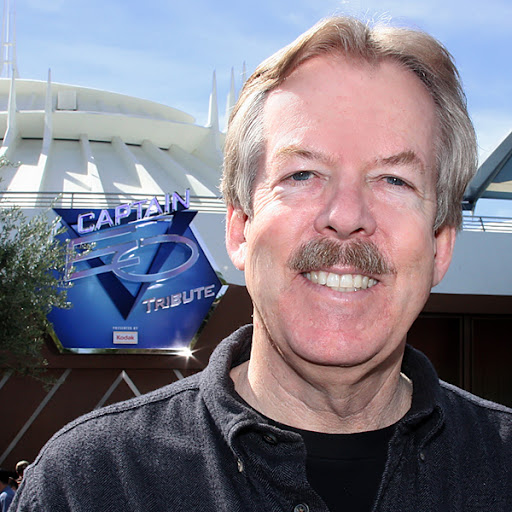
 

[dropcap style=”font-size: 60px; color: #9b9b9b;”] T [/dropcap]ony Baxter. It’s not necessarily a household name and for most, it’s not even a familiar one. True enough, if I asked you to name an influential person in the history of Disney Theme Parks, Tony Baxter might not even come to mind. But for some of you, this behind-the-scenes giant of Imagineering is the first person who comes to mind.

It’s been a few weeks since Tony announced that he was stepping down from his position as Senior Vice President for Creative Development at Walt Disney Imagineering and reactions have run the gamut from anger to sadness. Tony Baxter has left his mark on the hearts of millions through his designs, his ideas and his imagination.

But who is Tony Baxter and what has he done in the past 47 years?

Travel back in time with me to 1965. There’s a young teenager working at Disneyland; sweeping footpaths, scooping ice cream, and operating a ride or two. He’s working hard to help pay for his college degree in Theatre Design from California State University in Long Beach, California. Starting with that simple cast member position, he would have the same employer for the rest of his life. Having graduated in 1969, he presented Walt Disney Imagineering (originally known as WED Enterprises) with a portfolio including a model of a “Marble Maze”. WDI, impressed by the maze’s precision, gave this young man a job. That young man’s name was Tony Baxter.

Tony’s first assignment as an Imagineer was to work on Walt Disney’s newest project which was not in Anaheim but in Florida, where “the blessing of size” provided plenty of room for the creations of WDI. The Walt Disney World resort opened in 1971 and, with such a large canvas, it’s no wonder that Tony’s talent and vision shined so brightly.

His first big step came in the mid-70s back at Disneyland in California when he designed a concept model for a new attraction with sort of western theme – a runaway mine train. In 1979, Tony’s model of that attraction became a reality when Big Thunder Mountain Railroad first delighted Disneyland guests. Today guests in California, Florida, Tokyo, and Paris continue to experience and enjoy the thrills of an attraction that started as Tony’s model.

The 1980’s parlayed Tony’s success into a more active role within Disney. 1983 saw a complete overhaul and redesign of Disneyland’s Fantasyland. The overall renaissance theme and architecture was changed and replaced with colors and textures of a Bavarian village, thus invoking thoughts and feelings of a true fairytale among guests.

All of this took place under the direction, oversight, and supervision of Tony Baxter.

With such a positive reception, this design standard was repeated and copied at Disney theme parks around the world, proving that Cogsworth knew what he was talking about when he said, “If it’s not baroque (broke), don’t fix it.” That same year, Tony led the creative efforts that brought us the Journey Into Imagination pavilion (now Imagination!) at Epcot.

Brer Rabbit's quest for adventure and his rival's plot to do him inlaunch Walt Disney World guests on an action-filled journey with athrill-packed, five-story "splashdown" finale on Splash Mountain inthe Magic Kingdom.

One day while driving to work, Tony began to brainstorm on an attraction that would bring more guests to Disneyland’s less popular Bear Country (now Critter Country). The light bulb above his head flickered on and the idea for Splash Mountain began to take shape. In 1989 one of the most expansive projects in Disney Theme Park history opened and the first guests took the plunge into the Briar Patch. Two more versions of Splash Mountain now exist at Walt Disney World and at Disneyland Tokyo and all three continue to draw long lines of excited guests.

Even in light of all of this success, 1989 was a trademark year for Tony Baxter. Not just because of Splash Mountain, but because he was named Senior Vice President of Concept, Development, and Design in time for the design of Disneyland Paris which opened as Euro Disneyland in 1992.

The 1990s brought continued success for Baxter. Following in the successful footsteps of the Indiana Jones Epic Stunt Spectacular, another Indiana Jones based attraction was developed and created at Disneyland. The Indiana Jones Adventure: Temple of the Forbidden Eye was designed and constructed by a well-oiled machine of some 400 Imagineers led by Tony Baxter.
In 1998, Tony led a creative team to redesign Disneyland’s Tomorrowland area. The latter parts of Tony’s amazing career have seen the opening of the Finding Nemo Submarine Voyage, the reopening of Captain EO, and the redesign of Star Tours.

On February 1st of this year, Tony informed his fellow Imagineers via an open letter that he would be stepping down from his current role and into an advisory position. He’ll still be an influence – just not a full-time one.

In his 47 year career, Tony Baxter created numerous enduring Disney classic attractions, redesigned others, brought smiles to the faces of people on other continents, and creatively designed an entire Disney theme park, all of which beg to answer just one question: What have you done lately?


[quote]“It has been a wondrous 47 years spanning the opening of Walt Disney World to Big Thunder Mountain Railroad and Star Tours, from Epcot’s original Journey into Imagination to Disneyland Paris and Indiana Jones Adventure. The Imagineers I have known and shared these times with have provided invaluable experiences not to be found anywhere else on earth. The future of Imagineering and Disney Parks is incredibly bright.” – Tony Baxter[/quote]

First Details on the Sleeping Beauty Castle Walkthrough

Brady MacDonald over at the LA Times Travel Blog has put up the first real guide as to what will be included in the “re-awakened” Sleeping Beauty Castle Walkthrough when it re-opens this December. After watching the special feature on the original walkthrough from the Sleeping Beauty Plantinum DVD last night, it’s safe to say that they are keeping very close to the original design, which is a very good thing for us Disney purists:

The Sleeping Beauty castle walk-through reopens at Disneyland in December 2008 after a seven-year hiatus.

Visitors will walk past a series of forced-perspective dioramas featuring deceptively simple special effects that tell the story of “Sleeping Beauty.”

Disney Imagineers redesigned the castle walk-through in 1977 to dismal results, installing costumed Barbie doll-like figurines under the misguided notion that the classic artwork from the 1959 animated movie had become dated. The 2008 re-redesign hews closely to the hand-painted concept art employed in the original 1957 walk-through.

A scene-by-scene breakdown of the re-created Sleeping Beauty castle walk-through:

  • Entering from the castle courtyard, visitors encounter the first of seven illuminated manuscripts that tell the story of “Sleeping Beauty.” Naturally, the first book begins, “Once upon a time…”
  • In the first scene at the top of a long staircase, the king and queen watch as a pyre of spinning wheels burn. Imagineers used the first of several Pepper’s Ghosts effects in the castle to achieve the flickering inferno — shining a light through a rotating wine bottle onto an unseen plate of angled glass, making the fire appear to burn in the middle of the scene.
  • In the christening scene with baby Aurora, the fairies Flora, Fauna and Merryweather sprinkle sparkling pixie dust from their magic wands. To achieve the effect, a light shines through a revolving grocery store checkout conveyor belt poked with “pixie dust” pin spots as the fairies rock on hidden cams.
  • Maleficent makes her first appearance in her dungeon. The tails of her cloak billow ominously (aided by hidden air jets) as her pet raven spreads its wings (an early animatronic). A cyclorama painted on the curved back wall gives the illusion of a long hallway. The original 1957 raven survived, thanks to a Disneyland maintenance worker who kept the black bird on his desk since 1977.
  • Ascending to the top of the castle, visitors first come upon the sleeping spell scene. The fairies sprinkle pixie dust on the castle inhabitants in a repeat of an earlier sight gag. In the 1957 version, visitors were encouraged to add their own “snore” — which was recorded, looped and added to the scene.
  • In the next scene, Sleeping Beauty makes her first appearance locked in eternal slumber. Rays of pixie dust filter across the room from a moonlit window, aided by a shimmering light shining through a series of pinholes onto an invisible piece of glass slopping at a severe angle from the canopy of her bed toward the viewer.
  • In the first of a series of scenes not in the 1959 animated movie, Maleficent’s goons pop up to surprise visitors who peer into a barred prison cell. Back in 1957, visitors peeked through keyholes at Maleficent’s imprisoned goons in a simple yet elaborate mirror illusion that put the viewer’s eyes on the goons’ faces. The gag, which halted traffic in the cramped castle corridors in 1957, proved too problematic to replicate in 2008.
  • Heading downstairs, visitors come upon Maleficent summoning her demons to help her destroy Phillip — a scene that never made the movie. Using another pepper’s ghost illusion, the ghouls ascend into the night sky as lightning bolts flash. A rear projector shines storm clouds against a scrim.
  • In Maleficent’s dungeon scene, ghouls emerge from a fiery pit. Ghastly green smoke reflected off diffusion glass appears to billow from the pit. The original 1957 effect would be used later in the Haunted Mansion ballroom.
  • In a new scene not in the 1957 castle walk-through, Prince Phillip battles Maleficent’s dragon. As viewed from the thorny brambles, the villainess transforms from a wicked witch into a fire-breathing fiend. Imagineers based the tableau on artwork developed for but never used in the original walk-through.
  • The increasingly dark storyline moves onto another scene not in the movie — the Dance of the Spinning Wheels dream sequence. A single set of spinning wheels on a rotating platform reflects in the mirrors surrounding the room, creating a mesmerizing and hypnotic illusion. A flickering blue flame effect made of China silk strips painted with black-light colors and fluttered by a hidden fan would be used later in the Pirates of the Caribbean attraction.
  • In the final diorama, Prince Phillip awakens Sleeping Beauty with a kiss. Doves fly past overhead with the aid of a rotating wheel cocked at an odd angle. A bed of roses spreads to infinity with the help of an angled pane of glass. Imagineers are still working on the effect that transforms Aurora’s skin tones from cool to warm when kissed. Inexplicably, the kiss scene was not included in the 1957 castle walk-through on opening day.
  • And just when all seems resolved, a shadowy silhouette of Maleficent appears on the wall — from a hidden projector. The 1957 scare frightened children so terribly that it had to be unplugged. How kids today react remains to be seen.
  • Before exiting to the courtyard, visitors encounter the last illuminated manuscript, insisting that all ends “Happily ever after.”

Brady has also put up an exclusive interview with the amazing Imagineer spearheading this attraction, Tony Baxter. Here are a few highlights from the interview:

Disney Imagineer Tony Baxter, who shepherded the walk-through restoration, understands that the best new Disneyland attraction is an old attraction conceived by Walt Disney himself. Resurrecting the past plays into one of the Anaheim theme park’s core assets: nostalgia.

“I still have very strong memories of taking a journey through this castle,” said Baxter, Disneyland’s chief Imagineer.

The castle walk-through closed shortly after 9/11, in the ensuing weeks when terrorism fears gripped the nation. While no reason was given at the time for the shuttering of the largely unsupervised self-guided tour through the iconic symbol of American pop culture, Disney now admits the tired and dated 1970s remodel of the attraction needed a rest — pun intended. In either case, the walk-through remained closed for the better part of this decade — long enough for the casual visitor to forget it ever existed and far too long for the die-hard fan.

[ . . . ]

The A-ticket attraction resulted in what Baxter called “the zenith of our artistry,” with much of the future “magic” to be found later in the Haunted Mansion and Pirates of the Caribbean taking embryonic form in the castle walk-through.

“That was the first application in Disneyland of some artistically brilliant and technically stunning special effects,” Baxter said.

[ . . . ]

By 1977, the original castle walk-through had run its course and Imagineers ripped out the guts of Earle and Anderson’s work to install a version of the story more faithful to the movie. The ill-advised move replaced the hand-painted cutouts with costumed figurines that looked like Barbie dolls. The inferior substitutes didn’t hold up well over time.

“In 2001, we took a long, hard look at it and we said, ‘Gee, you know, this doesn’t live up to what people remember in the movie,’ ” Baxter said, being as charitable as possible.

With the 50th anniversary of the movie on the horizon, the decision was made in mid-2007 to re-create the walk-through by mapping the 1950s hand-painted scenes onto turn-of-the-millennium computer-generated cutouts.

But after the closure of the walk-through in 2001, layer upon layer of additions — fireworks displays, faux snow-making machines, elaborate Christmas decorations — had chewed up precious real estate inside the castle.

By the time Imagineers stepped back inside the castle in 2007, they found the walk-through in disarray. Like excavators on an archaeological dig, Baxter and company discovered complete sets from the 1957 version still intact behind untouched 1977 scenes. In other places, air conditioning ducts snaked through long-abandoned scenes. They wondered how some sets — 20 feet tall in places — were ever shoe-horned into the castle’s tight confines.

[ . . . ]

Over the ensuing 18 months, Baxter and his team set about deciding what to remove, what to leave intact, what to reinstate and what to improve. And how to strike a delicate and seamless balance between the original concept and the new elements.

“We’ve definitely got everything and then some of what was there before,” Baxter said. “I don’t think anybody will be disappointed that it’s not what they remembered.”